


CATEGORIES:
How to Evaluate Commercial Tornado Shelter Manufacturers Before You Trust Them With Your Employees
September 21, 2026
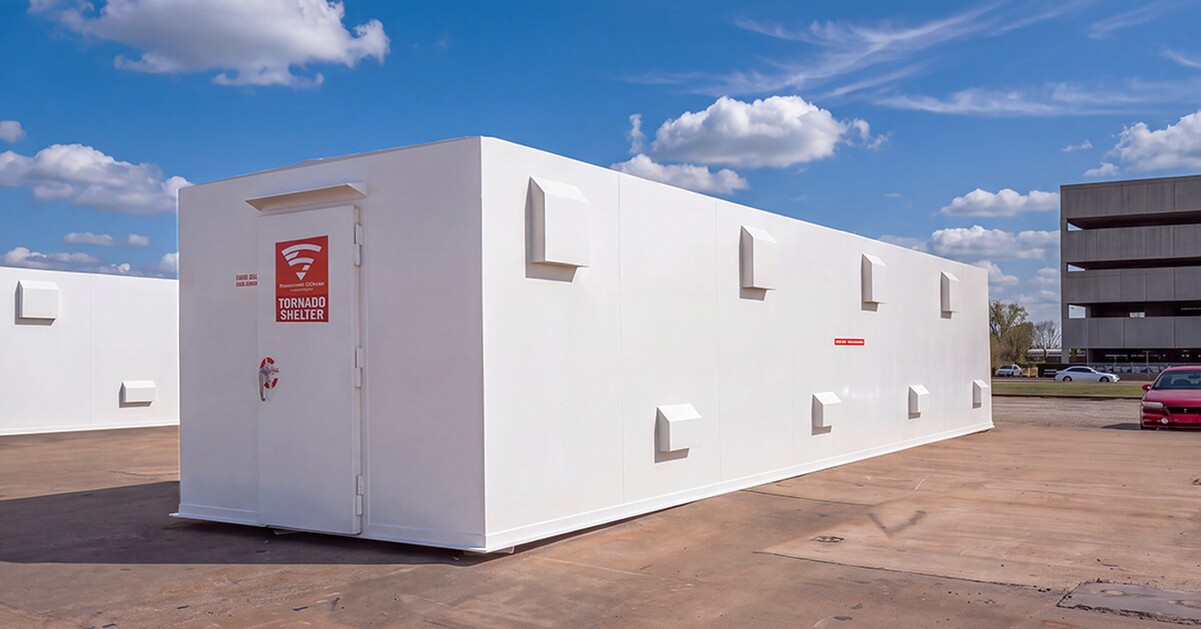
Buying a commercial tornado shelter is not like purchasing office furniture or fleet vehicles. If those purchases go wrong, you deal with a complaint and a replacement. If a tornado shelter purchase goes wrong, the consequences are worse. That should shape every step of how you evaluate manufacturers, and yet most buyers treat it as a standard procurement decision, comparing prices and reading brochures.
A credible commercial tornado shelter manufacturer should be able to explain how all three apply to the proposed shelter and provide appropriate documentation (like engineer-stamped drawings) supporting its compliance claims. Manufacturers who won’t are signaling a gap in their compliance depth.
 Installation and Crew Qualifications:
Apply this framework as a go/no-go filter first. Any manufacturer who cannot pass the compliance, membership and documentation checks does not advance to price negotiation or site assessment. This prevents the common mistake of investing significant time with a vendor only to discover late in the process that their compliance claims cannot be substantiated.
The manufacturer who earns your trust is the one who welcomes every verification step, produces documentation without hesitation, and gives you references you can call. Resistance to any of those steps is not a negotiating posture. It is information about how that manufacturer operates.
Key Takeaway: Reframe "best commercial tornado shelter" away from marketing claims and toward a simple question: which manufacturer scores highest on verifiable, documented criteria? The answer to that question is the defensible choice for both your employees and your organization.
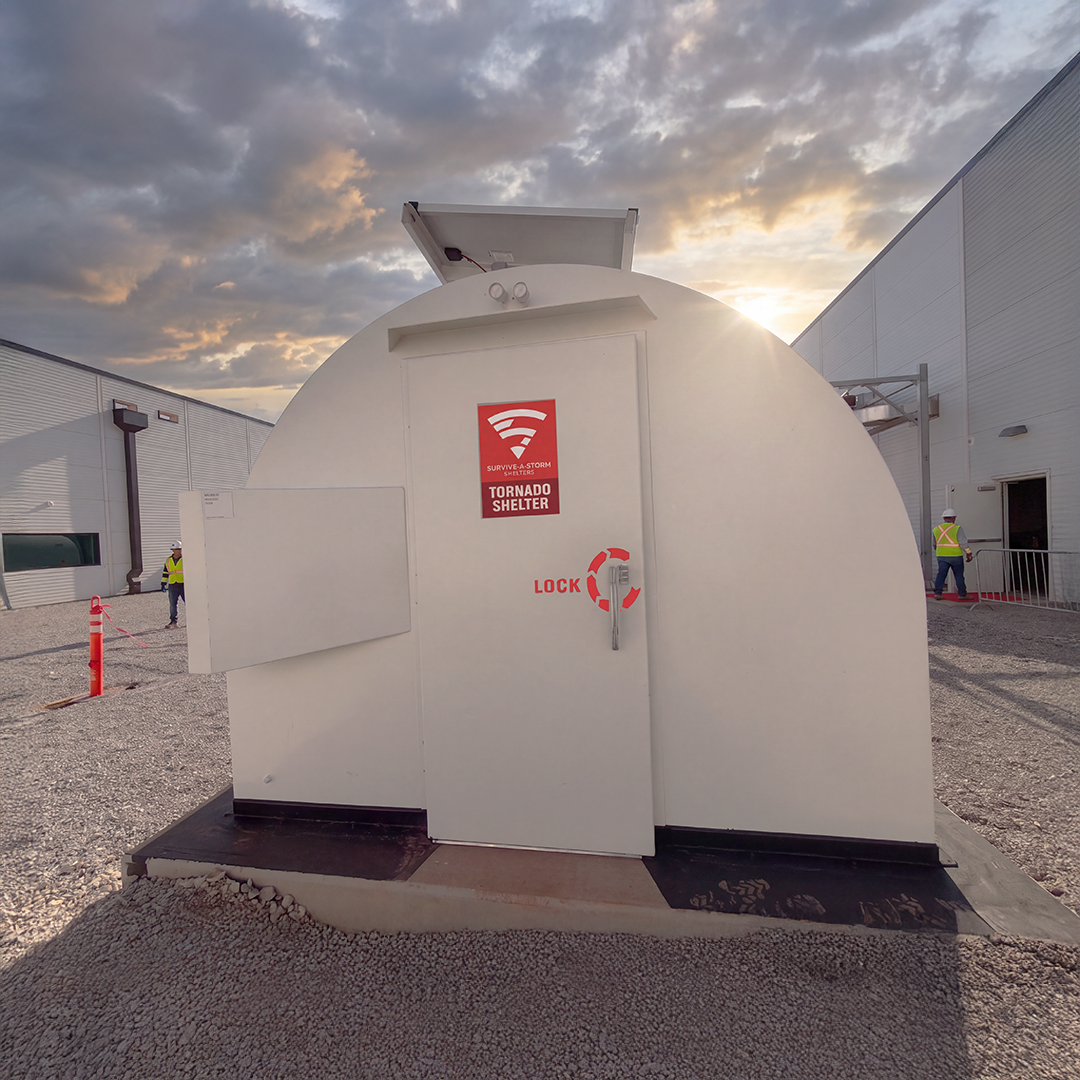
Choosing a commercial tornado shelter manufacturer is one of the few purchasing decisions where the vetting process itself can be nearly as important as documenting the final selection. The manufacturer who earns that trust is the one who welcomes every verification step, produces engineering-stamped documentation without hesitation, and gives you references you can call. Survive-A-Storm Shelters builds compliant above-ground commercial safe rooms to FEMA P-361 and ICC 500 standards, using third-party-tested products, in-house installation crews, and a track record of verified commercial installations across schools, businesses, and facilities throughout Tornado Alley.
If you're ready to move forward with a manufacturer you can verify and trust, contact Survive-A-Storm Shelters today to request your facility assessment and get the answers your due diligence requires.
Why Manufacturer Vetting Is Life-or-Death Due Diligence
The quiet professional dread of being the person who chose wrong is real. If your company invests in commercial tornado shelters and a tornado hits, every decision you made becomes part of the record. Did you verify compliance to FEMA guidelines? Did you confirm installation quality? Did you check that the shelter was rated for the number of employees who would use it? If the answer to any of those questions is no, and something goes wrong, the legal and moral consequences could fall on your organization. Business owners and facility managers have a responsibility to the safety of their employees during foreseeable emergencies. Tornadoes are foreseeable in most of the central and southern United States. That responsibility extends to ensuring that emergency shelter meets documented safety standards, not just to purchasing something marketed as a shelter. The 2011 Joplin, Missouri EF5 tornado killed 158 people, making it the deadliest single U.S. tornado since modern recordkeeping began. Investigations found that many deaths occurred in buildings with no designated shelter space at all. The cost of a compliant shelter, measured against the costs of a mass-casualty event in litigation, regulatory scrutiny, and irreversible human loss, is not a close comparison. Key Takeaway: The stakes of this decision make manufacturer vetting the most important step in the entire purchasing process. Documenting that process creates a clear record of the standards, qualifications and other factors that your organization considered before selecting a manufacturer. The absence of such evidence could make it difficult to demonstrate that careful consideration of safety influenced the purchasing decision.Commercial Tornado Standards That Actually Mean Something
The compliance landscape for commercial tornado shelters confuses most buyers, and some manufacturers deliberately exploit that confusion. Understanding which credentials matter and what they require gives you an immediate filter for separating legitimate manufacturers from those making vague claims.ICC 500 and What It Requires
ICC 500 is the International Code Council's standard for the design and construction of storm shelters. It is the primary adopted standard that governs commercial tornado shelters and is referenced by building codes in most U.S. jurisdictions. ICC 500 establishes structural load requirements, occupant capacity and usable floor area requirements, door and penetration performance standards, and ventilation requirements. A manufacturer who cannot explain how the proposed shelter meets ICC 500 standards and identify the applicable edition (which may vary by jurisdiction) should not be trusted with a commercial installation. Compliance with ICC 500 is not a marketing badge. It is a documented record of engineering and testing. When a manufacturer claims ICC 500 compliance, your follow-up question is always: what third-party documentation proves it for the specific shelter design being proposed?NSSA Membership and Why It Matters
The National Storm Shelter Association provides an independent verification process for shelter manufacturers. NSSA membership involves a voluntary code of conduct and independent auditing. It’s important to note that manufacturers who hold NSSA membership have submitted to a verification process that goes beyond self-attestation. NSSA doesn't “certify” its members or their shelters. Rather, Producer Members submit engineering designs and independent testing documentation for third-party review as part of the membership process. This provides a level of verification that goes beyond a manufacturer's own claims of compliance. Importantly, NSSA maintains a public directory of Producer Members. Before your first phone call with any manufacturer, checking that directory takes only 5 minutes and can help eliminate non-compliant vendors. We cover how to use that directory below.What FEMA-Approved Really Means
One critical point on the phrase "FEMA approved": FEMA does not directly approve or certify individual shelter products. FEMA publishes guidance and criteria, most importantly FEMA P-361 (Safe Rooms for Tornadoes and Hurricanes, 5th Edition, 2024), which credible manufacturers build to. When a manufacturer claims their product is "FEMA approved," that phrasing is either a misunderstanding or a misrepresentation.FEMA P-361 vs ICC 500 vs Third-Party Testing
These three frameworks address the same goal from different angles, and understanding the difference makes it much harder to mislead you. FEMA P-361 is a design and construction guidance document. It tells engineers how to design a shelter that will protect occupants. FEMA P-361 specifies a design wind speed of 250 mph for tornado safe rooms, with a minimum of 5 square feet of floor space per occupant for community shelters. It is the authoritative technical benchmark against which manufacturers should be evaluated. ICC 500 is consensus standard for the design and construction of storm shelters. Its requirements become enforceable when referenced in the building code adopted by specific jurisdictions. ICC 500 establishes minimum requirements for storm shelter design, construction and inspection, while FEMA P-361 incorporates ICC 500 requirements and provides additional criteria for FEMA safe rooms. Third-party testing is the physical verification layer. A manufacturer can design a shelter to FEMA P-361 and claim ICC 500 compliance without every applicable component or assembly having undergone independent testing. Where testing is required, an accredited laboratory can evaluate components and assemblies against applicable performance criteria. Testing documentation, along with engineering designs and specifications, can then be submitted for independent review as part of the NSSA Producer Membership process. This third-party testing and then independent review provide verification beyond the manufacturer’s own claims of compliance.| Framework | What It Is | How It Is Applied or Verified | What Buyers Can Verify |
|---|---|---|---|
| FEMA P-361 | Federal design and construction guidance | Not directly enforced; may be required by project or funding criteria | Engineer-stamped drawings documenting applicable P-361 criteria |
| ICC 500 | Consensus standard referenced by adopted building codes | Local building departments, AHJ | Engineer-stamped drawings showing ICC 500 compliance |
| Third-Party Testing | Physical performance verification | Performed by qualified independent laboratories according to applicable test criteria | Confirm membership of manufacturer as a Producer Member of the NSSA |
How to Verify a Manufacturer's Claims Independently
The most important claims that a manufacturer makes about compliance, capacity, and track record can be independently verified. The following steps should happen before any site visit or sales meeting.Checking the NSSA Directory
The National Storm Shelter Association maintains a searchable online directory where buyers can verify a manufacturer’s Producer Member status. Start here before your first conversation with any vendor. Once you have verified that they are a member, you can feel more confident that the manufacturer’s designs have gone through NSSA’s independent verification process and are compliant with FEMA P-361 and ICC 500. A manufacturer who does not hold NSSA membership but makes vague claims that its products are “certified” should certainly come under more scrutiny. The NSSA directory is available at nssa.cc. Checking it takes minutes and can save months of pursuing the wrong vendor.Understanding Third-Party Testing
Third-party testing is an important part of demonstrating that storm shelter components and assemblies meet applicable performance requirements. Testing can include debris-impact testing of walls, doors and other components to evaluate how they perform against windborne debris generated during a tornado. Texas Tech University has played an important role in storm shelter research and the development of debris-impact testing methods used to evaluate shelter components against FEMA and ICC criteria. Its National Wind Institute, which performed testing on Survive-A-Storm’s tornado shelter designs, also conducted debris-impact testing of storm shelters and components for many years. Testing for tornado shelter components included firing a 15-pound 2x4 at speeds up to 100 mph to simulate windborne debris. Although Texas Tech no longer offers debris-impact testing for standards compliance, testing completed there while the program was active continues to provide valid documentation for shelter design standards when the relevant requirements remain unchanged. Third-party debris-impact test results aren’t public documents that a prospective buyer can pull up and evaluate. One of the major consumer benefits of NSSA Producer Membership is that the manufacturer’s documentation has undergone independent engineering review. Buyers can then use the NSSA directory to verify a manufacturer’s membership. All Producer Members of the NSSA must submit design plans, specifications and impact-testing results for review by an NSSA-approved independent third-party engineer. Beyond membership in the NSSA, verify installation references for commercial facilities that are similar to your own in occupancy type. A manufacturer with strong residential installation records but no verified commercial installations in schools, warehouses, or office buildings has not demonstrated the same level of commercial experience.Questions to Ask Every Manufacturer Before You Sign
The following questions, organized by category, function as a practical vetting tool you can bring into vendor calls or share with procurement teams. NSSA Membership and Compliance:- Are you a Producer Member of the NSSA?
- Which edition of ICC 500 does this product comply with?
- Did your engineering team follow FEMA P-361 design criteria?
- Can you provide the engineer-stamped drawings for this design?
Installation and Crew Qualifications:
- Who performs the installation, and are they employed by you or subcontracted?
- What qualifications and training do installation crews have for commercial storm shelter installation?
- Do you handle the building permit application, or does that fall to the buyer?
- What post-installation inspection is included, and is it performed by an independent engineer?
- How is the occupancy rating calculated for this shelter, and does it reference FEMA P-361 minimum space-per-person requirements?
- Does the capacity rating account for ADA accessibility requirements?
- Can you provide three references from commercial installations of similar size and occupancy type?
- What does the structural warranty cover and for how long?
- What is the process if a shelter sustains damage and requires inspection or repair?
Red Flags That Should End the Conversation
The most dangerous vendor is not the one that is obviously fraudulent. The most dangerous vendor uses the right vocabulary, makes the right compliance claims, but cannot support their claims.- Is not a Producer Member of the NSSA. This could be a disqualifying signal. NSSA membership provides independent verification that a manufacturer has submitted its design and testing documentation for third-party engineering review. If they are not a Producer Member, ask what independent review has been performed to verify their compliance claims.
- Claims "FEMA approved" or “FEMA certified.” FEMA does not approve individual products. Any manufacturer using that phrase as a standalone credential either does not understand the compliance landscape or is deliberately misleading you.
- No verifiable commercial installations in your occupancy type. A manufacturer whose references are all residential or demonstration units has never proven their product in a real commercial environment.
- Pricing significantly below market norms. Compliant materials, third-party testing fees, qualified installation crews, and engineer-stamped drawings have real costs. A bid that cannot be reconciled with those costs warrants closer scrutiny of what is included, excluded or substituted.
- Resistance to facility visits. A vendor confident in their product welcomes scrutiny of their manufacturing facility.
- Vague or missing capacity ratings. Every compliant shelter has a documented occupancy load calculation. Vague answers like "it fits your team" without reference to square footage per person or ICC 500 occupancy requirements could indicate a loose interpretation of the shelter’s capacity.
- Residential shelter upsold as a commercial solution. FEMA P-320 provides safe room guidance for homes and small businesses, while FEMA P-361 addresses community safe rooms and other applications with more complex design and occupancy considerations. Residential shelters are designed for different occupancy loads, structural connections, and egress requirements than commercial installations.
What Professional Commercial Tornado Shelter Installation Actually Looks Like
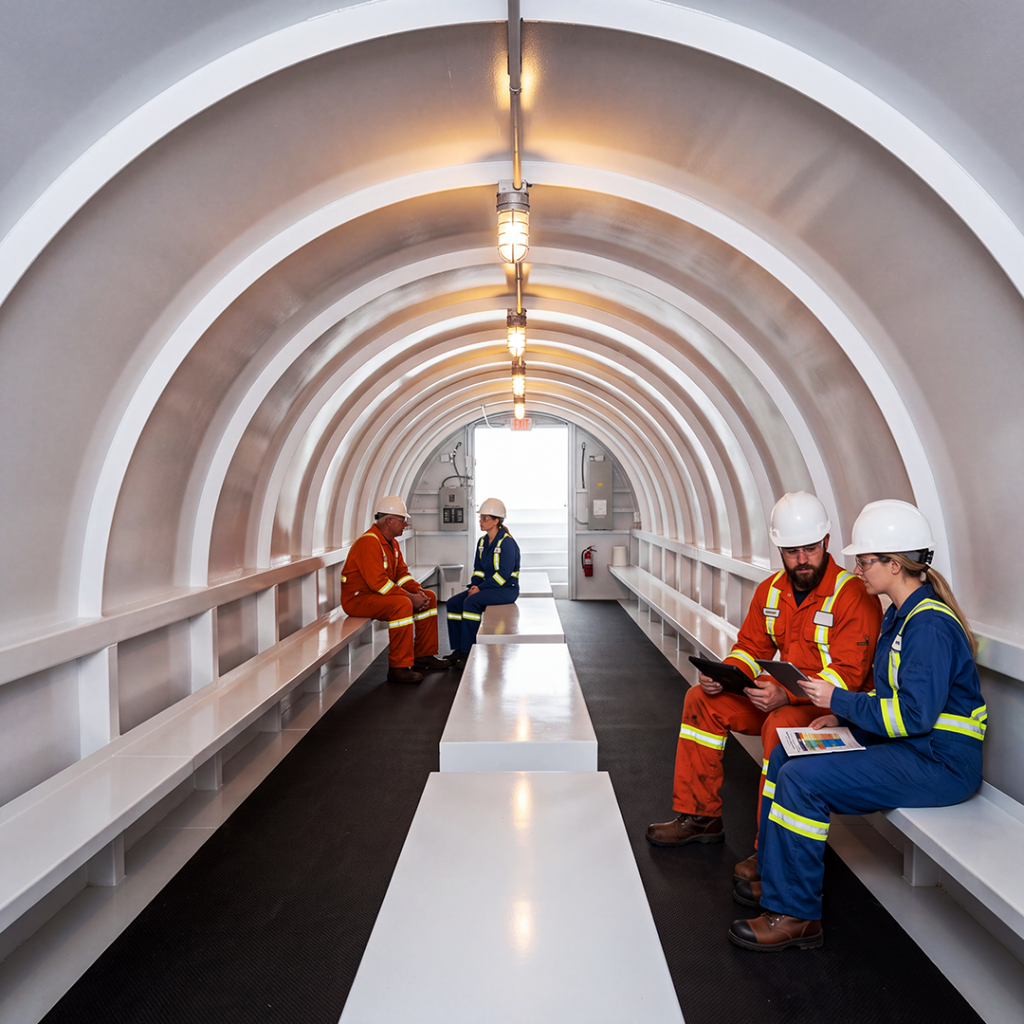
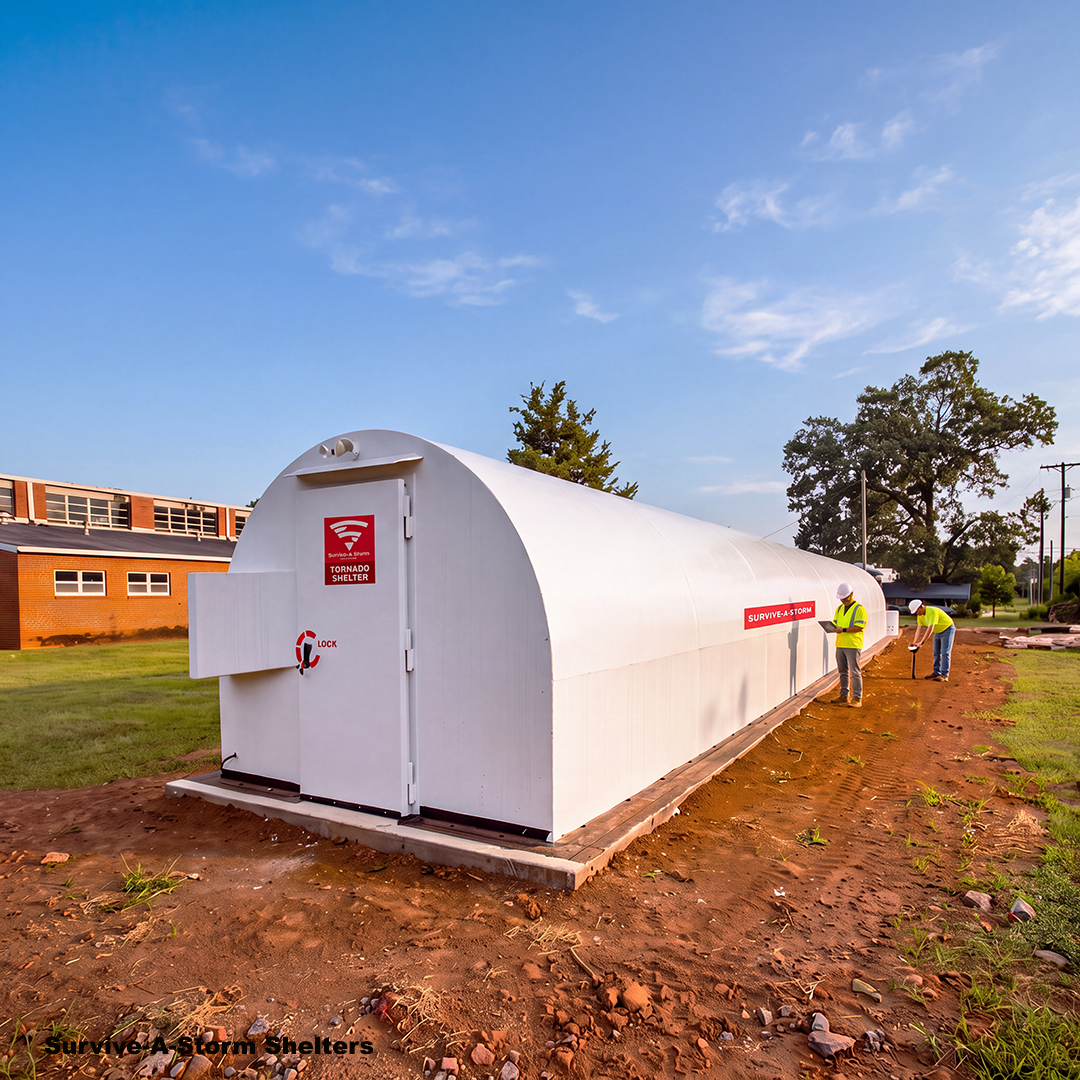
A compliant shelter installed incorrectly is not a safe shelter. Installation quality is inseparable from shelter performance, and buyers should vet installation crews with the same rigor applied to the product itself. Professional commercial tornado shelter installation is site-specific, and may include any of the following: documented site assessment, foundation, utility coordination, permit application and inspection scheduling, anchor bolt installation and torque verification, and final commissioning. Most jurisdictions require a building permit for commercial storm shelter installation, and the permit requirements typically include structural drawings stamped by an engineer and an inspection at the anchor bolt stage before concrete is poured.Above-Ground vs Underground Commercial Shelters
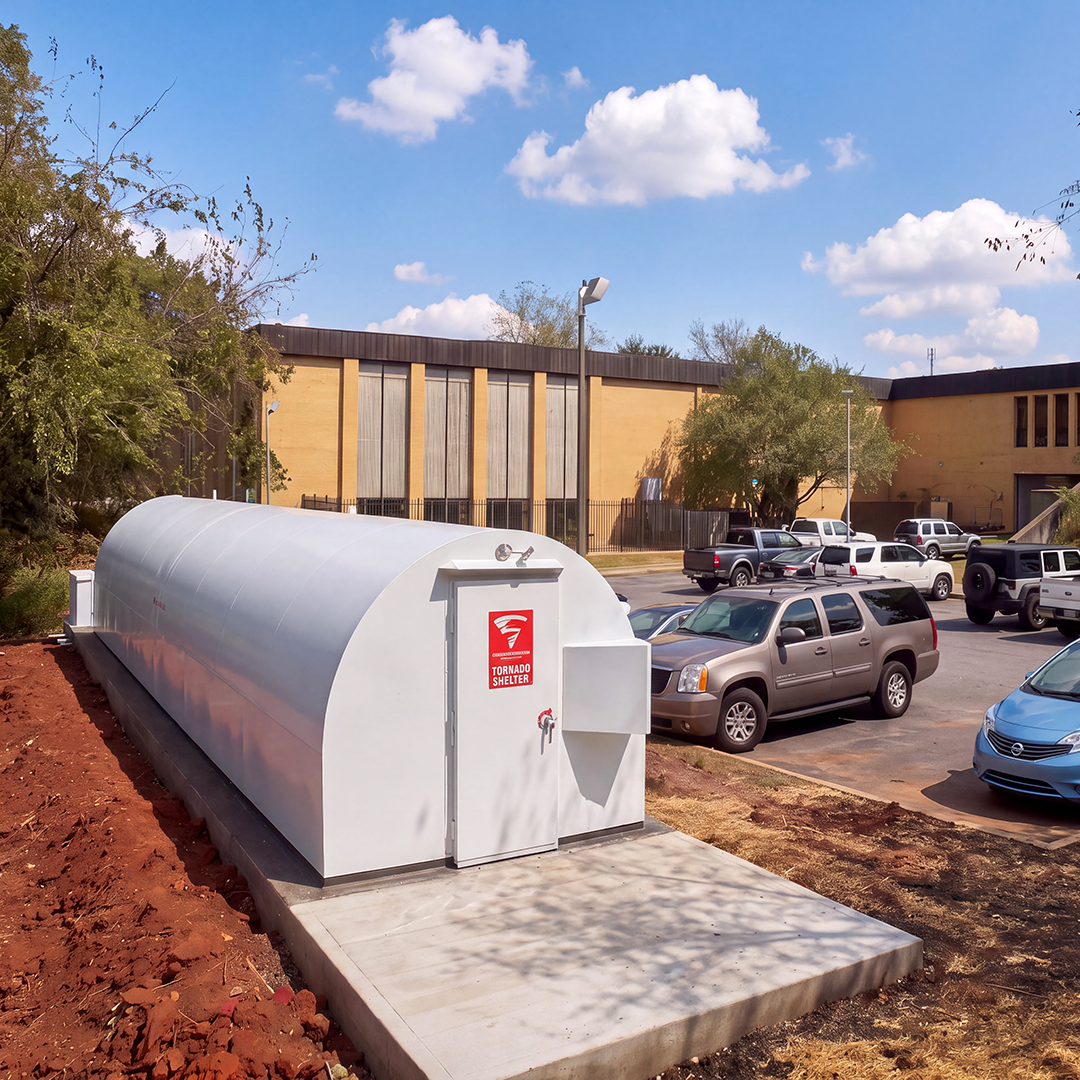
Above-ground commercial tornado safe rooms are typically installed inside or adjacent to buildings, depending on the facility and shelter design. They require engineered concrete slab connections because standard slab thicknesses often do not meet the anchor bolt embedment depth requirements. Above-ground shelters are common in schools, office buildings, retail facilities and other commercial applications where they meet the site’s occupancy, access and installation requirements. Underground tornado shelters require excavation depth calculations based on soil type, groundwater level, and frost line depth, which could make a geotechnical report a pre-installation requirement. Underground shelters are often preferred for settings where large groups of occupants need rapid access from ground level. Installation complexity for underground shelters is significantly higher, and pricing reflects that difference. Direct per-square-foot comparisons between above-ground and underground options are misleading without accounting for total installed cost. The best shelter for your warehouse, manufacturing facility, or other commercial operation isn't necessarily a matter of underground vs. above-ground tornado shelters. The answer is nuanced—it's the one that meets the specific requirements of your site, occupancy and emergency plan. At project completion, the buyer should receive applicable engineer-stamped drawings, inspection records, warranty documentation, and documentation of occupancy capacity.Understanding Commercial Tornado Shelter Pricing
Price is a data point, not a decision criterion. The right question is not which manufacturer is cheapest, but whether a given price is consistent with appropriate materials, qualified installation, and adequate capacity. Primary cost drivers for commercial tornado shelters include shelter type (above-ground versus underground), occupancy capacity, steel gauge and wall construction, site conditions, permit fees, and installation complexity. Realistic price ranges vary significantly by region, site conditions, and shelter capacity. We recommend requesting total installed cost breakdowns, not just unit prices, when comparing proposals. Critically, gross commercial tornado shelter pricing (purchase price) is not always the effective cost. FEMA's Hazard Mitigation Grant Program (HMGP) and the Building Resilient Infrastructure and Communities (BRIC) grant program can fund up to 75% of eligible shelter project costs for qualifying applicants, with the organization providing the remaining 25% cost share. Schools, businesses, and houses of worship in tornado-prone states have all received awards. Buyers who do not research grant availability before budgeting are working with incomplete financial information. Q: Does a dramatically low bid from a shelter manufacturer mean the product is unsafe? Not automatically, but it warrants scrutiny. Third-party testing fees, engineer-stamped drawings, qualified installation crews, and compliant materials all have real costs. A bid significantly below market rates for comparable compliant shelters is structurally suspicious. Ask the manufacturer to itemize exactly what is included and what the testing documentation covers. If they cannot reconcile their price with those cost components, that is a meaningful warning sign.A Practical Framework for Comparing Commercial Tornado Shelter Manufacturers
When evaluating multiple commercial tornado shelter manufacturers simultaneously, a structured comparison keeps the process objective and prevents polished sales materials from outweighing documented compliance records.| Evaluation Criteria | What to Verify | Strong Signal | Weak Signal |
|---|---|---|---|
| ICC 500 Compliance | Are their designs compliant and to what specific edition? | Provides engineer-stamped drawings of the design | Verbal claim only |
| NSSA Producer Member | Is a Producer Member of the NSSA | Listed in public directory | Membership claimed, but not listed with NSSA (Red Flag) |
| Third-Party Testing | Applicable testing has been performed and independently reviewed | Manufacturer can identify the testing laboratory and explain how testing was independently reviewed | Vague testing claims or inability to identify who performed testing |
| Commercial References | Similar occupancy type, verifiable contacts | Multiple commercial installs, references answer calls | Residential only or no references available |
| Installation Crew | Who performs the installation and their qualifications | Qualified crews with documented training and clear manufacturer oversight (employee installers - best practice) | Unclear installer qualifications or responsibility for installation |
Frequently Asked Questions About Evaluating Commercial Tornado Shelter Manufacturers
What certifications should a commercial tornado shelter manufacturer have?
There aren’t really any commercial tornado shelter certifications. However, the two most important factors that should steer your decision are compliance with ICC 500 standards and NSSA membership. ICC 500 is the International Code Council's consensus standard for storm shelter design and construction. Its requirements become enforceable when referenced by the building codes of a particular jurisdiction. NSSA Producer Membership means the manufacturer has submitted engineering designs and applicable test documentation for independent third-party review, going beyond self-attestation. A credible manufacturer should also be able to document how their shelter addresses FEMA P-361 criteria. Any manufacturer who cannot stand up to this framework warrants serious scrutiny before moving forward.What does "FEMA approved" mean for a tornado shelter?
It is frequently misused language. FEMA does not directly approve or certify individual shelter products. FEMA publishes design and construction guidance — most importantly FEMA P-361, Safe Rooms for Tornadoes and Hurricanes — which credible manufacturers build to. When a manufacturer claims their product is "FEMA approved,” that phrasing is either a misunderstanding of the compliance landscape or a deliberate misrepresentation. The correct question to ask is whether the shelter was designed and built to FEMA P-361 criteria and whether the manufacturer can provide engineer-stamped documentation to that effect.What is the difference between FEMA P-361, ICC 500, and third-party testing?
These three frameworks address shelter performance from different angles. FEMA P-361 is a federal design and construction guidance document that specifies how a shelter should be engineered to protect occupants from EF5 tornado conditions. ICC 500 is the enforceable building code standard that operationalizes FEMA P-361 guidance into testable requirements that building inspectors can verify. Third-party testing is the physical verification layer — an accredited laboratory physically tests a manufactured unit to confirm it performs as designed. A manufacturer can claim design compliance with both FEMA P-361 and ICC 500 without a single independent test ever being performed on their actual shelter design or components. Verifying their status as a Producer Member of the NSSA is an easy way to confirm that manufactured products match the engineering intent.How can I independently verify a tornado shelter manufacturer's claims?
Start with the National Storm Shelter Association's public directory at nssa.cc, which lists its Producer Members who sell compliant shelters. A manufacturer that claims to be an NSSA Producer Member but who is not listed in the public directory is a red flag that warrants a direct explanation. Next, confirm which accredited laboratory conducted the testing and ensure it was reviewed by a third party. (Required by NSSA membership.) This process takes less than an hour and eliminates non-compliant vendors before any significant time is invested.What are the biggest red flags when evaluating a tornado shelter manufacturer?
The clearest red flags are use of the phrases "FEMA approved" or “FEMA certified”, no verifiable commercial installations in your occupancy type, pricing significantly below market norms for comparable products, lack of NSSA membership, resistance to independent inspections or facility visits, vague or missing occupancy capacity calculations, and attempts to sell a residential shelter as a commercial solution. A manufacturer who deflects direct questions about engineering-stamped drawings or cannot name the specific testing laboratory that tested their product signals a gap in their compliance depth that matters far more than any price advantage they may appear to offer.Can a tornado shelter manufacturer claim ICC 500 compliance without physical testing?
Yes, and this is one of the most important gaps buyers need to understand. Design compliance and physical testing are separate things. A manufacturer can engineer a product to ICC 500 specifications without ever having a third-party laboratory physically test a manufactured unit. This means a compliance claim alone is not sufficient verification. Always confirm their membership in the NSSA to verify the testing was conducted by a recognized accredited laboratory and that the results were independently reviewed and scrutinized.What questions should I ask a commercial tornado shelter manufacturer before signing a contract?
The most important questions fall into four categories: Regarding compliance: which edition of ICC 500 does this product comply with? Can you provide the engineer-stamped drawings for this model number? Is your company listed in the NSSA Producer Membership directory? Regarding installation: who performs the installation, and are they employed by you or otherwise qualified? Regarding capacity: how is the occupancy rating calculated, and does it reference FEMA P-361 minimum space requirements? Regarding track record: can you provide three references from commercial installations of similar size and occupancy type, and what does the structural warranty cover? A manufacturer who cannot answer these questions directly and in writing should not advance to price negotiation.What should professional commercial tornado shelter installation include?
Professional installation may include a documented site assessment, foundation and utility coordination, permit application scheduling, anchoring and connection verification, and final commissioning. Commercial storm shelter installations may require a building permit, with requirements determined by the locally adopted building code and the authority having jurisdiction. Permit submittals may include engineer-stamped structural drawings and project-specific inspections. At project completion, the buyer should receive applicable engineer-stamped drawings, required inspection records, warranty documentation, and documentation of the shelter’s occupancy capacity.How does shelter manufacturer vetting protect my organization legally?
Documented vetting creates a record of the factors your organization considered when selecting and installing the emergency shelter. That record can include whether applicable ICC 500 and FEMA P-361 criteria were evaluated, whether installation requirements were addressed, whether shelter capacity matched the anticipated occupant load, and what engineering documentation was reviewed before the purchasing decision. If questions arise after a tornado event, having that documentation provides a clearer record of the due diligence that went into the shelter selection than treating it as a standard purchasing decision.Is a dramatically low bid from a tornado shelter manufacturer a warning sign?
It warrants close scrutiny. Third-party testing fees, engineer-stamped drawings, qualified installation crews, steel and construction materials, and permit coordination all have real costs. A bid significantly below market rates for comparable compliant shelters warrants a closer look at what is included or not included. Ask the manufacturer to itemize exactly what is included, what the engineer-stamped drawings indicate, and which laboratory performed their independent testing. If they cannot provide a clear accounting of how their price reflects those cost components, that is a meaningful warning sign — and one that should be resolved before selecting a life-safety product.Author

The leading manufacturer and distributor of prefabricated steel above ground and below ground tornado shelters, and community safe rooms.


Privacy Policy | Terms Copyright ©2026 Survive-A-Storm. All rights reserved.