

CATEGORIES:
In-Ground vs. Above-Ground Commercial Tornado Shelters: A Side-by-Side Decision Guide
June 5, 2026
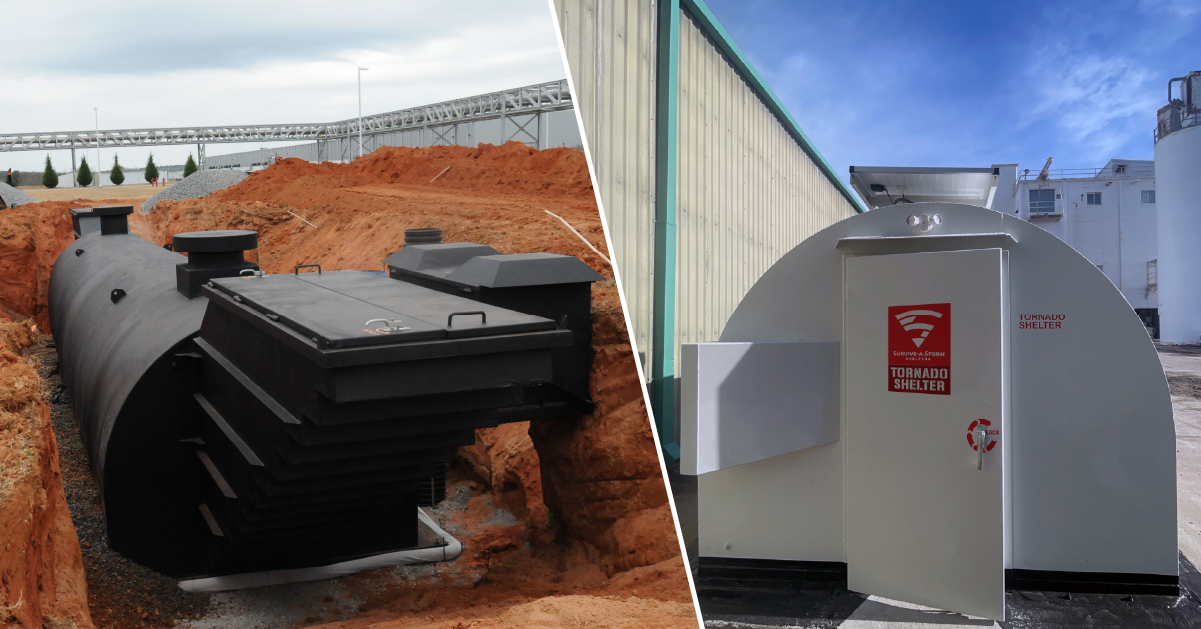
If you're researching commercial tornado shelters and regulations around them for the first time, the sheer number of options can feel overwhelming fast. The most important fork in the road comes early: should you choose an in-ground or above-ground commercial tornado shelter? Both protect people. Both can be manufactured to meet FEMA and ICC 500 requirements. Both can work for your facility. But they work in fundamentally different ways, and the wrong choice for your site can cost you time, money, and compliance headaches.
We are here to walk you through everything side by side so you can recognize the right answer for your situation rather than trying to recall a hundred disconnected facts.
How Each Shelter Type Actually Works
Businesses across Tornado Alley states like Oklahoma, Kansas, and Texas (and Dixie Alley states like Alabama, Georgia and Mississippi) face the highest commercial tornado risk in the country. But the protection strategy splits into two distinct engineering approaches.
In-Ground Shelters
In-ground tornado shelters are buried below grade, either beneath a concrete slab, in a parking lot, or as a freestanding buried unit. The earth itself becomes the primary protective barrier. Soil mass absorbs wind pressure and stops flying debris before it ever reaches the shelter walls. Access is typically through a hatch with stairs or a ramp leading down. The deeper the burial and the denser the surrounding soil, the more effective the natural shielding.
Above-Ground Safe Rooms
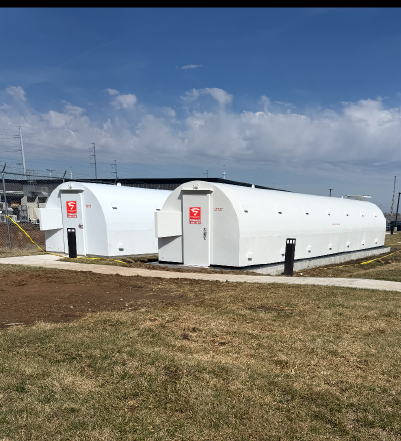
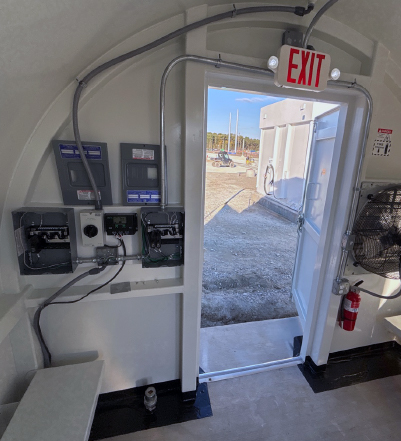
Above-ground commercial storm shelters are reinforced-steel or precast-concrete rooms anchored to an existing building’s foundation or installed as standalone units. Instead of using depth, these shelters rely on heavy-gauge steel walls, reinforced concrete, and precision anchor-bolt systems to resist the wind uplift forces that would otherwise overturn the structure. A properly engineered above-ground safe room can be built into an interior hallway, an existing storage room, or as a standalone pod near a high-occupancy work area.
Key Takeaway: The decision between an in-ground and above-ground commercial tornado shelter comes down to two different approaches to achieving the same level of protection. In-ground shelters use the earth as their primary defense. Above-ground shelters use engineered materials and anchoring systems. Both solve the same problem through different physics.
Protection Level: What the Standards Actually Say
Many buyers assume that underground automatically means safer. And some commercial tornado shelter manufacturers will even boldly state that! That assumption is worth examining. (Hint: it's a myth.)
Wind Speed Ratings and Impact Standards
Both shelter types can be engineered to survive an EF5 tornado, the most destructive category on the Enhanced Fujita scale, with winds exceeding 200 miles per hour. The FEMA P-361 design guide sets performance requirements that apply equally to in-ground and above-ground designs. What actually kills people in tornadoes is primarily flying debris, not wind pressure alone, according to the NOAA's National Severe Storms Laboratory. That is why debris impact testing is the centerpiece of most guidelines. ICC 500-2020, the International Code Council's enforceable standard for storm shelter construction, specifies that shelter doors and walls must withstand a 15-pound, 2x4 timber projectile traveling at 100 miles per hour without penetration.
Where Each Type Has a Genuine Edge
In-ground shelters inherently eliminate above-grade wind exposure. Above-ground shelters eliminate the risk of flooding and water infiltration because they sit above grade. They are also better options for those with mobility issues. Each has its own structural advantage, and the right one depends on your site.
FEMA and ICC 500 Compliance for Both Types
What FEMA P-361 Requires
FEMA P-361 establishes performance requirements for tornado shelters, including occupant load capacity, wind-speed resistance, debris-impact protection, and other life-safety criteria. Both in-ground and above-ground commercial shelter designs can be engineered to meet these requirements. The design should be reviewed and stamped by a licensed structural engineer who verifies that the shelter meets the applicable loads and performance criteria.
ICC 500 and Local Building Codes
ICC 500 is the enforceable code standard. A shelter can comply with ICC 500 regulations without being a FEMA-funded project, but FEMA grant eligibility requires meeting FEMA P-361 criteria. Local building permits for commercial tornado shelters typically require ICC 500 compliance. In high-risk tornado states like Oklahoma, Texas, and Kansas, state and local requirements may affect shelter design, permitting, and occupancy. If your facility is a school or public assembly building, verify which standards your jurisdiction enforces before selecting a shelter type.
Q: What is the difference between FEMA P-361 and ICC 500?
FEMA P-361 is a design guide used to qualify shelters for federal grant funding. ICC 500 is the enforceable code standard adopted by local building departments. Both in-ground and above-ground commercial shelters can comply with both, but you may need one, the other, or both, depending on your jurisdiction and whether you're seeking grant funding.
In-Ground vs. Above-Ground Commercial Tornado Shelter Comparison
The National Weather Service issues tornado warnings with an average lead time of roughly 13 minutes. That number matters because it directly limits how far employees can travel to reach a shelter. Use the table below to identify which factors matter most for your situation.
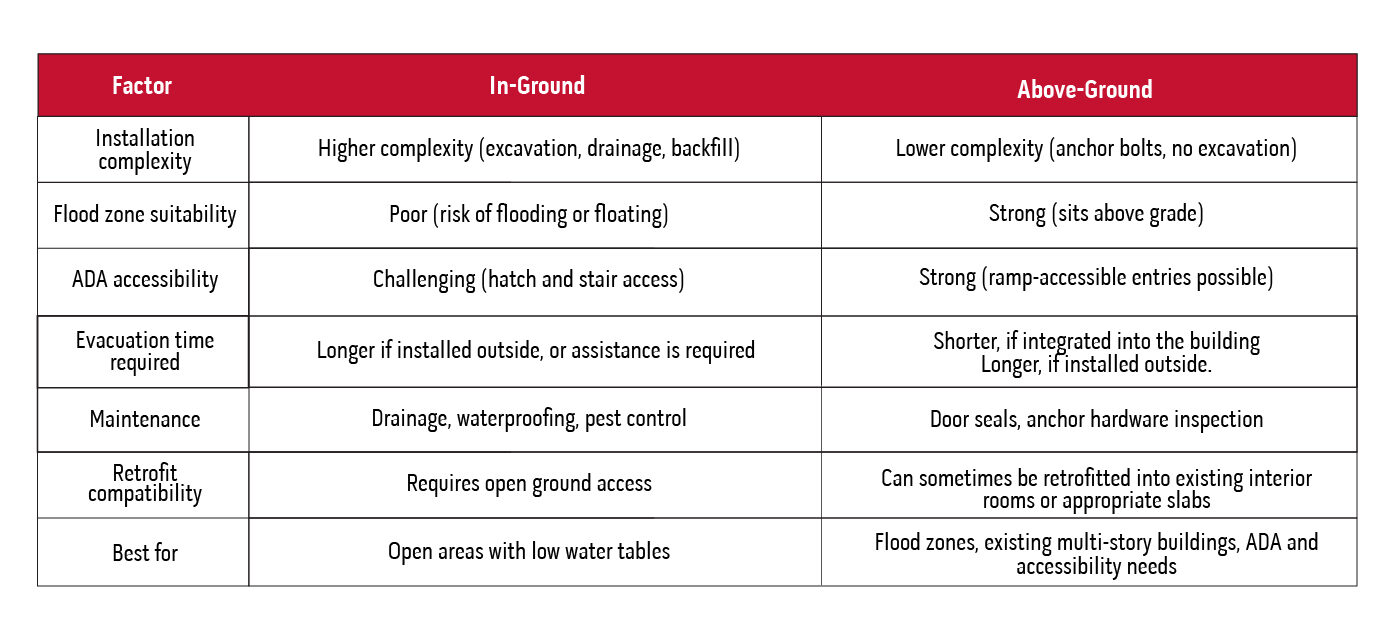 According to the ADA Standards for Accessible Design, above-ground commercial tornado shelters provide better ADA accessibility than in-ground units because above-grade entries can be built to wheelchair-accessible ramp standards. In contrast, underground access hatches require stair descent, which excludes many mobility-limited occupants.
Factors That Often Get Overlooked
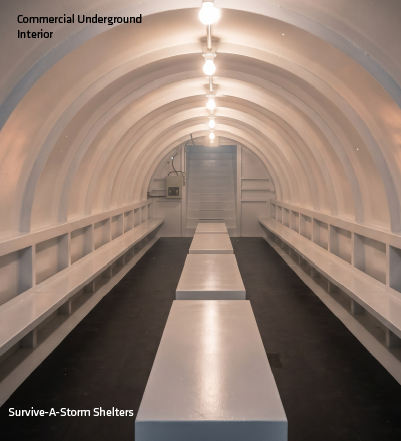
Post-storm egress is one of the most underestimated risks with in-ground shelters. Debris can pile over the hatch and trap occupants inside after the storm passes. Above-ground shelters can also be blocked, but are generally easier to clear from outside. Both shelter types require ventilation systems that balance fresh air intake with debris exclusion. For shelters that may hold occupants for 30 minutes or longer, lighting, seating, and air filtration matter more than most buyers expect. Employee compliance is another real variable: staff who have never practiced the evacuation route during drills are slower to respond when it counts.
Pro Tip: Run at least one timed evacuation drill per year and measure how long it takes your full team to reach the shelter. If any employee takes longer than your average warning lead time, shelter placement or signage needs to change.
Commercial Tornado Shelter Cost Breakdown
Typical Price Ranges by Shelter Type
In-ground tornado shelters for commercial use can cost up $100,000 for a 20- to 50-person unit, more than $100,000 for a 50- to 200-person unit, and even higher for large-capacity community shelters. Above-ground steel safe rooms for commercial occupancy tend to have slightly lower material costs but may require structural reinforcement of an existing building. Installed costs for above-ground units in the 20- to 50-person range typically fall between $60,000 and $100,000, with larger units scaling up.
Important to note: Commercial tornado shelter costs vary significantly from project to project. Factors such as shelter type, occupant capacity, site conditions, excavation requirements, accessibility needs, permitting, and regional labor costs can all affect the final price. Because of these variables, FEMA does not publish standard shelter pricing. The ranges provided here are intended as general planning estimates only. The most accurate way to determine project costs is to evaluate your facility's specific requirements and obtain quotes from multiple qualified shelter providers.
Hidden Costs Buyers Miss
In-ground tornado shelters cost more than above-ground models in most projects because excavation, drainage installation, and backfill are labor-intensive site work costs that above-ground installations do not incur. Above-ground shelters may require concrete foundation modifications or the removal of interior walls. Both types require engineering fees, building permits, modifications for ADA compliance, if applicable, safety signage, and maintenance. These line items could add 15 to 25 percent to initial quotes.
FEMA Grant Funding Opportunities
The FEMA Hazard Mitigation Grant Program (HMGP) has historically provided funding for up to 75 percent of eligible tornado shelter project costs in presidentially declared disaster areas. A $200,000 project, for example, could qualify for up to $150,000 in federal funding. The FEMA Building Resilient Infrastructure Communities (BRIC) program offers a similar cost-share for qualifying facilities. Schools, municipalities, and government-adjacent facilities tend to have the strongest grant eligibility. Both in-ground and above-ground shelter types can qualify if they meet FEMA P-361 standards.
Q: Can a private business qualify for FEMA shelter grants?
Private businesses can qualify for HMGP and BRIC grants when the shelter serves a community function or is located in a presidentially declared disaster area. Your State Hazard Mitigation Officer determines eligibility. Shelters that serve employees and the public tend to have stronger cases. Check with your state emergency management agency before assuming you do or do not qualify.
Choosing Between an In-Ground and Above-Ground Commercial Tornado Shelter
Three site-specific factors resolve most of the complexity of the comparison: whether your facility is in a flood zone, whether your existing structure can support a reinforced room, and whether large-group capacity across a wide campus is the primary need.
Schools and Large Assembly Buildings
Schools face the strictest occupancy and accessibility requirements because student populations include children, mobility-limited individuals, and high total occupant counts. ICC 500 places specific requirements on assembly occupancies, and many state education codes layer additional standards on top. Above-ground reinforced safe rooms integrated into new school construction are the most common solution. In-ground community shelters are worth evaluating for campuses with large outdoor gathering areas where interior safe rooms cannot be built close enough to all occupied zones.
Warehouses and Industrial Facilities
Large open-floor warehouses without interior partition walls are high-risk environments because there are no protected interior spaces, and the clear-span roof structure is vulnerable to uplift. Above-ground, standalone steel shelter pods installed near high-occupancy zones are the dominant solution here. In-ground units installed in adjacent parking areas also work well when the travel distance stays within the 13-minute warning window.
Offices and Multi-Tenant Commercial Buildings
Above-ground reinforced safe rooms are typically the practical choice for multi-story office buildings. Retrofitting an interior core room, such as a lower-level stairwell enclosure or interior storage room, into an ICC 500-compliant safe room is often the most cost-effective path for existing structures. In-ground shelters are rarely feasible in existing urban multi-story buildings because there is no accessible ground-level footprint for excavation.
Key Takeaway: Start your shelter selection process with a site assessment, not a product comparison. Soil conditions, water table depth, flood zone status, occupant count, and ADA obligations will eliminate most options before you ever request a quote. The comparison table above provides a quick filter. Your site conditions give you the final answer.
Choosing between an in-ground and above-ground commercial tornado shelter comes down to your site, your occupants, and your compliance requirements — not a general preference for one design over the other. The right shelter is the one that gets every person in your facility protected within your available warning window, meets your local code requirements, and fits the physical realities of your property. Survive-A-Storm Shelters has helped businesses, schools, and facilities across Tornado Alley make this decision, and our team can assess your specific site conditions, occupant count, and budget to help you identify the right solution. Contact us today to request a free consultation and take the guesswork out of one of the most important safety decisions your business will make.
Frequently Asked Questions About In-Ground and Above-Ground Commercial Tornado Shelters
Which is safer, an in-ground or above-ground tornado shelter?
Both can achieve the same level of protection when properly engineered. In-ground shelters eliminate above-grade wind exposure because the surrounding earth absorbs wind pressure and stops flying debris before it reaches the shelter walls. Above-ground shelters eliminate the risk of flooding and water infiltration and are generally better for ADA accessibility. The safer choice for your facility depends on your site conditions, water table depth, flood zone status, and occupant needs rather than a universal ranking of one type over the other.
What is the difference between FEMA P-361 and ICC 500 for commercial shelters?
FEMA P-361 is a federal design guide that qualifies shelters for FEMA grant funding. ICC 500 is the enforceable construction code standard adopted by local building departments. Both in-ground and above-ground commercial shelters can comply with both standards. Your jurisdiction may require one, the other, or both, depending on your facility type and whether you are seeking federal grant funding. Schools and public assembly buildings often face additional state-level requirements beyond these federal standards.
How much does a commercial tornado shelter cost?
In-ground commercial tornado shelters can cost up to $100,000 for a 20- to 50-person unit, more than $100,000 for 50- to 200-person units, and even higher for large-capacity installations. Above-ground steel safe rooms for similar occupancy ranges typically run $60,000 to $100,000 for smaller units, with larger units scaling comparably. Both types incur additional costs for engineering fees, permits, ADA modifications, signage, and maintenance.
Should I choose an in-ground or above-ground commercial tornado shelter?
There is no universal best option. In-ground shelters are often a strong choice for large campuses, open sites, and areas with low water tables because the surrounding earth provides natural protection from wind and debris. Above-ground shelters are often preferred for facilities in flood-prone areas, sites with accessibility requirements, and existing buildings where excavation would be difficult or disruptive. Both types can be designed to meet FEMA P-361 and ICC 500 requirements. The right choice depends on factors such as site conditions, occupant count, travel distance, accessibility needs, budget, and local code requirements. A site assessment is usually the fastest way to determine which option makes the most sense for your facility.
Can a private business qualify for FEMA storm shelter grants?
Yes, in certain circumstances. Private businesses can qualify for the FEMA Hazard Mitigation Grant Program and BRIC funding when the shelter serves a community function or is located in a presidentially declared disaster area. Your State Hazard Mitigation Officer determines eligibility. Shelters that serve both employees and the general public tend to have the strongest cases. Contact your state emergency management agency to confirm current program availability and eligibility requirements before assuming you do or do not qualify.
How many people can a commercial tornado shelter hold?
Both in-ground and above-ground commercial shelter types are available in configurations ranging from 20 persons to over 1,000 persons. Per-occupant cost decreases significantly, as capacity increases, due to material efficiency at scale. Shelter capacity must be matched to your total occupant load under ICC 500 requirements, and facilities with high or variable occupant counts — such as schools, warehouses, or retail locations — should size for peak occupancy rather than average daily headcount.
How long does it take to install a commercial tornado shelter?
Above-ground safe rooms typically have shorter installation timelines because they require anchor bolt installation rather than excavation, backfill, and drainage work. In-ground shelters require more site preparation and can take longer to complete, depending on soil conditions, water table depth, and local permitting timelines. Both types require a building permit and engineer-stamped documentation before installation begins. Working with an experienced shelter installer who is familiar with local permitting requirements is the most reliable way to keep the project on schedule.
What are the ADA requirements for commercial tornado shelters?
Above-ground commercial safe rooms can be built with wheelchair-accessible ramp entries that comply with the ADA Standards for Accessible Design. In-ground shelters present greater accessibility challenges because hatch and stair access excludes many mobility-limited occupants. Facilities with employees or visitors who use wheelchairs or have limited mobility should prioritize above-ground shelter designs with ramp-accessible entries. ICC 500 and local building codes may impose specific accessibility requirements depending on your facility type and occupancy classification.
How far should employees have to travel to reach a commercial tornado shelter?
The National Weather Service issues tornado warnings with an average lead time of roughly 13 minutes. Shelter placement should ensure that every employee can reach the shelter within that window under real evacuation conditions, not ideal ones. Running a timed evacuation drill with your full team is the most reliable way to verify that your shelter placement works. If any employee consistently takes longer than your average warning lead time to reach the shelter, placement, signage, or drill frequency needs to change.
Do commercial tornado shelters require annual inspections?
No. Neither FEMA P-361 nor ICC 500 requires an annual inspection by a third party, and no governing body routinely enforces annual shelter inspections. However, an annual visual inspection by a manager on-site is a good practice and should be part of the shelter's regular maintenance program.
For in-ground shelters, this may include checking drainage systems (if equipped), looking for signs of water intrusion, and inspecting for pests or other conditions that could affect usability. For above-ground shelters, doors, vents, and anchoring components should be inspected to ensure they function properly and are free of damage or obstructions.
Facilities should also keep records of inspections, maintenance activities, and tornado drills. Maintaining this documentation can help demonstrate that the shelter is being properly maintained and remains ready for use during an emergency.
Author