

CATEGORIES:
How Tornado Shelters Boost Home Resale Value: ROI Explained Simply
February 27, 2026
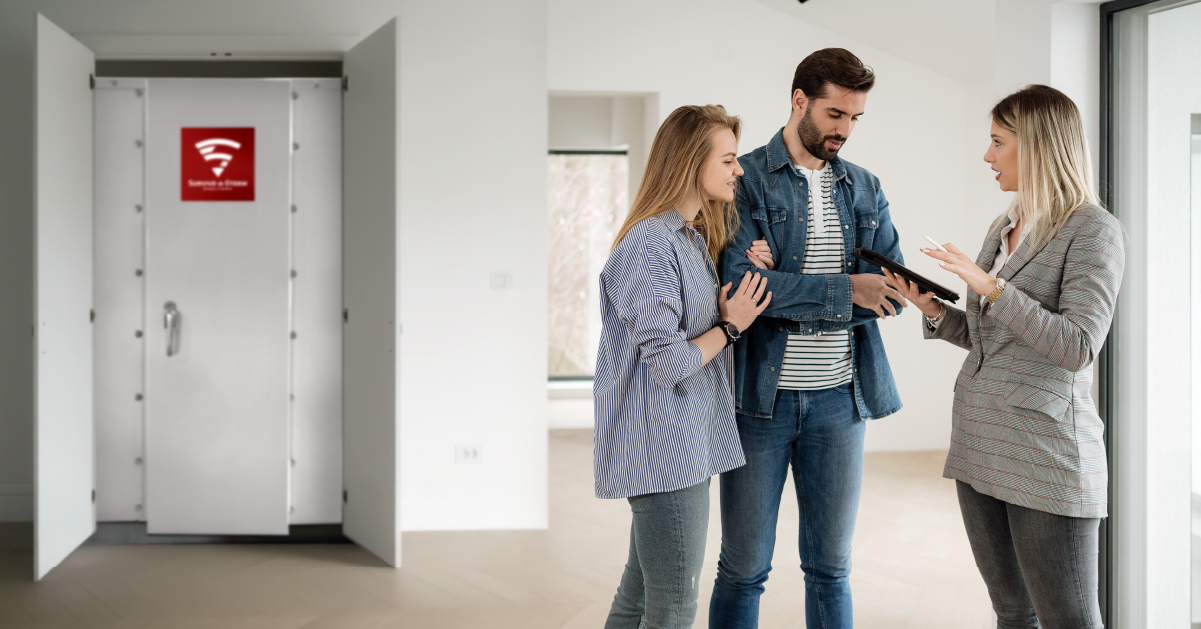
You've probably wondered whether installing a tornado shelter is just an expense or an actual investment. The short answer is that it depends entirely on where you live and what type of shelter you choose. In tornado-prone regions, shelters can add thousands to your home's value and help it sell faster. In low-risk areas, you might struggle to recoup your costs.
We're breaking down the real numbers behind tornado shelter ROI so you can make a confident decision based on facts, not fear or guesswork.
Do Tornado Shelters Actually Increase Home Value?
Yes, tornado shelters increase home value in areas where tornadoes are a regular concern. But the keyword is "regular." Does your region experience tornado warnings multiple times a year? Buyers actively look for homes with shelters. If tornadoes only make local news once a decade, then shelters become a curiosity rather than a selling point.
Data from regional real estate markets shows homes with tornado shelters built to FEMA and ICC 500 standards in high-risk states often see measurable increases in appraised value, commonly ranging from a few thousand dollars to more than $15,000. Homes in Tornado Alley states like Oklahoma, Kansas, and parts of Texas would see an increase in value on the higher end of that range, where buyer demand for shelters is strongest. Homes in moderate-risk zones might also see value increases, though typically smaller. In low-risk areas, the impact on value could be negligible.
The area known as Tornado Alley is fluidly defined, and many experts have identified an area called Dixie Alley where tornadoes also regularly occur.
Key Takeaway: Geographic tornado risk determines whether your shelter is a premium feature or just an interesting add-on. Check your area's annual tornado frequency before calculating expected returns.
Here's what matters beyond the price increase. Homes with shelters in tornado-prone markets often sell faster than comparable homes without them, because buyers view storm protection as a meaningful safety advantage. The National Association of Realtors research consistently shows that safety features influence buyer decisions and improve a home's marketability. Faster sales reduce carrying costs, which improves your effective ROI.
What To Expect In A Home Value Increase
The value increase from a tornado shelter varies dramatically based on your zip code's tornado risk profile. Understanding these ranges helps you set realistic expectations.
High-Risk Market Examples
In the state of Texas, which has more tornadoes than any other state, or in cities like Moore, Oklahoma, and Joplin, Missouri (both of which have been devastated by EF5 tornadoes), homes with tornado shelters designed to meet FEMA guidance and ICC 500 standards command significant premiums. A $250,000 home in these markets can appraise for $12,500 to $20,000 more with a properly installed shelter. Buyers in these areas view shelters the same way they view garages: essential, not optional.
Real estate agents in Oklahoma City report that homes with shelters receive multiple offers more frequently, and buyers are willing to negotiate less on price when a quality shelter is included.
Moderate-Risk Market Expectations
In moderate-risk states, where tornadoes occur, but aren't annual certainties, the value bump is typically smaller. A $250,000 home might see an increase of $5,000 to $10,000. Shelters are considered nice-to-have features rather than deal-makers.
One important note about geography is that today's moderate risk could be tomorrow's high risk. States like Arkansas and Tennessee used to be considered moderate-risk but are now considered high-risk for tornadoes.
Low-Risk Market Reality
In regions where tornadoes are rare news events (most of the Northeast, Pacific Northwest, and Southwest), shelters add minimal resale value. You might recover 50%–75% of your installation costs at best, with the exception of buyers relocating from high-risk areas who specifically want tornado protection regardless of local conditions.
Breaking Down The Real ROI Numbers
 ROI calculation requires some math. The basic formula is this: (Home value increase minus installation cost) divided by installation cost equals your ROI percentage.
The Basic ROI Formula
Example for a high-risk market: You own a $250,000 home in Moore, Oklahoma. You install an above-ground garage tornado shelter for $6,000. The shelter increases your home's value by $12,500 based on local market demand. Your ROI: ($12,500 - $6,000) / $6,000 = 108% return on investment.
Same scenario in a moderate-risk area with a 2.5% value increase: ($6,250–$6,000) / $6,000 = 4% return. Still positive, but barely.
Hidden Financial Benefits
Insurance premium reductions add significant value over time. According to the Insurance Information Institute, homeowners in Oklahoma and Kansas can receive 10%–20% annual discounts on their homeowners’ insurance premiums when they install a shelter that meets FEMA guidelines and ICC 500 standards. On a $1,500 annual premium, that's $150–$300 saved every year.
Over a 10-year ownership period, those savings add $1,500 to $3,000 to your effective ROI. Combined with faster sale times (which reduce mortgage, utility, and maintenance costs while your home is listed), the hidden benefits can equal 15%–25% of your initial investment.
Pro Tip: Ask your insurance company about specific discount percentages before installation. Some insurers require pre-approval or documentation showing the shelter meets FEMA or ICC 500 standards to qualify for premium reductions. Get the discount terms in writing to avoid surprises.
When The Math Doesn't Work
There are a few honest scenarios where you won't recoup costs. The first is installing an expensive underground tornado shelter in a low-risk area. Next, is adding a shelter to a starter home under $150,000, where the percentage increase in value may be modest. And finally, planning to sell within 2-3 years, which doesn’t allow enough time to accumulate insurance savings or market appreciation.
In these situations, the primary benefit of a tornado shelter isn’t measured in dollars. Having a tornado shelter gives you confidence that your family has a place to go when seconds matter. Many homeowners choose to install shelters for the peace of mind, daily security, and protection they provide, knowing that safety is an investment that holds value regardless of resale timing.
Why Location Changes Everything For Resale Value
Tornado frequency statistics directly correlate with buyer demand for shelters. States in Tornado Alley, like Oklahoma, Kansas, Nebraska, and northern Texas, consistently rank in the highest in annual tornado frequency. (For example, an average of 50-100+ tornadoes wouldn't be uncommon.) Buyers in these markets have personal experience with tornado warnings and understand the life-saving value of shelters.
Peripheral risk states like Missouri, Arkansas, Tennessee, and Iowa also experience regular tornado activity, though typically at lower frequency. (Averages there could range from 20-50 tornadoes per year.) Shelters are appreciated but not universally demanded. Low-risk coastal and mountain states rarely experience tornadoes, making shelters a hard sell unless the buyer has specific concerns.
Regional insurance costs also play a role. In states where tornado damage claims are common, insurers charge higher premiums, making the insurance discount from shelter installation more valuable. This difference creates a geographic multiplier effect where high-risk areas benefit from both increased home value and from larger insurance savings.
Which Shelter Type Offers The Best Value?
Above-ground tornado shelters can deliver a better ROI. They cost less than underground bunkers, install faster, and buyers appreciate the convenience of accessing the shelter without going outside during severe weather.
In-Home Safe Rooms
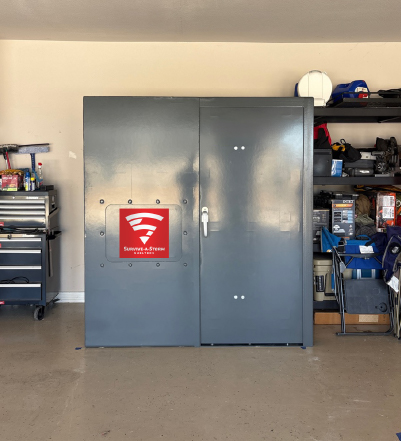
For homeowners who want maximum convenience without sacrificing living space, an in-home safe room is one of the most practical solutions. These tornado shelters are designed to be integrated directly into the home during construction or remodeling, often installed in a master closet, laundry room, or garage.
Because the system is built from prefabricated steel panels, installation is fast and efficient, often completed in hours instead of the multi-day process required for poured-concrete safe rooms. The design for these storm shelters also allows for flexible sizing and layouts, so builders and homeowners can create a shelter that fits seamlessly into the floor plan without losing valuable square footage.
These shelters are rated for EF5 tornadoes, with winds up to 250 mph. They provide immediate, ground-level access from the main living areas, which is especially important for families with children, elderly occupants, or anyone with mobility concerns. In-home shelters combine life-saving protection with everyday practicality and resale value.
Underground Tornado Shelters
Underground tornado shelters offer the highest perceived safety but will cost more when installed. In moderate-risk areas, this higher cost often exceeds the value increase you'll see at resale. Many people consider an underground tornado shelter the gold standard for safety because being below ground provides inherent protection from extreme winds and debris. These shelters are typically constructed with durable steel or concrete and designed to be corrosion-resistant, leakproof, and long-lasting.
If your property conditions allow, an underground shelter can be an excellent option. However, the idea that the only safe place during a tornado is underground is a common myth. In many areas, high water tables, rocky soil, or flood-prone conditions make underground installations impractical or more expensive. Excavation requirements and drainage considerations can also increase total project costs.
Reserve underground shelters for high-risk markets where buyers specifically seek maximum protection.
Above-Ground Tornado Shelters
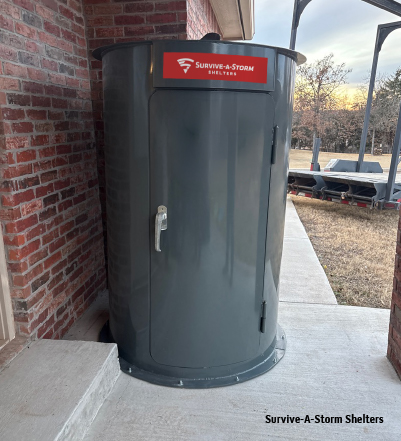
Above-ground tornado shelters provide a highly effective and convenient alternative to underground units. Built from reinforced steel and anchored to a concrete slab according to ICC 500 design requirements, these shelters are engineered to withstand the extreme winds and debris impacts associated with tornadoes.
One of their biggest advantages is accessibility. With no stairs to navigate, they are ideal for families with elderly members, children, or individuals with mobility challenges. Above-ground shelters can be installed in garages, basements, or as standalone units on the property, giving homeowners flexible placement options. They also typically cost less than underground shelters and can be installed much faster.
Some homeowners are concerned about space usage or visibility, since above-ground units occupy existing square footage. However, modern designs offer compact footprints and integrated options that blend into the home.
What Real Estate Agents Say Buyers Want
Real estate agents in tornado-prone markets understand how buyers actually behave during showings and negotiations. The features that make buyers willing to pay premium prices include:
- Easy access from main living areas (especially bedrooms)
- Built to FEMA P-320 or ICC 500 standards
- Capacity to accommodate families and pets
- Ventilation options
Shelters with these features can add more value than basic code-compliant models. (At times 15%–25%.) Buyers are willing to negotiate less on the overall home price when they see a well-equipped shelter that clearly prioritizes safety and comfort.
Q: Do buyers actually ask about tornado shelters during home tours?
In high-risk markets, absolutely. Some real estate agents in Oklahoma report that shelter questions come up in 70-80% of showings. Buyers want to know the shelter's age, capacity, whether it was designed and installed to meet safety standards, and whether warranties transfer. Having documentation ready during showings demonstrates professionalism and builds buyer confidence.
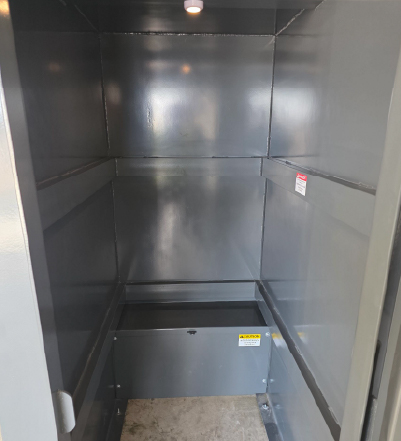
Agents also note that homes with shelters photograph well for listings. A clean, well-lit shelter creates a strong safety narrative in marketing materials.
How Installation Choices Impact Your Investment
Installation quality directly affects resale value. Buyers and appraisers look for specific documentation to validate your shelter's value.
Standards That Matter To Buyers
FEMA P-320 and ICC 500 represent the gold standard for residential tornado shelter design. These standards establish engineering criteria that ensure your shelter can withstand extreme winds (250 mph) and debris impacts associated with EF5 tornadoes, according to FEMA guidelines. Shelters that are properly designed and installed to meet these standards provide documented proof of their protective capability.
ICC 500 is the consensus standard referenced by building codes and widely recognized by engineers, inspectors, and appraisers. FEMA P-320 provides guidance specifically for residential safe rooms and is equally respected when supported by proper engineering and installation documentation. Manufacturers that are members of the National Storm Shelter Association (NSSA) also follow industry best practices and established testing protocols, which can further strengthen buyer confidence.
Without documentation showing the shelter was designed and installed to meet recognized standards, your shelter is just a reinforced room. Appraisers can't justify adding value without third-party validation of protection standards. (And that third-party validation may come at the homeowner's expense.)
Hint: ask for sealed engineering drawings to verify design standards. And remember, there is no "certification" for tornado shelters. Verification of a shelter's safety comes from testing, engineering, and compliance with published standards.
Professional vs DIY Installation
Professional installation can cost more than DIY kits but adds significantly more resale value. Buyers want to see building permits, final inspections, and contractor warranties. These documents prove that your shelter meets local building codes and was installed according to the manufacturer's specifications.
DIY installations without permits could actually raise red flags that can delay or kill sales.
Key Takeaway: Professional installation with proper documentation isn't optional if you care about resale value. The 20-30% premium you pay upfront protects your entire investment and gives buyers confidence in your shelter's quality and safety standards.
Tornado shelters boost home resale value when installed strategically in appropriate markets. Calculate your expected ROI using your home's value, local tornado risk, and realistic appraisal increases. Factor in insurance savings and faster sale times for a complete financial picture.
Choosing the right tornado shelter ultimately comes down to your home, your location, and your family’s specific needs. The most important factor is selecting a shelter that meets safety standards and fits seamlessly into your daily life.
That’s where Survive-A-Storm makes the difference. With a full range of FEMA- and ICC-compliant underground, above-ground, and in-home panelized shelters, our team can help you find the right solution for your property, budget, and protection goals. From design guidance to installation, we focus on making storm safety simple, reliable, and accessible, so you can protect what matters most with confidence. Contact us today!
Frequently Asked Questions About Tornado Shelter ROI and Home Value
How much value does a tornado shelter add to my home?
In high-risk tornado areas like Oklahoma and Kansas, shelters designed and installed to meet FEMA and ICC 500 standards often add measurable value to a home. In many cases, appraised value increases can range from a few thousand dollars to $20,000 or more, depending on home price, shelter type, and local buyer demand. Moderate-risk regions may see smaller increases, while low-risk areas may recover only part of the installation cost.
Will a tornado shelter help my home sell faster?
Yes, in tornado-prone markets. Homes with shelters that meet FEMA and ICC 500 standards tend to attract more buyer interest because storm protection is viewed as a meaningful safety feature. In high-risk areas like Moore, Oklahoma, and Joplin, Missouri, real estate agents report that many buyers specifically ask about shelter features during home tours.
Can I get an insurance discount with a tornado shelter?
Many insurance companies in high-risk states offer annual premium discounts for homes with shelters designed and installed to meet FEMA standards. Discounts vary by insurer and location, but may range from 5%-20% in some states. On a $1,500 annual premium, that's $75-$300 saved per year. Over 10 years, these savings could add $750-$3,000 to your effective ROI. Contact your insurance provider before installation to confirm available discounts and the requirements.
Which type of tornado shelter offers the best resale value?
Above-ground shelters and in-home safe rooms typically offer better ROI than underground bunkers. They cost less to install, provide easier accessibility (especially for elderly or disabled family members), and buyers appreciate not having to go outside during severe weather. Underground shelters work best in high-risk markets where buyers specifically seek maximum protection.
Does DIY installation affect my home's resale value?
Yes, it can. Professional installation with proper permits, engineering documentation, and inspections could add more value than DIY kits. Buyers and appraisers need documentation showing the shelter was designed and installed to meet recognized standards. Unpermitted DIY installations can raise concerns during inspections and may reduce buyer confidence.
What standards do buyers look for in tornado shelters?
Buyers should look for shelters designed and installed to meet FEMA P-320 and ICC 500 standards. These standards establish criteria for wind resistance and debris impact protection. Ask for engineering sealed drawings as documentation. Shelters manufactured by NSSA member companies and supported by engineering sealed drawings will carry greater credibility with buyers and appraisers.
When doesn't a tornado shelter make financial sense?
The math doesn't work in three scenarios: installing expensive underground shelters in low-risk areas, adding shelters to starter homes under $150,000 (the percentage increase is too small), or planning to sell within 2-3 years (insufficient time to accumulate insurance savings). If you're installing purely for family safety with no resale concerns, that's valid—just don't expect strong financial returns.
Author