

CATEGORIES:
Commercial Tornado Shelter Pricing: What Affects Cost and What to Expect
July 17, 2026
One of the first questions organizations ask when planning for severe weather is, "How much will a commercial tornado shelter cost?" It's an important question, but one that doesn't have a simple answer.
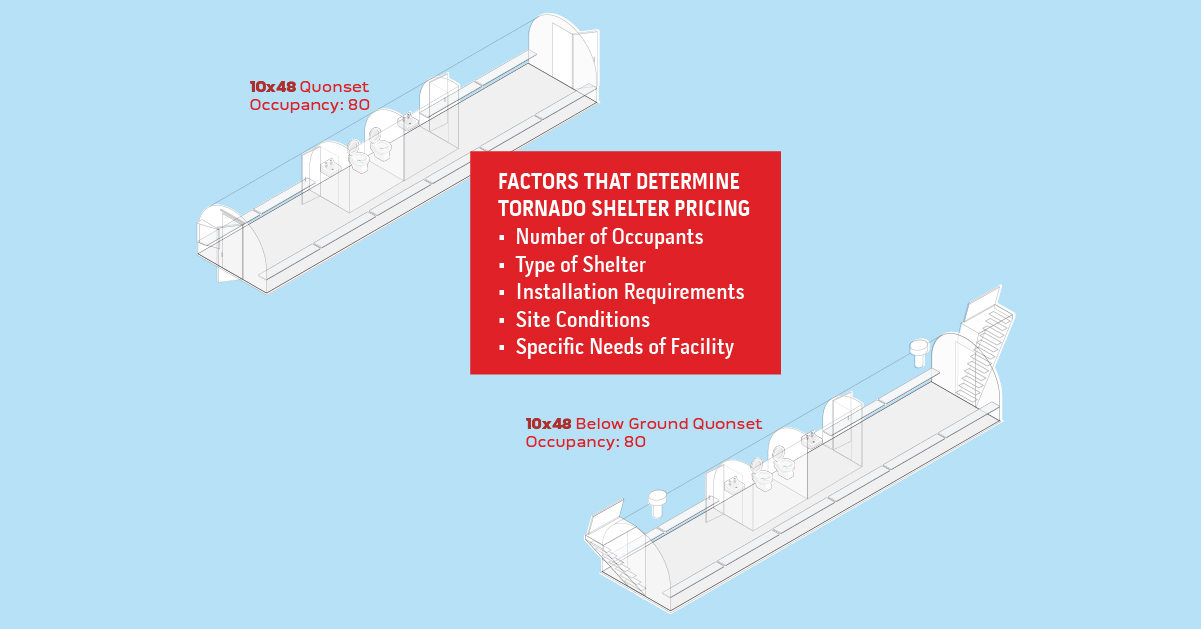
Unlike many commercial products, tornado shelters aren’t one-size-fits-all. Pricing depends on a combination of factors, including the number of occupants, the type of shelter, installation requirements, site conditions and the specific needs of your facility. A shelter designed for a small office will have very different requirements than one intended to protect employees in a manufacturing plant, warehouse or school.
While you may find published price ranges online, those estimates rarely account for the variables that have the greatest impact on a project's final cost. Understanding those factors is often more valuable than comparing generalized numbers that may not apply to your facility.
We'll explain what influences commercial tornado shelter pricing, discuss the decisions that can affect your budget, and help you understand what information you'll need to receive an accurate project-specific quote.
Why Commercial Tornado Shelter Pricing Varies So Much
Two commercial tornado shelters may appear similar at first glance, but have very different costs. That's because pricing isn't determined by a single factor. It reflects the shelter's size, intended occupancy, installation requirements and the conditions at the project site.
For example, a shelter designed to protect 25 employees in an existing office building will likely have different engineering and installation requirements than one intended to protect several hundred people at a manufacturing facility or school. Even projects with similar occupant capacities can vary in cost based on factors such as available space, foundation requirements, accessibility needs and local building requirements.
The type of shelter also plays a role. Above-ground and underground shelters each present distinct design and installation considerations, while new construction projects may offer opportunities that aren't available when adding a shelter to an existing facility.
Because every project is different, generalized price ranges often tell only part of the story. They may not account for the factors that strongly influence the final cost of a commercial tornado shelter.
Understanding these variables before requesting quotes can help you compare proposals more effectively and develop a budget that's based on your facility's actual requirements rather than a broad industry estimate.

The Biggest Factors That Affect Commercial Tornado Shelter Pricing
Several variables influence the cost of a commercial tornado shelter, but a handful of factors have the greatest impact on the final project budget. Understanding these early in the planning process can help you set realistic expectations and make it easier to compare quotes from different manufacturers.
Shelter Size and Occupant Capacity
Occupant capacity is one of the most significant factors affecting commercial tornado shelter pricing. Shelters designed to protect more people require more space, more materials and, in many cases, more complex engineering.
Determining the appropriate shelter size begins with estimating how many people may need protection during a tornado event. That number should include employees, visitors, customers, contractors or students, depending on the facility. Once the required occupancy is established, the shelter can be designed to meet applicable space requirements while accommodating the operational needs.
Because occupant capacity influences nearly every aspect of the project, it serves as the foundation for developing an accurate budget.
Above-Ground vs. Underground Shelters
Both above-ground and underground commercial tornado shelters provide effective protection when properly designed and installed, but they involve different construction and installation considerations.
Above-ground shelters are often installed within or adjacent to an existing facility and may require foundation modifications, anchoring systems and coordination with the building's layout. Underground shelters introduce additional considerations such as excavation, drainage, soil conditions and site access.
The right choice depends on the facility, available space, operational requirements and project goals rather than cost alone.
Site Preparation and Foundation Requirements
No two installation sites are exactly alike. Existing concrete, available space, utilities, drainage, soil conditions, and access for delivery equipment can all influence the amount of site preparation required before installation begins.
For retrofit projects, existing conditions may require modifications to support the shelter. New construction projects, on the other hand, may allow the shelter and foundation to be incorporated into the overall building design from the beginning.
Evaluating site conditions early in the planning process helps identify potential challenges before construction begins.
Accessibility, Ventilation and Other Project Requirements
Commercial shelters often have project-specific requirements that extend beyond the shelter structure itself. Accessibility considerations, ventilation, lighting, emergency communications and occupancy requirements may all influence the final design.
Schools, healthcare facilities, manufacturing plants and other occupancies may also have unique operational needs that affect the project scope. These requirements are evaluated during the design process to help ensure the completed shelter meets both the organization's needs and applicable standards.
Shipping and Installation
Commercial tornado shelters are significant structures that must be transported, delivered and installed at the project site. Shipping distance, site accessibility, equipment requirements and installation logistics can all affect the total project cost. Larger shelters or sites with limited access may require additional planning and specialized equipment to complete the installation safely and efficiently.
While these are some of the biggest factors affecting commercial tornado shelter pricing, every project combines them differently. Understanding how each one applies to your facility can help you establish a realistic budget and compare proposals with greater confidence.
Comparing Commercial Tornado Shelter Options
Every commercial tornado shelter project has its own priorities. Some organizations are planning for new construction, while others need to add protection to an existing facility. Available space, site conditions, occupancy and operational needs all influence which shelter solution makes the most sense.
Understanding these considerations early can help narrow your options before requesting project-specific pricing.
New Construction vs. Existing Facilities
Installing a commercial tornado shelter during new construction offers greater flexibility because the shelter can be incorporated into the overall building design. Foundation work, utility connections and site planning can all be coordinated as part of the construction process.
Adding a shelter to an existing facility is also a common option, but it may require additional planning to accommodate the available space, existing utilities, access routes and structural conditions. Evaluating these factors early helps identify the most practical location and modifications that may be needed before installation.
Neither approach is inherently better than the other. The right solution depends on the facility, project goals and long-term operational needs.
Steel Tornado Shelters vs. Concrete Storm Shelters
Steel and concrete are both used in commercial tornado shelter construction, and each offers advantages depending on the project requirements.
Steel modular tornado shelters are manufactured off-site and delivered ready for installation, which can help streamline construction schedules and minimize disruption at the project site. Concrete shelters may be constructed on-site or assembled from precast components, depending on the design and application.
Organizations should evaluate the shelter as a complete system. Factors like occupant capacity, available space, installation requirements, maintenance expectations and project schedule often have a greater influence on the final decision than the construction material by itself.
Budgeting Beyond the Shelter Itself
When planning a commercial tornado shelter project, it's important to look beyond the cost of the shelter itself. Installation, site work and project-specific requirements all contribute to the overall investment.
Understanding these costs early can help you develop a more realistic budget and reduce the likelihood of unexpected expenses during the project.
Engineering and Permitting for Tornado Shelters
Commercial tornado shelters are engineered structures designed to meet applicable standards and project requirements. Depending on the location and scope of the project, permitting, engineering documentation and local plan reviews may all be part of the process.
Building code requirements and permitting procedures vary by jurisdiction, so it's important to understand local requirements before construction begins.
Site Work
Site preparation varies from one project to another. Existing concrete, grading, excavation, utility relocation, drainage improvements, or foundation work may all be necessary depending on where the shelter will be installed.
For projects incorporated into new construction, some of this work can often be coordinated as part of the overall site development. Retrofit installations may require additional preparation based on existing conditions.
Installation
Installing a commercial tornado shelter involves more than simply placing the structure on-site. Delivery logistics, equipment access, anchoring, utility connections and final inspections all contribute to the installation process.
Discussing installation requirements early with your shelter manufacturer can help identify potential challenges and improve project planning.
Long-Term Inspection and Maintenance
Like other commercial building systems, tornado shelters should be inspected and maintained according to the manufacturer's recommendations. Periodic inspections can help verify that doors, hardware, ventilation systems and other components remain in proper working order and that the shelter is ready if it's ever needed.
Considering long-term maintenance as part of the overall project budget can help organizations plan for the shelter throughout its service life.
Funding Opportunities for Eligible Projects
For some organizations, grant funding may help offset the cost of a commercial tornado shelter. While not every project or applicant will qualify, federal programs are available to support certain hazard mitigation initiatives.
Two of the primary FEMA programs include the Hazard Mitigation Grant Program (HMGP), which provides funding after a presidentially declared disaster to help reduce future risk, and the Building Resilient Infrastructure and Communities (BRIC) program, which supports eligible pre-disaster mitigation projects that strengthen community resilience.
Eligibility requirements, funding availability and application procedures vary by program and project. Organizations interested in pursuing grant funding should review the current program requirements and determine whether their proposed shelter project may qualify.
If grant funding is part of your planning process, discussing those plans with your shelter manufacturer early can help ensure the project is designed to meet applicable standards and documentation requirements.
Preparing for a Commercial Tornado Shelter Quote
Requesting a quote is one of the best ways to understand the cost of a commercial tornado shelter for your facility. While every project is different, having a few key details available can help your shelter manufacturer provide a more accurate estimate and identify any project-specific considerations early in the planning process.
Before requesting a quote, be prepared to discuss:
- Facility type: Is the shelter for a school, healthcare facility, manufacturing plant, warehouse, office or another type of commercial building?
- Occupant capacity: How many people will need protection during a tornado event?
- Project type: Is the shelter being incorporated into new construction or added to an existing facility?
- Preferred shelter location: Will the shelter be located inside the building, adjacent to it or elsewhere on the property?
- Site conditions: Are there any known space limitations, access challenges or site considerations that could affect installation?
- Project timeline: Is there a target completion date or construction schedule the shelter project needs to support?
Providing this information early helps manufacturers evaluate your project's requirements, identify potential challenges and develop a proposal based on your facility's specific needs rather than broad industry assumptions.
If you're planning a commercial tornado shelter project, Survive-A-Storm can help you evaluate your facility's requirements and recommend a solution that fits your occupancy, site conditions and operational needs. Contact our team to request a project-specific quote and start planning with confidence.
Frequently Asked Questions About Commercial Tornado Shelter Pricing
How much does a commercial tornado shelter cost?
Commercial tornado shelter pricing varies based on several factors, including occupant capacity, shelter type, installation requirements, site conditions and project-specific design needs. Because every facility has different requirements, the most accurate way to determine cost is through a project-specific quote.
What factors have the biggest impact on commercial tornado shelter pricing?
The biggest cost drivers typically include the number of occupants the shelter must protect, whether the shelter is above ground or underground, site preparation requirements, installation complexity and any project-specific features such as accessibility or utility connections.
Are above-ground commercial tornado shelters less expensive than underground shelters?
Not necessarily. Above-ground and underground shelters have different construction and installation requirements, and the most cost-effective option depends on your facility, available space, site conditions and project goals. A project-specific evaluation is the best way to compare options.
Can a commercial tornado shelter be added to an existing building?
Yes. Many commercial tornado shelters are installed as retrofits to existing facilities. The feasibility and cost depend on factors such as available space, foundation requirements, access for installation and the building's existing conditions.
Do commercial tornado shelters have to meet FEMA or ICC standards?
Many commercial tornado shelters are designed to meet the requirements of ICC 500, the standard for the design and construction of storm shelters. Some projects, particularly those pursuing certain grant opportunities, may also reference the Federal Emergency Management Association's FEMA P-361 for guidance. Your shelter manufacturer can help determine which standards apply to your project.
Are grants available for commercial tornado shelters?
Some public entities, schools and other eligible organizations may qualify for hazard mitigation funding through programs such as FEMA's Hazard Mitigation Grant Program (HMGP) or Building Resilient Infrastructure and Communities (BRIC) program. Eligibility depends on the applicant, the project and current program requirements.
How long does it take to install a commercial tornado shelter?
Project timelines vary depending on the shelter's size, site preparation requirements, permitting and installation complexity. New construction and retrofit projects may also have different schedules. Your shelter manufacturer can provide a timeline based on your project's specific requirements.
How do I get an accurate quote for a commercial tornado shelter?
The best way to receive an accurate quote is to provide information about your facility, the number of occupants who need protection, whether the project is new construction or a retrofit, and any known site conditions or project requirements. This allows the manufacturer to develop a proposal tailored to your specific project.
Author