

CATEGORIES:
Why 2026 Is The Year To Invest In A Commercial Tornado Shelter
January 28, 2026
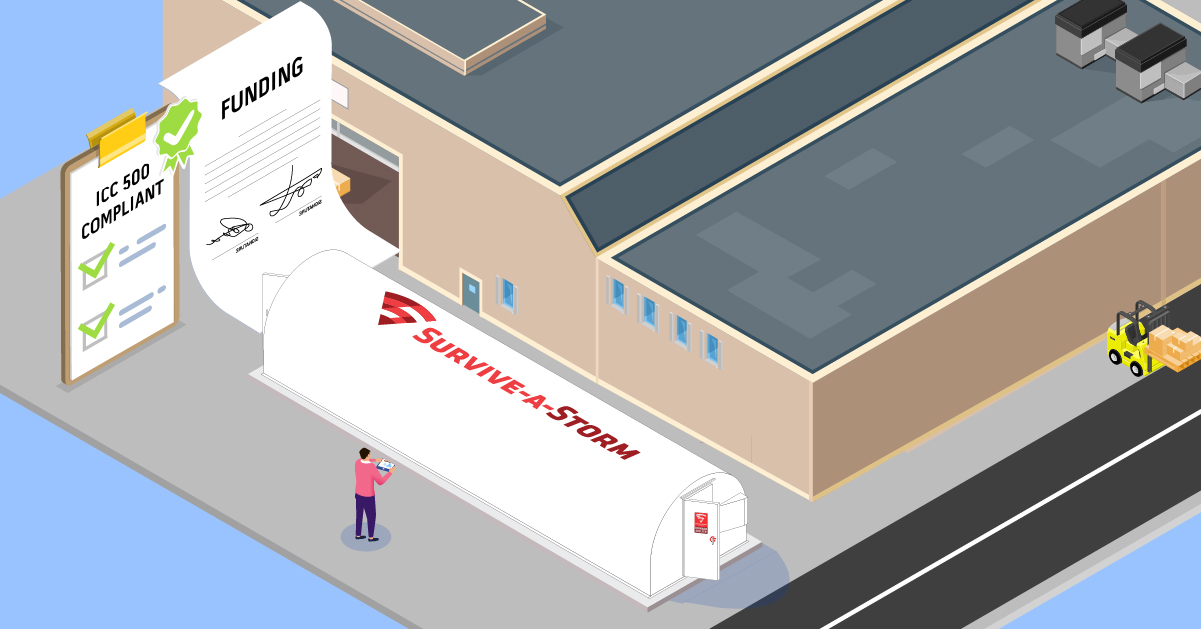
If you watch the weather, you're probably wondering two things right now:
- Is 2026 going to be a bad tornado year?
- Do businesses really need a shelter now, or can this wait?
The answer to these questions boils down to three forces converging at once: a sharper understanding of shifting tornado risk, code and standard updates that create clear specs, and funding/insurance dynamics that make the math easier to defend in a budget meeting.
The short answer is this: you get a safer workplace, an easier compliance path, and a better financial story if you plan a shelter in the 2026 cycle rather than scrambling later. That's not marketing spin; it's what facility managers see on the ground: sirens wail, the power flickers, pellets of hail ping on the metal roof, and you have minutes to move people. A compliant safe room turns that chaos into a practiced routine, protecting lives and ensuring business continuity when disaster strikes.
What Changes In 2026 Make Tornado Shelters A Timely Investment?
The changes in 2026 that make tornado shelters a timely investment include wider adoption of the newest ICC 500 tornado shelter standard, active FEMA mitigation grant cycles that fund safe rooms, and insurers' tighter pricing for severe convective storm exposure. To put it in simple terms: the specs are clearer, the help is available, and the cost risks show up in premiums and downtime models, making disaster preparedness a competitive priority for forward-thinking companies.
This matters because severe convective storms have driven multi-billion-dollar losses in recent years across the United States, and NOAA's records show busy springs are now common, not outliers. You don't need a doom forecast to make a smart decision. You need a plan that turns seasonal exposure into a fixed, manageable cost while building organizational resilience against increasing climate-related risks.
The 2026 planning cycle is a practical moment in construction and technology development. Vendors have updated designs to ICC 500-2023, incorporating product innovation and advancements in shelter durability. Building officials are familiar with submittals. And procurement windows line up with grant calendars and government funding initiatives. Miss that rhythm, and you risk paying more for rush engineering, crane reschedules, and change orders that didn't need to happen.
If you wait another year, you can expect two things: a higher chance of a price bump (steel, freight, labor) and the very real possibility of a code trigger on your next renovation that forces a faster, less controlled shelter purchase. A calm 2026 still favors action because you control the timeline, specs, and financing, rather than reacting mid-season, putting you ahead of the demand curve while competition for quality installations remains manageable.
Key Insight: 2026 isn't about fear; it's about timing and opportunity. Safety standards matured, grant money is live, and insurers reward risk reduction; those three factors together rarely line up this cleanly. For companies prioritizing disaster preparedness, this represents a window of opportunity to expand internal security measures and enhance workplace safety.
What A Commercial Tornado Shelter Is And How It Protects
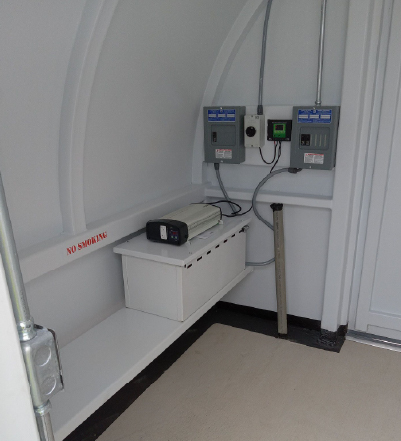
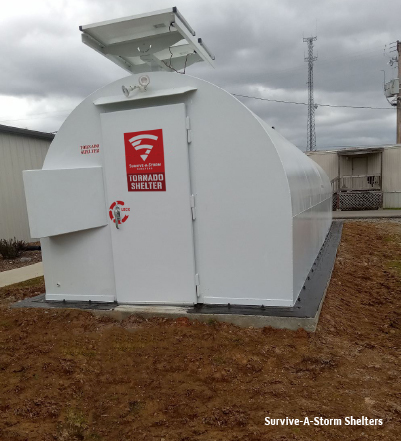
A commercial tornado shelter is a hardened refuge engineered to ICC 500 and guided by FEMA P-361 to protect people from extreme winds and flying debris during tornado warnings. Protections might include bolt-down steel or reinforced concrete with tested doors, anchored foundations, and venting that keeps air moving while the wind roars outside, purpose-built solutions designed for survival in the most severe disasters.
The difference between a purpose-built shelter versus "hunkering down in an interior room" shows up when debris hits. ICC 500 requires impact tests that launch a 15-pound 2x4 like a spear at tornado speeds, and compliant assemblies take that hit without penetration. Roofs are designed so they don't peel away. Doors stay latched. You get a space that stays intact while the building around it may not. This durability is a testament to engineering quality and the role of rigorous safety standards in protecting communities.
Capacity planning is straightforward. ICC 500 sets minimum floor area per person—plan ~5 square feet per occupant for tornado use, allocate more for wheelchairs, and reserve space for critical gear like first-aid and a weather radio. Lighting should have backup power, and signage should be obvious under stress. The route should be clear and the door hardware should feel familiar in hand, so that people are walking fast, and not frantic. This clarity of design and functionality directly impacts survival rates when seconds count.
Important: Don't call a bathroom or a storage closet a "shelter" unless it's engineered, anchored, and documented to ICC 500 standards. Inspectors and insurers will ask for stamped drawings and test data, and, more importantly, your people deserve protection that holds under impact. Families, employees, and stakeholders all have an interest in verified shelter performance backed by established regulations—not improvised solutions that compromise security.
Safe Room Vs Shelter
"Safe room" and "tornado shelter" get used interchangeably in business conversations, but there's a practical distinction worth knowing. A safe room usually means the space follows FEMA P-361 best practices for life safety, while a tornado shelter references ICC 500's enforceable performance criteria tied to building codes. Day to day, you want a solution that checks both boxes: designed and tested to ICC 500 with the documentation FEMA expects. This distinction matters for preparedness planning across industries and sectors where regulatory compliance drives decision-making.
Plan on a short stay. Tornado warnings often last 30–60 minutes. That's why capacity, ventilation, and door egress matter more than creature comforts. That's also why placement matters. The best shelter is close enough that workers in steel-toed boots can reach it in a couple of minutes from the far end of the floor. This design priority reflects both functionality and trust in emergency protocols.
Core Standards To Know for Storm Shelters
ICC 500, the consensus standard for storm shelters, sets the structural, impact, and egress requirements that manufacturers and engineers must meet. You'll see references to design wind speeds up to 250 mph in the highest risk zones and to debris impact testing at tornado velocities. FEMA P-361 explains how to apply those requirements in real projects, from siting and capacity to operations and maintenance. Together, they turn a "strong room" into a defensible life-safety asset with paperwork that stands up during permitting, audits, and renewal negotiations—creating a framework that benefits facility managers seeking clear compliance pathways and government support for resilience initiatives.
What The 2026 Tornado Risk Outlook Means For Your Facility
The 2026 tornado risk outlook helps your facility set drill schedules, assess shift coverage, and right-size shelter capacity based on when your region sees the most severe weather and how your county's hazard maps classify design winds. That translates into smarter placement and a practical activation plan tied to actual warning lead times—essential elements of comprehensive disaster preparedness that protect both people and operations.
Start with NOAA's Storm Prediction Center (SPC) outlooks. Facilities managers watch marginal/slight/enhanced risk days because that's when crew counts and break coverage change. Pair that with your floor plan: how far do employees walk from each workstation to the shelter? If the answer is more than a few minutes across busy aisles with forklift horns chirping, you need secondary muster points or a second shelter location. This awareness of risks and implications drives better planning outcomes across all applications.
Regional Shifts To Watch In 2026
Risk still hits the Plains hard, but recent years have seen more days with tornadoes across the Mid-South and the lower Ohio and Tennessee Valleys, areas often called "Dixie Alley." That matters for businesses in Arkansas, Mississippi, Alabama, Tennessee, Kentucky, and adjacent states that once treated tornado days as rare. It also matters to parts of the Midwest and Great Lakes that pick up early-season events. The bottom line is that if your county sits in a 200–250 mph design wind zone, you want ICC 500 compliance, not a best-effort retrofit. These regional patterns reflect broader climate trends and the increasing frequency of severe weather events, making resilience planning a priority across North America.
The expansion of tornado activity into new regions represents both a challenge and a growth opportunity for companies offering shelter solutions. Understanding these geographical shifts helps businesses in multiple countries and sectors anticipate demand and allocate resources accordingly, factors that influence market share and long-term competitiveness in the disaster preparedness segment.
Risk Signals That Drive Business Decisions
Three cues drive decisions: the number of severe weather days in your busy months, the warning lead time in your county, and the vulnerability of your building type. Metal buildings and tilt-up warehouses can sustain significant debris damage; retail sites with wide glass frontages can see wind and shards. Your exposure doesn't require a monster outbreak. One 20-minute warning on a Tuesday can cost a full day of operations if your plan turns into a scramble. A shelter cuts that downtime because people move once and stay put until the all-clear, protecting lives while maintaining operational continuity that builds trust with employees and stakeholders.
Understanding these risks helps leadership establish clear priorities and allocate resources toward preparedness solutions that deliver measurable benefits. Interest in quantifying disaster-related downtime has grown significantly as companies recognize the direct link between security investments and business resilience.
Which Shelter Type Fits Your Workplace Or Community Site
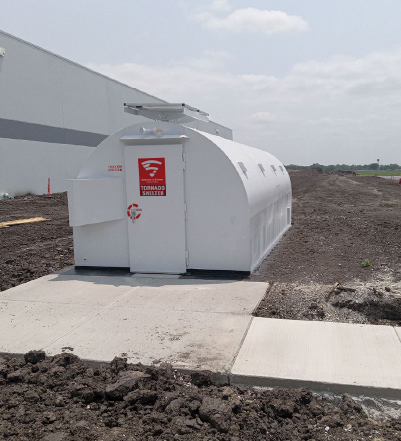
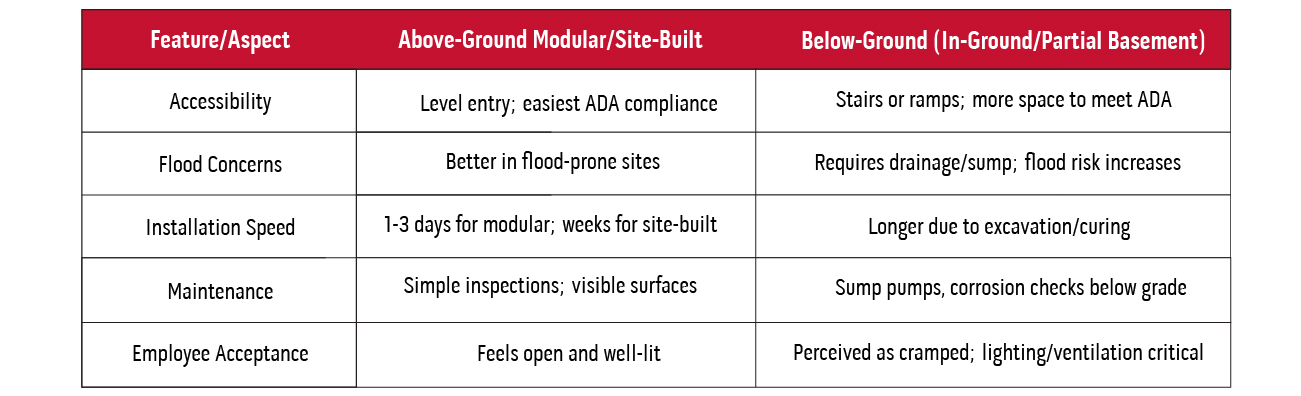
The shelter type that fits your workplace or community site depends on occupancy size, building layout, accessibility needs, and flood exposure, which means you'll choose between above-ground modular or site-built rooms and below-ground options based on site and operational factors. Most businesses opt for above-ground steel or concrete rooms because they can be installed quickly, meet ICC 500 requirements, and remain accessible to everyone. Innovations in modular design have accelerated this trend across multiple sectors.
Here's how to sort it out without overthinking it.
Above-Ground Vs Below-Ground
Above-ground shelters sit on or tie into your slab, which simplifies ADA access and keeps flood risk low if the slab stays dry. Below-ground rooms win on thermal stability, but water tables, drainage, and stairs complicate both permitting and use.
How 2026 Codes, Standards, And Incentives Shape Your ROI
Codes, standards, and 2026 incentives shape ROI by defining when shelters are required, opening grants that can offset 25–75% of costs, and providing insurers with a basis for pricing risk reductions into premiums or terms. That combination moves a shelter from "nice-to-have" to a line item that protects people and stabilizes budgets, a shift that reflects the growing recognition of disaster preparedness as both a security measure and a financial strategy.
First, codes and regulations. Jurisdictions that adopt the 2024 International Building Code may reference ICC 500-2023 for tornado shelters. Some occupancies, especially schools and certain community facilities in high-risk regions, face explicit requirements when building new or substantially renovating. Even if your private facility isn't mandated, the same compliance proof helps during permitting and creates credibility with carriers and auditors. The development of these regulatory frameworks across different countries demonstrates the priority placed on life safety in the future of building design.
Second, grants and government partnerships. FEMA's Building Resilient Infrastructure and Communities (BRIC) program and Hazard Mitigation Grant Program (HMGP) have funded community and safe room projects with real dollars. States announce application windows, and awards can be substantial enough to make a $400,000 project a $150,000 net expense. Timing matters: pre-application, benefit-cost analysis, and local sponsorship all take calendar time. That's a 2026 reason to start now—leveraging these initiatives before demand peaks and competition for funding intensifies.
Third, insurance and finance benefits. Severe convective storms are driving more claims now, and underwriters are paying closer attention to life-safety controls. While premium credits vary, risk engineering teams respond well to documented ICC 500 compliance, updated plans, and drills. On the finance side, shelters count as building improvements, so talk to your CPA about depreciation and whether any portion fits accelerated treatment under your specific tax scenario. These financial advantages represent measurable support for companies making strategic investments in workplace security.
Pro Tip: Ask your state emergency management office for a 15-minute call on safe room funding. You'll learn the next application window, required documents, and whether previous grant recipients in your county succeeded, intel that cuts months off your process and positions your project ahead of the growth in applications expected as awareness spreads.
Q: Do businesses have to add a tornado shelter by code in 2026?
A: Some new buildings and major renovations in high-risk regions must include ICC 500 shelters, especially in schools and certain community occupancies. Private workplaces outside those categories rarely face a mandate, but compliant shelters still speed permitting, improve insurance conversations, and reduce liability exposure, factors that influence the long-term competitiveness and reputation of safety-conscious organizations.
What A Commercial Shelter Costs In 2026 And How To Budget
Commercial tornado shelter costs in 2026 range roughly from $1,100 to $2,500 per occupant, installed, for modular above-ground units; site-built rooms and complex retrofits run higher, depending on foundation work, utilities, and finishes. A 150-person modular shelter might cost $185,000–$315,000 installed, while a larger 300-person room with duplicate doors, emergency lighting, and ventilation upgrades can land in the $400,000–$650,000 range. Understanding this pricing structure helps companies budget appropriately and positions them to capitalize on market expansion trends in the shelter segment.
Scope drives variance fast. Freight and crane time add real dollars—a single missed crane day can cost $2,000–$4,000 to reschedule. If your slab needs thickening or a new footing, concrete and rebar can add $20,000–$80,000 to the cost. That's why you want apples-to-apples quotes with the same wind speed rating, door count, and foundation details on every bid. This clarity in cost comparison supports better decision-making and ensures quality outcomes regardless of competitive pressure.
Cost Drivers To Model
Plan by occupant load first. ICC 500 capacity rules set minimum square feet per person, which means a headcount update can shrink or grow the room and the price. Material choice (steel plate thickness, concrete wall design), anchorage and rebar, mechanical ventilation, emergency lighting and backup power, floor coatings, benches, and signage round out the bill. Locally, permitting and required third-party inspections may add $2,000–$10,000. And don't forget about travel. Remote sites pay more for freight and crew lodging. These factors influence both upfront investment and long-term maintenance, considerations that impact the total cost of ownership and organizational resilience planning.
Budgeting And Procurement Timeline
Here's a realistic 2026 timeline you can run: four to eight weeks for assessment and stamped drawings, two to six weeks for permitting and procurement, then one to three days for modular installation or several weeks for site-built. Many teams schedule slab work and delivery around slow production days or weekends to keep operations humming. Waiting until March to order for spring installs forces you into weather delays and crane crunches when everyone else wants the same Saturday. With growing demand and heightened interest in disaster preparedness solutions, early planning becomes a competitive advantage—especially as sales cycles compress and lead times extend across the sector.
Total Cost Of Ownership
Owning a shelter stays inexpensive if you set a simple rhythm. Annual inspections check door hardware, gaskets, and anchor bolts. Drills take 15 minutes a quarter and pay back in calm behavior during real warnings. Add a few consumables, like a weather radio, flashlights, and a first-aid kit. Compared to tornado downtime, tornado shelter maintenance is trivial; many operations model $5,000–$50,000 in lost output per hour, and a messy shelter activation can burn multiple hours. These operational benefits make shelter ownership a sound investment in both safety and business continuity—protecting families, employees, and company assets while reinforcing trust in leadership priorities.
Q: What's the cost per square foot for a business safe room?
A: Budget by occupants first, not square footage, because ICC 500 ties size to headcount. If you want a rough conversion, modular above-ground rooms often land in the $200–$400 per square foot installed range, depending on doors, ventilation, and foundation work.
How To Compare Vendors And Verify Compliance Quickly
Compare tornado shelter vendors by requesting engineer-sealed drawings, third-party ICC-500 debris-impact test reports, installation references, and clear warranty/service terms that name parts and labor. When those four items look solid, you're usually dealing with a pro. This due diligence protects your organization from substandard products and ensures the shelter delivers the functionality and durability promised, critical factors when lives depend on performance during disasters.
Start with proof. You want stamped structural drawings for your site, not generic cut sheets. Ask for test reports from accredited labs showing that wall, roof, and door assemblies passed tornado missile and pressure tests. Call two recent customers with similar facilities and headcounts. This verification process builds confidence and trust while revealing the vendor's track record across different industries and applications.
Red flags jump out once you know where to look. Be wary of "rated door" claims with no lab report, vague quotes that omit foundations or freight, and lead times that compress drawings, permits, and delivery into a fantasy schedule. If a vendor hesitates to show submittals or dodges questions about anchorage details, walk. In a sector experiencing growth and innovation, distinguishing between quality providers and opportunistic competitors requires this level of scrutiny.
Pro Tip: Send every finalist the same two-page scope with headcount, design wind speed, door count, foundation assumptions, and delivery window. Matched scopes cut quote spreads from $100k illusions to real $10k–$20k differences you can evaluate—providing the clarity needed for sound procurement decisions that support both immediate security needs and long-term preparedness goals.
How To Plan And Install A Shelter With Minimal Disruption
Plan and install a commercial tornado shelter with minimal disruption by sequencing five stages: assessment, design, permitting, installation, and training, around your slow days and known maintenance windows. That lets you keep lines running while you harden safety—an approach that balances operational priorities with the urgent need for enhanced disaster preparedness and resilience.
Hazard and capacity assessment: Map travel distances from work areas and confirm headcount by shift. Decide on one larger room or two smaller rooms based on those walking paths.
Design and submittals: Get stamped drawings for structure and anchorage. Confirm door swing, clearances, and egress meet code in your jurisdiction. This technical development phase ensures compliance with evolving regulations and establishes the foundation for successful implementation.
Permitting and procurement: File early. Order doors and hardware right away; those lead times can bottleneck projects. Strong partnerships with local building departments and vendors accelerate approvals and support timely delivery.
Site prep: Thicken slabs or pour footings if needed. Mark routes and stage equipment to keep aisles clear.
Delivery and installation: Book cranes for off-hours. Stage materials near the dock. Assign one internal point of contact to greenlight adjustments fast. This coordination minimizes disruption while maintaining quality control—essential when managing complex projects in active facilities.
Inspection and commissioning: Walk with the inspector, test latches under load, and verify signage and lighting work on backup power.
Training and drills: Run a brief orientation at the start of every shift. Post routes on breakroom walls and by the time clocks. Hold a 10–15 minute drill each quarter, timed to your region's peak season. These preparedness exercises build muscle memory and trust, ensuring employees and families feel confident in the shelter's role during actual emergencies.
Where To Follow The 2026 NOAA Forecasts And Safety Guidance
Follow 2026 NOAA forecasts and safety guidance by checking SPC convective outlooks daily, monitoring your local NWS office for watches and warnings, and using redundant alerting—NOAA Weather Radio plus mobile alarms—to trigger shelter procedures. Build your training calendar around seasonal patterns in your region and coordinate with county emergency management on sirens and local guidance. This integration of technology and government resources represents best practice in disaster preparedness, ensuring your organization stays ahead of severe weather threats.
SPC Convective Outlooks And Risk Maps
SPC's Day 1–8 outlooks mark marginal, slight, enhanced, moderate, and high risk days. Facilities teams use those maps to pre-brief supervisors, stage door props for faster entry, and cancel optional outdoor work. Red polygons in mesoscale discussions signal a watch may be imminent—grab your weather radio, not just an app. This situational awareness supports rapid decision-making and reflects the increasing frequency of severe weather events that demand heightened vigilance across multiple sectors.
NOAA Weather Radio And Alerting
Apps are great, but redundancy saves you during a power blink. NOAA Weather Radios crackle even when the cell network stutters, and Wireless Emergency Alerts vibrate in pockets across the floor. Install one radio inside the shelter so the all-clear is unmistakable. Tape fresh batteries to the side. These low-tech solutions complement advanced warning systems and ensure functionality when digital infrastructure fails—a critical consideration in comprehensive disaster preparedness planning that protects lives regardless of conditions.
Local Emergency Management Coordination
County emergency managers will share siren policies, shelter recommendations, and post-storm procedures. Two quick emails align your plan with theirs and make contact easier if you ever need assistance after a storm. After a real event, request a damage survey from your local NWS; knowing where debris traveled helps refine your siting and drills. Building these partnerships strengthens community resilience and demonstrates your organization's commitment to public safety. These arepriorities that benefit both your employees and the broader town or region you serve, fostering trust and establishing your company as a leader in disaster preparedness initiatives.
Ready to protect your team and secure your operations? Connect with one of our commercial tornado shelter experts today to talk about Do's and Don'ts. We'll walk you through the site assessment, compliance requirements, available funding options, and a timeline that aligns with your operational calendar. Whether you're evaluating a single-location shelter or planning installations across multiple facilities, our team brings the technical expertise and project experience to deliver a solution that meets ICC 500 standards and your budget. Don't wait until the next warning siren forces a decision; start the conversation now and take control of your 2026 preparedness plan. Contact us today or call 888-360-1492 to schedule your consultation.
Author