

CATEGORIES:
Fall Tornado Season Is Real: Why Fall Tornado Protection Matters
October 8, 2026
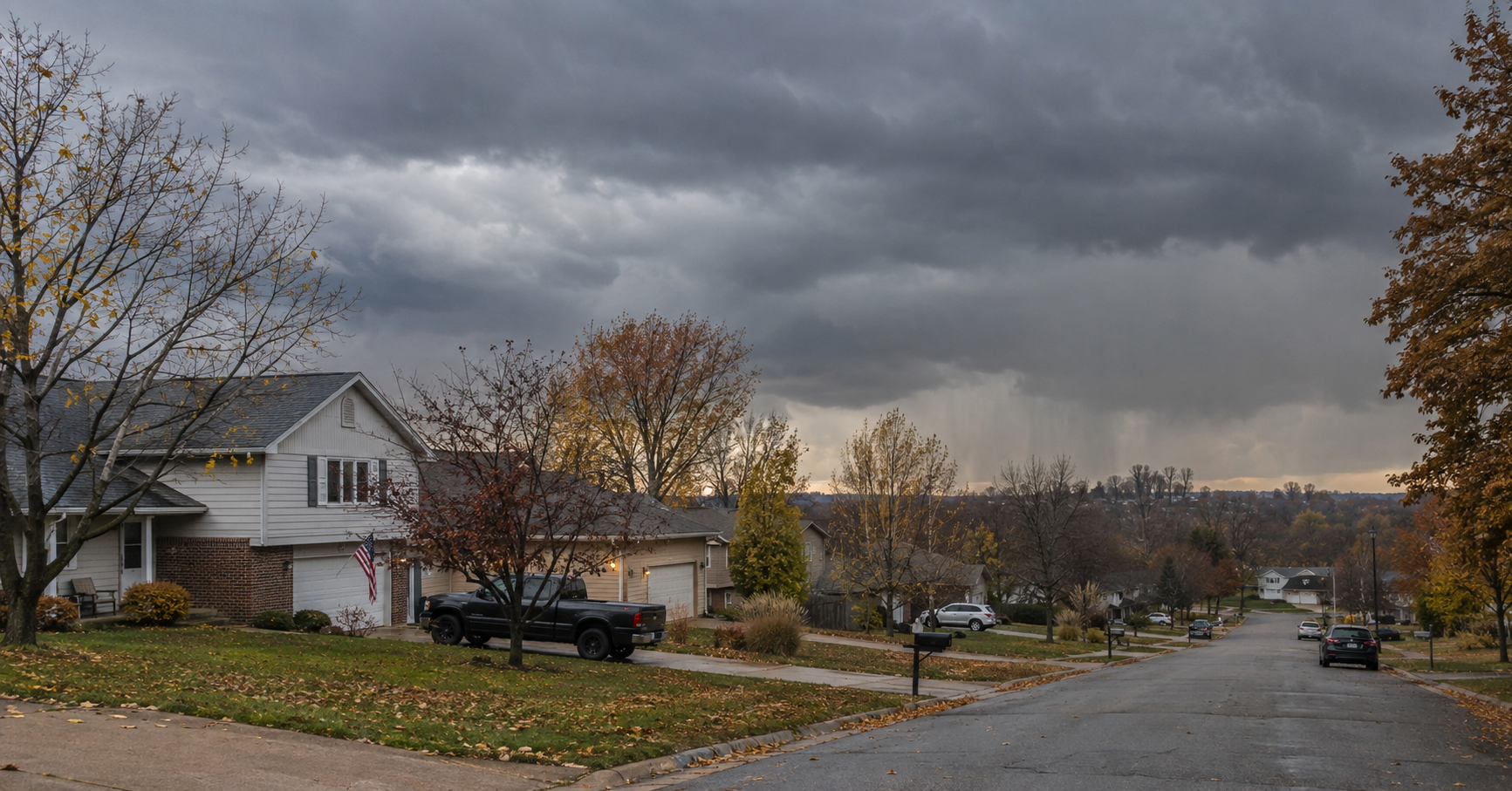
If you just learned that tornadoes happen in October and November, you're not alone. Most households in the United States associate tornadoes with April and May, put away their weather worries after summer, and never hear a word about the second tornado season. Meteorologists have tracked that second season for decades. The gap is in public awareness, not in the science.
Do Tornadoes Happen in the Fall?
Yes, and not just as rare flukes. The United States has a documented secondary tornado season that runs roughly from October through early December, with November as the historical center of activity. Meteorologists call this pattern bimodal, meaning tornado activity has two peaks in the calendar year: a large one in spring and a smaller, but very real one, in autumn.
Monthly tornado climatology from the NOAA Storm Prediction Center shows tornado counts declining through late summer, reaching a low point in early fall, then rising into a distinct November bump, particularly across the Gulf Coast and Southeast. This is not a new discovery or a recent climate quirk. The second season shows up in decades of tornado records.
If you're staring at a tornado warning in November and thinking that tornado season should be over, the honest answer is that tornado season never fully ends in the United States. It quiets down, shifts location, and returns each fall with a different personality than its spring counterpart.
When The Fall Tornado Season Peaks
The fall tornado season follows a predictable arc:
- October: Activity begins climbing as the first strong cold fronts push south into still-warm, humid air. Hurricane-related tornadoes also contribute during this month.
- November: The historical peak of the second season. Some of the most violent late-year outbreaks on record occurred in mid-to-late November.
- December: Activity tapers but does not vanish, especially in Gulf states like Mississippi, Louisiana, and Alabama, where warm, moist air lingers the longest.
Compare that to the familiar spring peak of April through June, when the Plains and Midwest see the year's largest outbreak totals. The spring season is bigger in raw numbers. But as we’ll cover below, several characteristics of the fall season can make tornadoes particularly dangerous.
Key Takeaway: Fall tornado season is a documented secondary peak in U.S. tornado activity, running roughly October through early December with November at its center. It is a recognized meteorological pattern, not an anomaly, and it deserves the same preparation as spring.
Why Do You Never Hear About The Second Season?
Feeling unsettled about being unknowingly vulnerable is a normal reaction, and missing the fall tornado season is not a personal failure. It's a predictable blind spot stemming from how tornado risk is communicated to the public.
Nearly everything in tornado awareness culture points at spring. Severe weather awareness weeks are often scheduled in late winter or spring. Schools commonly conduct tornado drills around the same time. News coverage clusters around the big spring outbreaks in Tornado Alley because that's when the most tornadoes occur.
Lower fall tornado counts compared to spring also feed a false impression that autumn risk is negligible. The second season produces fewer tornadoes overall, so it generates fewer headlines, fewer viral videos, and fewer reminders. By fall, the seasonal reminders that keep tornado preparedness top of mind have largely faded, even in areas where November brings a renewed tornado threat.
That awareness gap has a real cost. Families put the weather radio in a closet after August. Phone alert settings get silenced and forgotten. When a fall tornado warning arrives, it hits households that have stopped watching. Recognizing this now, before November, gives you time to prepare.
What Causes Tornadoes In Fall?
The simplest mental model for fall tornado season is this: fall is spring in reverse. The same three ingredients that fuel spring tornadoes—warm, moist air, incoming cold air, and strong winds aloft—reassemble every autumn as the seasons transition.
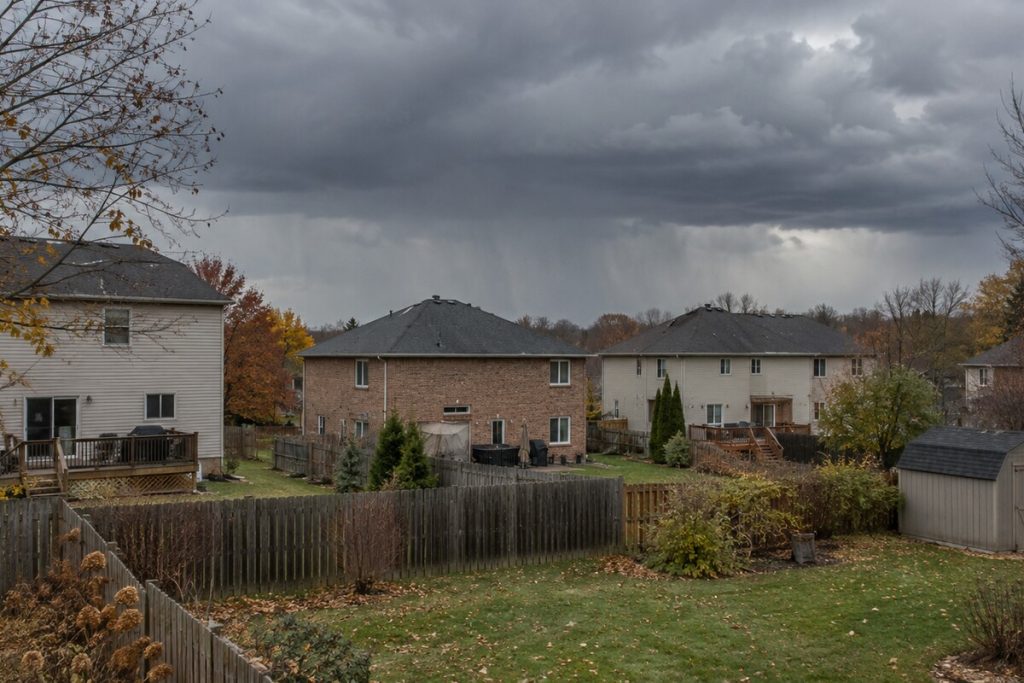 Spring In Reverse
In the spring, warm Gulf of Mexico air advances north and collides with retreating winter cold. In fall, the process flips. Strengthening cold fronts push south and slam into air that is still warm and humid from summer, because the Gulf of Mexico stays warm well into November. That collision creates atmospheric instability, which is the fuel thunderstorms need.
The second ingredient is the jet stream, the river of fast-moving air high in the atmosphere. The jet stream retreats north in summer and migrates back south in fall, bringing strong wind shear with it. Wind shear, or the change in wind speed and direction with height, is what helps thunderstorms develop rotation. When shear meets instability, ordinary storms can become rotating supercells, and supercells produce the most dangerous tornadoes.
Fall systems also tend to move fast. A stronger jet stream drives storm systems across states at highway speeds and beyond, which leaves less time to react once a warning is issued. Many fall tornadoes also form within squall lines, or quasi-linear convective systems (QLCSs). These tornadoes can spin up quickly, giving forecasters less lead time than classic supercell tornadoes.
The Hurricane Connection
Fall carries one tornado threat that spring doesn't: tropical systems. Landfalling hurricanes and tropical storms routinely spawn tornadoes in their outer rainbands, sometimes hundreds of miles inland from the coast. According to the National Hurricane Center, tornadoes are a recognized hazard of landfalling tropical cyclones, and some hurricanes have produced dozens of tornadoes across multiple states. Because peak Atlantic hurricane season runs through September and October, hurricane-spawned tornadoes overlap directly with the front end of fall tornado season, adding to totals in Texas, Louisiana, Florida, and the broader Southeast.
Q: How can there be a tornado when the weather is getting colder?
Tornadoes don't need summer heat. They need contrast. An unseasonably warm, humid fall day followed by a strong cold front is a classic tornado setup, because the clash between the two air masses creates instability, and the fall jet stream supplies the wind shear that makes storms rotate. Many November outbreaks began with locals commenting on how strangely warm it felt that morning.
Which States Face Fall Tornado Risk?
Fall tornado risk does not sit in the same place as spring risk. The geographic center shifts east and south, away from the classic Plains-centered Tornado Alley and into a region researchers call Dixie Alley, states like: Mississippi, Alabama, Louisiana, Arkansas, Tennessee, and Georgia.
Dixie Alley Takes Center Stage
The Southeast becomes the epicenter in fall for a simple reason: moisture in the Gulf. Warm, humid air stays available near the Gulf Coast long after the Plains have dried out and cooled down. When November cold fronts arrive, the Southeast is the region that still has fuel to burn. The Lower Midwest is not exempt, however. Strong November systems can produce violent tornadoes in Illinois, Indiana, and Ohio, as history has proven more than once.
| Region | Peak Fall Months | General Fall Tornado Risk |
| Southeast / Dixie Alley (MS, AL, LA, AR, TN, GA) | November, extending into December | Highest |
| Gulf Coast (TX coast, LA, FL Panhandle) | September, October (hurricane-related), November | High |
| Lower Midwest (IL, IN, OH, KY, MO) | Late October, November | Moderate, with occasional violent outbreaks |
| Southern Plains (OK, north TX) | October, early November | Moderate |
Risk levels are intended as a general comparison of regional fall tornado activity, not an official NOAA or National Weather Service risk classification.
Why Are Fall Tornadoes More Dangerous?
Fall tornadoes are not stronger than spring tornadoes on average. They are dangerous disproportionately for a different set of reasons.
- They strike after dark. Fall tornadoes in the Southeast often occur at night, when families may be asleep and unable to see the approaching storm.
- They move fast. A stronger fall jet stream can push storms along quickly, leaving less time to react when a warning is issued.
- They hide in rain. Rain-wrapped tornadoes, common in fall storm systems, can be invisible until impact, which makes visual confirmation an unreliable warning method.
- People aren’t expecting them. Public vigilance is at its yearly low, and the holiday season adds distraction.
- They hit vulnerable housing and terrain. Dixie Alley has heavy tree cover, hilly terrain that blocks sightlines, and the nation's highest concentration of manufactured housing.
The Nighttime Problem
Nighttime tornadoes are a real risk in the fall season. Sleeping families miss sirens and phone alerts, and they can’t see the storm coming. Fall's early sunsets push a larger fraction of tornadoes into those dangerous overnight hours, especially in the Southeast where many November tornadoes arrive between dusk and dawn.
Fall Tornado Protection: How to Prepare
Awareness is the foundation, but fall tornado protection comes down to solving a specific problem. When a tornado arrives at night, moving fast and hidden in rain, getting warned is key. Each piece of the plan below resolves a specific fall danger.
Why A Weather Radio Matters Most In Fall
In the fall, tornadoes frequently strike after dark, when phone alerts may go unheard, be silenced, or be delayed. That makes a NOAA Weather Radio, backed up by batteries, an important fall-specific tool. It works because mobile phones fail in predictable ways: do-not-disturb settings, dead batteries, disabled alerts, and coverage dead zones. Outdoor tornado sirens are designed to warn people who are outside, not to wake people who are sleeping indoors. A weather radio with a loud alarm tone sits on your nightstand and sounds off the moment the National Weather Service issues a warning for your area, whether you're asleep, the power is out, or the cell network is down.
It’s a good idea to layer your alerts, rather than relying on one source. Keep Wireless Emergency Alerts enabled on every phone in the house. Modern tornado warnings use a polygon system that targets only the specific threatened area, so alerts you receive are genuinely relevant to your location. The weather radio wakes you; the phone confirms details and timing.
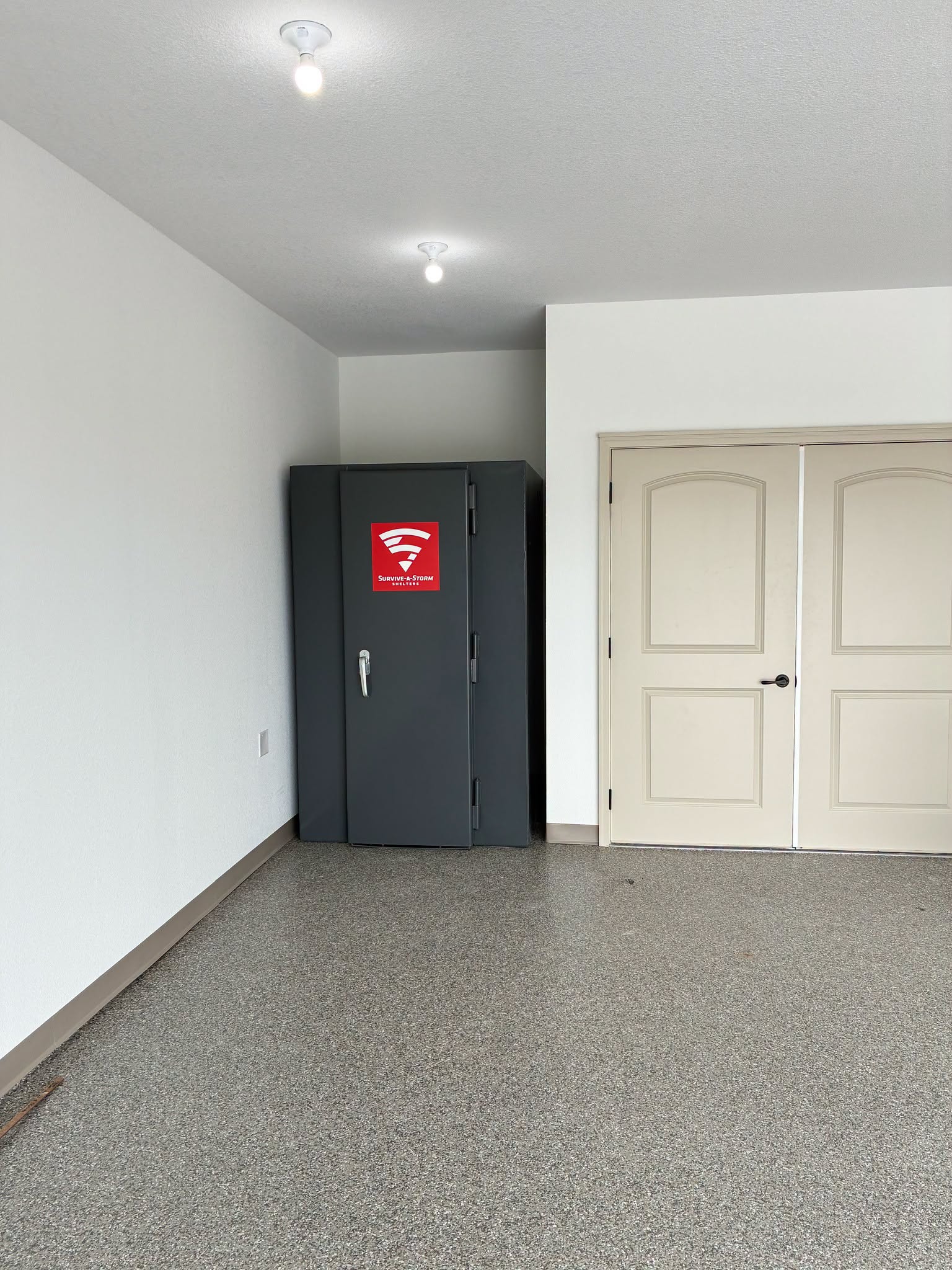
Decide on your shelter spot now, not during a warning, because fast-moving fall storms leave no time for on-the-spot decisions. The safest location is a compliant storm shelter. If you don't have one, a small interior room on the lowest floor, away from windows, such as a basement, closet or bathroom, may provide the best available protection. If you live in a mobile or manufactured home, identify a sturdy building or community shelter nearby before the season starts, since manufactured housing offers minimal protection even in weaker tornadoes. FEMA publishes safe room standards, and many states offer shelter rebate programs worth checking if you're considering a permanent shelter.
Pro Tip: Know the difference between a watch and a warning, and act differently for each. A tornado watch means conditions favor tornadoes in the coming hours: charge your phone, review your plan, and if you're in a mobile home, relocate to a sturdier shelter early. A tornado warning means a tornado is occurring or imminent: shelter immediately. In fall, treat evening watches with extra seriousness, because the dangerous hours arrive after you fall asleep.
Your October Readiness Checklist
Run through this list every October, the same way you'd change smoke detector batteries:
- Check Wireless Emergency Alerts on every phone and confirm they aren't silenced by do-not-disturb settings overnight.
- Program or re-check your NOAA Weather Radio's SAME code for your county, and replace its backup batteries.
- Walk the family through the shelter spot, including where kids go if a warning hits while they're asleep.
- Restock the emergency kit with water, flashlights, shoes for everyone, bike helmets for head protection, medications, and phone chargers, all kept in or near the shelter spot.
- Run one tornado drill after the clocks change in early November, when early darkness makes the drill realistic.
- Review post-storm safety with the household: stay away from downed power lines, watch for gas leaks, and don't re-enter damaged structures.
Make Fall Tornado Protection Part of Your Plan
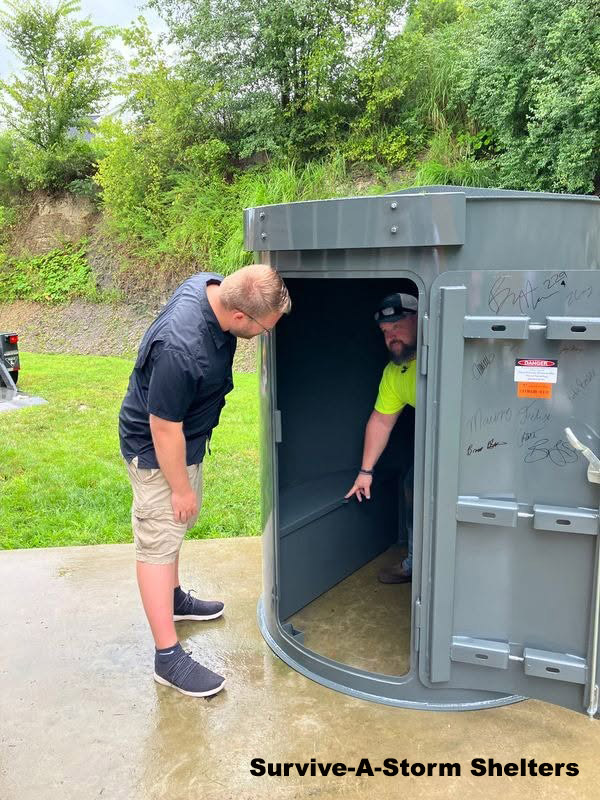
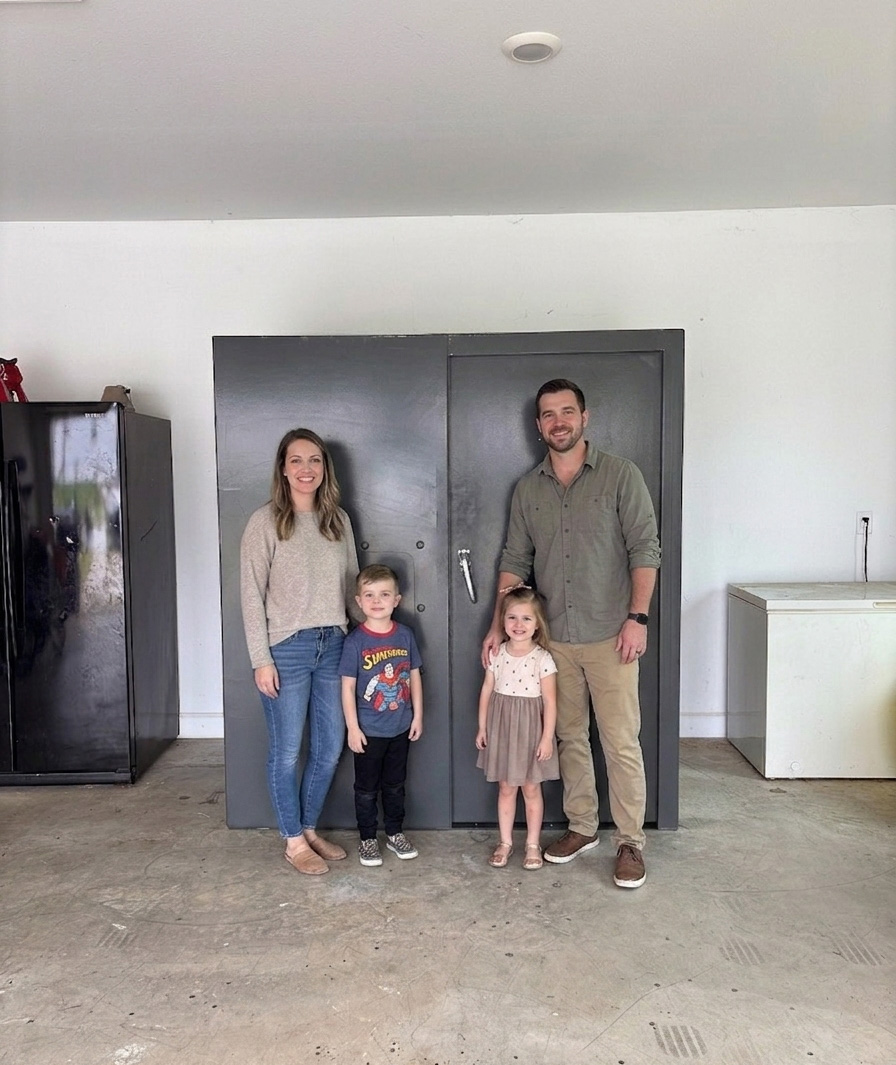
If you're considering adding a storm shelter to your home, Survive-A-Storm can help you understand your options and find the right fit for your household and property. Talk with a shelter expert.
FALL TORNADO SEASON FAQ
Can tornadoes happen in October and November?
Yes. The United States has a documented secondary tornado season running from October through early December, with November as the historical peak. This is not rare—meteorologists track this bimodal pattern (two annual peaks) across decades of tornado records.
When exactly is fall tornado season?
Fall tornado season typically runs from October through early December, with November historically the most active month. October marks the beginning, as cold fronts push south, and activity tapers off in December, though it doesn't disappear entirely.
What states have the most fall tornadoes?
The Southeast—particularly Mississippi, Alabama, Louisiana, Arkansas, Tennessee, and Georgia (called "Dixie Alley")—faces the highest fall tornado risk. The Lower Midwest (Illinois, Indiana, Ohio, Kentucky, Missouri) also experiences violent November tornadoes. The Southern Plains (Oklahoma, North Texas) see moderate fall activity.
Are fall tornadoes more dangerous than spring tornadoes?
Not necessarily, but they are particularly dangerous because they: strike after dark when families are asleep, move faster due to a stronger jet stream, hide in rain (rain-wrapped, invisible until impact), occur when public vigilance is at yearly lows, and hit areas with vulnerable housing and terrain (tree cover, hills, manufactured homes).
How do fall tornadoes form?
Fall tornadoes form through the same three ingredients as spring tornadoes—warm, moist air, incoming cold air, and strong winds aloft—but the seasonal setup is reversed. Strengthening cold fronts push south and collide with warm, humid air lingering over the Gulf of Mexico from summer, creating atmospheric instability and rotation.
Can hurricanes cause fall tornadoes?
Yes. Landfalling hurricanes and tropical storms routinely spawn tornadoes in their outer rainbands, sometimes hundreds of miles inland. Since Atlantic hurricane season peaks in September and October, hurricane-spawned tornadoes overlap directly with the front end of fall tornado season, particularly in Texas, Louisiana, Florida, and the Southeast.
Why don't I hear about fall tornado season?
Fall tornado awareness is minimal because nearly everything in tornado culture points to spring—weather awareness weeks, school drills, and news coverage all cluster around spring's larger tornado counts. The fall season produces fewer tornadoes overall, resulting in fewer headlines and public reminders. This awareness gap leaves families vulnerable.
What's the best way to prepare for fall tornadoes?
The foundation is a NOAA Weather Radio on your nightstand (to wake you during nighttime tornadoes), layered with Wireless Emergency Alerts on your phone. Identify and walk through your shelter spot before October, know the difference between watches and warnings, and run a tornado drill after daylight saving time ends.
Is a basement necessary for tornado safety?
The safest locations are a compliant storm shelter or basement that is confirmed to be tornado-safe. If you don't have either, use a small interior room on the lowest floor away from windows (closet or bathroom). Those living in manufactured homes should identify a nearby sturdy community shelter and relocate early when a tornado watch is issued.
What's the difference between a tornado watch and warning?
A tornado watch means conditions favor tornadoes in the coming hours—charge devices and review your plan. A tornado warning means a tornado is occurring or imminent—shelter immediately. In fall, treat evening watches seriously since dangerous hours arrive after you fall asleep.
Author