

CATEGORIES:
Safe Room vs. Storm Shelter for Your Home
May 20, 2026
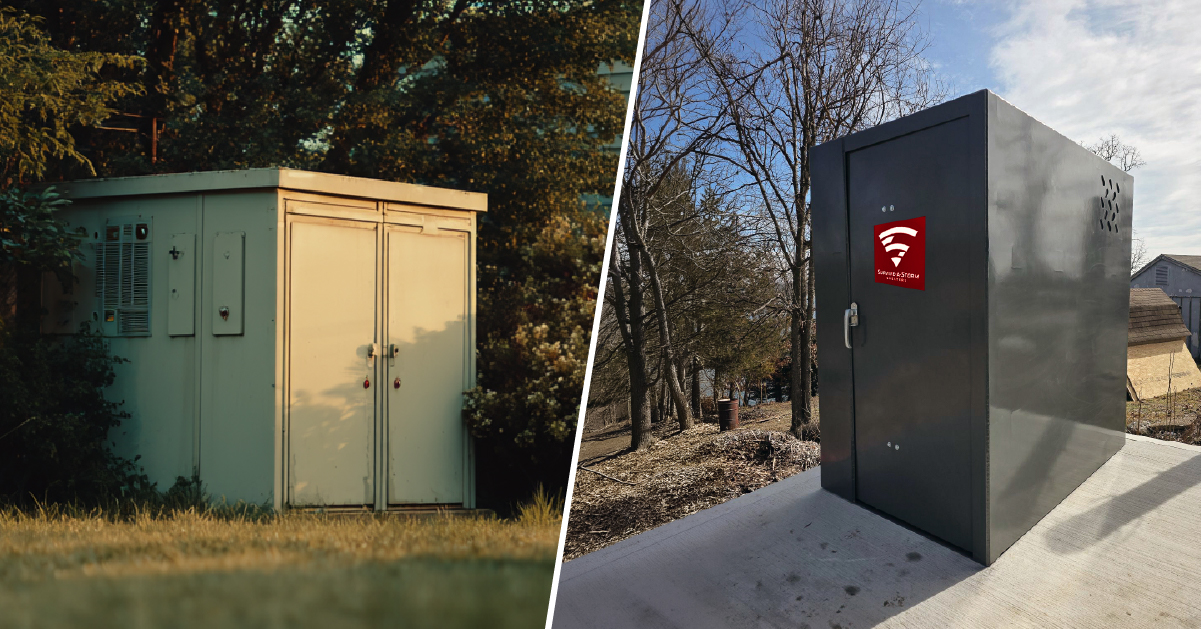
If you've been researching tornado protection for your home, you've probably seen "safe room" and "storm shelter" used interchangeably. One product brochure calls it a safe room. The next calls it a storm shelter. A third says "tornado shelter." Are they the same thing? Does the label even matter?
The short answer: the terms overlap, but they are not identical. And, it's also important to note that neither FEMA nor the International Code Council (ICC) approve or certify storm shelters or safe rooms. There is no FEMA-approval or certification process.
In the context of ICC 500 or FEMA compliance, the distinction has real financial consequences, especially if you're hoping to qualify for federal assistance. For the purposes of this blog post, we use “safe room” to refer to a shelter that meets FEMA and ICC 500 performance criteria.
Key Takeaway: A safe room is a storm shelter that is specifically designed and installed to FEMA standards. Not all storm shelters are safe rooms. This difference is what matters most when buying a shelter, not the name on the product label.
What Safe Rooms and Storm Shelters Actually Are
The confusion between these two terms comes almost entirely from marketing. Manufacturers use both terms loosely, and homeowners understandably assume they mean the same thing. They don't, at least not technically.
A storm shelter is the broad category. A safe room is a specific type within that category built to defined performance standards. Think of it like the difference between "vehicle" and "pickup truck." One is a category; the other is a defined type within that category.
The Safe Room Definition
A safe room is a hardened structure built to meet FEMA P-320, the federal design standard that specifies minimum wind resistance and debris-impact requirements for residential tornado-protection structures. FEMA P-320 covers residential applications. Its companion standard, FEMA P-361, governs community and public-facility safe rooms.
To qualify under FEMA P-320, a safe room must withstand EF5 tornado wind speeds exceeding 200 mph and pass debris-impact testing that simulates a 15-pound 2x4 board traveling at 100 mph. That's not a theoretical benchmark. It's a tested, documented performance threshold that gives the term "safe room" a specific, verifiable meaning.
Safe rooms are permanently constructed and anchored directly to the home's foundation, which is what distinguishes them from portable or temporary alternatives. The anchor bolt system is critical. FEMA P-320 requires that the structure resist both lateral wind pressure and vertical uplift forces simultaneously.
The Storm Shelter Definition
Storm shelter is the umbrella term covering any purpose-built structure intended to protect occupants from a tornado. This includes underground units, above-ground steel units, garage-floor installations, and backyard shelters. Many of these products meet or exceed FEMA performance standards without being formally marketed as "safe rooms."
The industry standard most buyers should focus on is ICC 500, published by the International Code Council. ICC 500 governs construction requirements for both above-ground and below-ground storm shelters and is the standard most local building departments reference when issuing installation permits. A shelter designed and tested to ICC 500 requirements has met rigorous third-party testing criteria, regardless of whether it's called a safe room or a storm shelter on the marketing materials.
Q: Is a safe room the same as a tornado shelter?
Not exactly. In the context of FEMA or ICC, all safe rooms are tornado shelters, but not all tornado shelters are safe rooms. A safe room specifically meets FEMA P-320 construction and performance standards. A tornado shelter is designed to protect occupants from a tornado, and the quality varies widely. When evaluating any shelter, don’t make assumptions about the use of the word. Instead, ask for engineer-stamped drawings of the design that will show it is compliant to ICC 500 or FEMA P-320, rather than relying on whether it is called a safe room or a shelter. Another way to vet a manufacturer is to find out if they are a producing member of the National Storm Shelter Association (NSSA). Producing members submit engineer-stamped drawings and third-party testing of their designs to the organization as part of the membership process.
Why the Safe Room vs. Storm Shelter Matters When Buying
You might reasonably wonder whether this difference in labeling is just semantics. In practice, it affects three things: grant eligibility, potential insurance savings, and resale value.
The FEMA Hazard Mitigation Grant Program (HMGP) can cover up to 75 percent of eligible safe room construction costs, with individual residential grants typically ranging from $2,500 to $4,000 depending on state program caps. However, HMGP funding generally requires that the shelter meet FEMA P-320 standards specifically. A storm shelter marketed without documented FEMA compliance may not qualify. If you're planning to apply for HMGP funding, verify compliance before you buy, not after.
On the insurance side, homeowners in tornado-prone states can often qualify for premium discounts by installing a FEMA-compliant shelter. Insurers typically require documentation of compliance with ICC 500 or FEMA P-320 to apply the discount. A shelter without that paperwork may still protect your family, but it won't reduce your premium.
Resale value is the third factor. In tornado alley markets, a designated safe room is a marketable feature. Buyers in Oklahoma, Kansas, Texas, and Alabama actively search for homes with FEMA-compliant shelters. Without documentation, that selling point largely disappears.
The practical takeaway: don't buy based on product name. Ask the manufacturer or seller for ICC 500 or FEMA P-320 compliance documentation before committing to any shelter purchase.
Pro Tip: Before purchasing any tornado shelter for home use, ask the seller for two documents: the engineer’s stamped drawing and the manufacturer's installation specifications. If either document is unavailable, that's a signal worth taking seriously before you spend thousands of dollars.
Safe Room vs Storm Shelter: Which Fits Your Home?
Now that you have the definitional framework, the natural next question is: what are the actual options? There are four primary residential shelter types, each suited to a different home configuration.
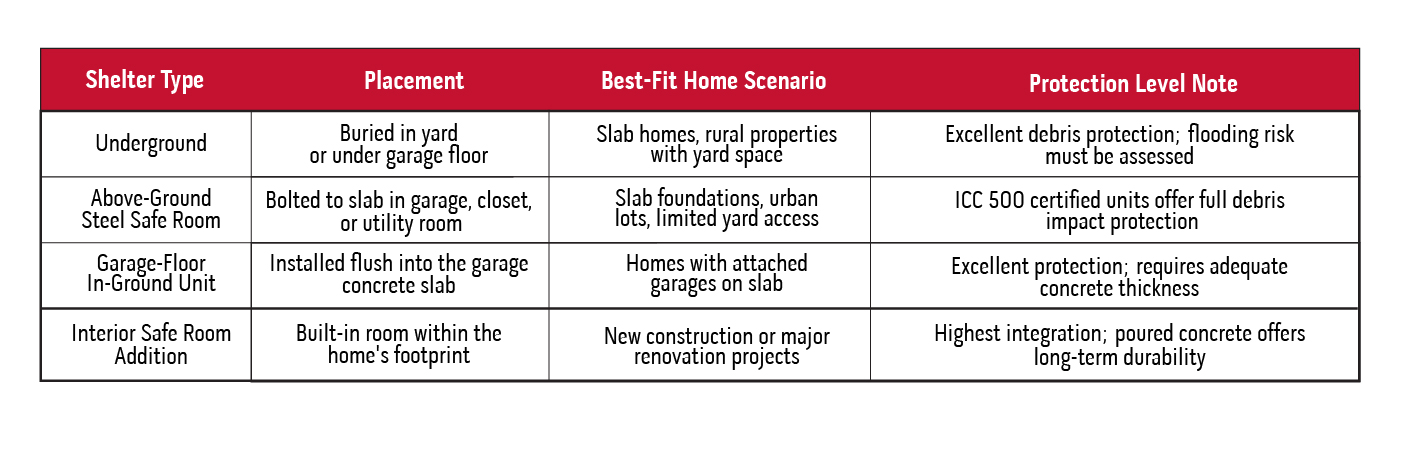
Underground In-Ground Shelters
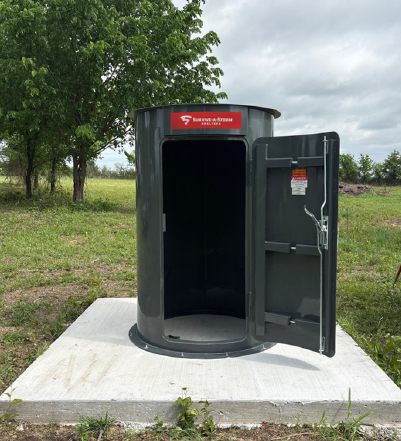
Underground tornado shelters are steel or concrete units buried either in the yard or beneath the garage floor. They are the most psychologically familiar option in tornado alley, and for good reason. Below-grade placement means the surrounding soil absorbs the structural load, providing strong protection even in severe tornado events.
Underground shelters suit homes without basements, particularly in Oklahoma, Kansas, and Texas, where slab-on-grade construction is common, and basement building is impractical due to soil conditions.
The main consideration is flooding. FEMA guidance advises against installing below-grade shelters in areas with a high probability of flooding. In flood-prone zones, a shelter that fills with water during a storm event traps rather than protects occupants. Before installing an underground unit, a site drainage assessment is worth the time and cost.
Above-Ground Steel Safe Rooms
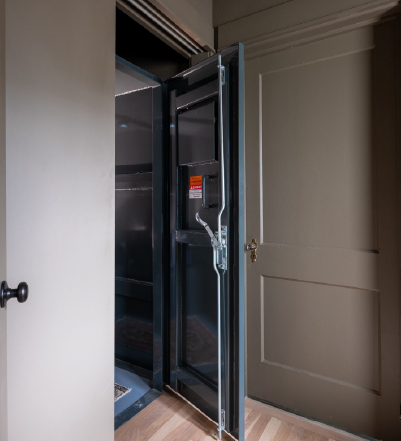
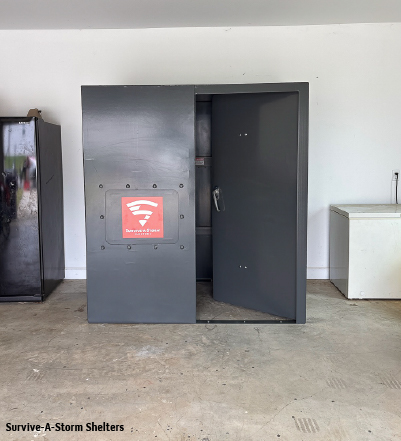
Above-ground steel safe rooms are prefabricated steel units bolted directly to the concrete slab inside a garage, closet, or utility room. They are the fastest-growing category of residential tornado shelters for home use, largely because they solve two problems that underground units cannot: flooding risk and accessibility.
For households with elderly members, people with mobility limitations, or young children, above-ground shelters eliminate the need to descend into a below-grade unit during a high-stress emergency. No ladder. No stairs.
The key specification to verify in any above-ground steel unit is the debris impact rating. A quality unit will have passed the 15-pound 2x4 board impact test at 100 mph, as required by FEMA P-320 and ICC 500. Engineer stamped drawings signal that ICC 500 was followed.
Garage-Floor and Basement Units
Garage-floor units are a subset of in-ground shelters designed to be installed directly beneath the concrete slab of an attached garage. What makes garage installation distinct from a standard yard burial is the concrete thickness requirement. Garage slabs are typically 4 inches thick, and many installation specifications require a minimum thickness of 3.5 to 4 inches to properly anchor the unit lid and access frame.
Drainage is also important. A garage-floor unit needs adequate drainage to prevent water from pooling inside the shelter.
A standard home basement is not a FEMA-compliant tornado shelter on its own. Basements offer substantial protection, but they are not all engineered to ICC 500 or FEMA P-320 standards. The distinction matters for grant eligibility and insurance purposes. A basement safe room unit, which is a reinforced steel shelter module installed in the basement space, can change that equation by adding code-compliant protection to an existing basement.
Q: Is an underground tornado shelter safer than an above-ground one?
If both types can meet the same ICC 500 and FEMA P-320 protection standards, then neither is inherently safer. The meaningful differences are site-specific. For most homeowners, the right choice comes down to foundation type, site drainage, and household accessibility needs rather than a universal safety ranking.
Safe Room and Storm Shelter Costs by Type
According to date from NOAA Storm Prediction Center, between 1993 and 2022, an average of 71 people were killed annually. Mobile home residents are estimated to be roughly 15 to 20 times more likely to die in a tornado than residents of site-built homes. For households in high-risk zones, a tornado shelter is a serious safety investment. Understanding real costs helps you evaluate them clearly.
According to cost data from contractor surveys and Angi's home improvement cost database:
- Above-ground steel safe rooms: $4,000 to $10,000+ installed
- Underground in-ground shelters: $4,500 to $30,000+ installed, price variation can be driven by soil conditions and excavation difficulty
- Poured-concrete interior safe rooms: $6,000 to $30,000+
- All costs (for all shelter types) are dependent on size, type and location
Installation costs vary significantly by region and can add 10-20% to the total shelter cost. Contractors in high-demand tornado alley markets may charge premium rates during active storm seasons. Rocky or clay-heavy soil increases excavation labor costs substantially for underground units. If you're finding the installer, always get at least two installation quotes before committing.
The FEMA Hazard Mitigation Grant Program can offset a significant portion of these costs. HMGP covers up to 75 percent of eligible project costs for shelters that meet FEMA P-320 standards, with residential grants typically capped between $2,500 and $4,000, depending on state program limits. Individual state programs may offer additional assistance beyond the federal grant. Oklahoma, Texas, and Alabama all administer state-level rebate programs worth checking before you spend.
Choosing the Right Safe Room or Storm Shelter for Your Home
Foundation type and available installation space narrow your realistic options faster than any other factor. Start there, then filter by budget and household needs.
If your home is on a slab foundation with an attached garage, you have two strong options: a garage-floor in-ground unit or an above-ground steel safe room bolted to the garage slab. The in-ground unit works well if your property drains properly and your soil conditions allow excavation. The above-ground unit is the better choice if your area has flood risk or if any household member has mobility limitations.
If your home is on a slab without a garage, an above-ground steel safe room installed in a closet, utility room, or back patio is typically the most practical option. These rooms can be sized to fit a standard closet footprint while still accommodating a family of four.
If your home has a basement, you are already in a better position than most during a tornado. However, in most cases, an unmodified basement doesn’t qualify as a compliant shelter for FEMA grants or insurance purposes. If those benefits matter to you, consider a installing a FEMA-compliant basement safe room module in the existing basement.
If your home has no basement, no garage, and limited yard space, an above-ground safe room addition to an interior room is worth exploring. These can be built as poured-concrete rooms integrated into the home's structure during renovation.
Household needs matter just as much as architecture. The average tornado warning lead time in the United States is approximately 13 minutes, according to NOAA National Weather Service performance data. That's not enough time to drive to a community shelter for most families. A shelter on your property, in a location you can reach quickly in the dark while half-awake, is far more valuable than a theoretically superior facility three miles away.
For households with pets, verify interior dimensions before purchasing. Most standard residential units accommodate two to six people, but adding two large dogs changes the math. Many manufacturers offer extended-capacity units for slightly larger families or pet-owning households.
What Tornado Shelter Installation Actually Involves
Most homeowners assume that installing a shelter is a major construction project. In most cases, it isn't.
Above-ground steel safe rooms are typically installed in a single day. The installer anchors the unit to the concrete slab using the manufacturer-specified bolt pattern, seals the anchor points, and tests the door operation. The homeowner needs to be present, the installation area needs to be clear, and that's largely it.
Underground in-ground shelters take longer. Excavation typically requires one to two days, depending on soil conditions and unit size. After the vault is lowered into place and leveled, concrete backfill is poured around the unit and requires curing time before the shelter is ready for use. Total project time from excavation to completion is typically two to four days.
Poured-concrete safe room additions are the longest projects, often taking weeks depending on complexity and curing schedules.
Most jurisdictions require a building permit before installation begins. Skipping the permit creates two problems: the installation may fail inspection, and unpermitted structures can complicate title transfers when you sell the home. Ask your installer whether a permit is required in your municipality before the project starts.
When evaluating installers, ask three specific questions. First, are you a manufacturer-authorized installer for this product? Many shelter warranties require professional installation by a trained contractor to remain valid. Second, do you have confirmation that this shelter follows FEMA guidelines or ICC 500 requirements? Third, does your anchoring method match the manufacturer's specifications?
The installation itself is not something most homeowners need to manage intensively. The more important variable is who you hire and whether they can verify that the shelter is FEMA compliant.
Finding the right tornado shelter for your home comes down to knowing your foundation type, your household's accessibility needs, and what matters for grant eligibility and insurance savings, and then finding a manufacturer who can back their claims.
Survive-a-Storm Shelters offers FEMA-compliant above-ground steel safe rooms built to FEMA P-320 and ICC 500 standards, sized for real families in real homes, and installed by trained professionals who are NSSA members and can provide engineer-stamped drawings of their designs. This will help with insurance discounts and grant reimbursements. If you're ready to stop researching and start protecting your household, contact Survive-a-Storm today to find the right shelter for your home, your foundation, and your family.
Frequently Asked Questions About Safe Rooms and Storm Shelters for Your Home
What is the difference between a safe room and a storm shelter?
A storm shelter is a broad category of purpose-built structures designed to protect occupants from a tornado, including underground vaults, above-ground steel units, garage-floor installations, and backyard shelters. A safe room is a specific type within that category. Specifically, a hardened structure built to meet FEMA P-320 standards, which includes minimum wind resistance and debris impact requirements for residential tornado protection. All safe rooms are storm shelters, but not all storm shelters are safe rooms. The distinction matters most for grant eligibility, insurance discounts, and resale value, all of which typically require FEMA P-320 or ICC 500 compliance.
Does it matter whether a shelter is called a safe room or a storm shelter?
Yes, in three specific ways. First, FEMA Hazard Mitigation Grant Program funding generally requires that the shelter meet FEMA P-320 standards. A shelter marketed without documented compliance may not qualify, regardless of what it's called. Second, insurers in tornado-prone states typically require ICC 500 or FEMA P-320 documentation to apply a premium discount — a shelter without that paperwork may protect your family, but won't reduce your insurance bill. Third, in tornado alley real estate markets, a compliant shelter is a documented, marketable feature at resale, while a non-compliant one largely is not. The label on the product brochure matters far less than the confirmation that the manufacturer is FEMA compliant.
What does FEMA P-320 require for a residential safe room?
FEMA P-320 is the federal design standard for residential tornado protection structures. To qualify, a safe room must withstand EF5 tornado wind speeds exceeding 200 mph and pass debris-impact testing that simulates a 15-pound 2x4 board traveling at 100 mph. The structure must be permanently constructed and anchored directly to the home's foundation, with an anchor bolt system designed to resist both lateral wind pressure and vertical uplift forces simultaneously. These are tested, documented performance thresholds — not marketing claims — which give the term "safe room" a specific, verifiable meaning that a generic storm shelter label does not.
What types of tornado shelters are available for homes?
There are four primary residential shelter types. Underground in-ground shelters are buried in the yard or beneath the garage floor and offer excellent debris protection, though flooding risk must be assessed before installation. Above-ground steel safe rooms are bolted to an existing concrete slab inside a garage, closet, or utility room; they are the fastest-growing category because they eliminate flooding risk and are more accessible to elderly or mobility-limited household members. Garage-floor in-ground units are installed flush into the garage concrete slab and offer strong protection with a minimal footprint. Interior safe room additions are built-in reinforced rooms within the home's footprint, best suited for new construction or major renovation projects. They offer the highest flexibility in location and placement of shelter, while still providing EF5 protection.
Is an underground tornado shelter safer than an above-ground safe room?
Not automatically. Both types can meet the same ICC 500 and FEMA P-320 protection standards when properly installed, so neither is inherently safer than the other. Underground shelters eliminate above-grade wind exposure because the surrounding soil absorbs the structural load, but they pose a flooding risk in certain locations and present accessibility challenges for elderly or mobility-limited household members. Above-ground steel safe rooms eliminate flooding risk and require no stairs or ladder access, but they can be affected by catastrophic structural collapse of the surrounding building during extreme events. The right choice for most homeowners comes down to foundation type, site drainage, and household accessibility needs rather than a universal safety ranking.
How much does a home tornado shelter cost?
Costs vary significantly by shelter type and region. Above-ground steel safe rooms typically run $3,000 to $9,000 installed. Underground in-ground shelters typically run $4,500 to $15,000 installed, with variation driven largely by soil conditions and excavation difficulty. Poured-concrete interior safe rooms run $6,000 to $30,000 or more, depending on size, materials, and regional labor rates. Installation costs are higher in high-demand tornado alley markets during active storm seasons, and rocky or clay-heavy soil increases excavation costs substantially for underground units. Always get at least two installation quotes before committing, and check state-level rebate programs in Oklahoma, Texas, and Alabama before finalizing your budget.
Can FEMA help pay for a home tornado shelter?
Yes, in certain circumstances. The FEMA Hazard Mitigation Grant Program can cover up to 75 percent of eligible project costs for shelters that meet FEMA P-320 standards, with residential grants typically capped at $2,500 to $4,000, depending on state program limits. Individual homeowners do not apply to FEMA directly — funding flows through state and local emergency management agencies. Oklahoma, Texas, and Alabama all administer state-level rebate programs that may provide additional assistance beyond the federal grant. Verify FEMA P-320 compliance before purchasing any shelter if you intend to apply for grant funding, because a shelter that does not meet the standard will not qualify, regardless of when you apply.
What shelter type works best for a home on a slab foundation?
Slab-foundation homes have two strong options. If your home has an attached garage, a garage-floor in-ground unit, or an above-ground steel safe room bolted to the garage slab are both practical choices. The in-ground unit works well when your property drains properly, and soil conditions allow for excavation. In contrast, the above-ground unit is the better choice if your area has a flood risk or if any household member has mobility limitations. If your home is on a slab without a garage, an above-ground steel safe room installed in a closet, utility room, or back patio is typically the most practical option and can be sized to fit a standard closet footprint while still accommodating a family of four.
Do I need a permit to install a tornado shelter at home?
In most jurisdictions, yes. Skipping the permit creates two significant problems — the installation may fail inspection, and unpermitted structures can complicate title transfers when you sell the home. Ask your installer whether a permit is required in your municipality before the project starts, not after. A manufacturer-authorized installer familiar with your local requirements will typically handle permit coordination as part of the installation process. Getting the permit also protects you because the inspection that follows confirms that the anchoring method matches the manufacturer's specifications, a condition most shelter warranties require to remain valid.
How long does it take to install a home tornado shelter?
Above-ground steel safe rooms are typically installed in a single day. The installer anchors the unit to the concrete slab, seals the anchor points, and tests the door operation — the homeowner needs to be present, and the area needs to be clear — and that is largely the extent of the disruption. Underground in-ground shelters take longer, with excavation typically requiring one to two days, depending on soil conditions and unit size, followed by concrete backfill that requires curing time before the shelter is ready for use — total project time from excavation to completion typically runs two to four days. Poured-concrete interior safe room additions are the longest projects and can take several weeks, depending on complexity and curing schedules.
What should I ask a tornado shelter installer before hiring them?
Three questions matter most. First, ask whether they are a manufacturer-authorized installer for the specific product being installed — most shelter warranties require professional installation by a trained contractor to remain valid, and an unauthorized installer voids that protection. Second, ask whether they have verified that the shelters are FEMA compliant, because that will be needed for insurance discounts and grant reimbursements. Third, ask what their anchoring method is and whether it matches the manufacturer's specifications. The installation itself is straightforward in most cases — the critical variable is whether the design is FEMA and ICC 500 compliant.
Author