

CATEGORIES:
Tornado Shelters for Data Centers: Addressing the Employee Safety Gap
August 21, 2026
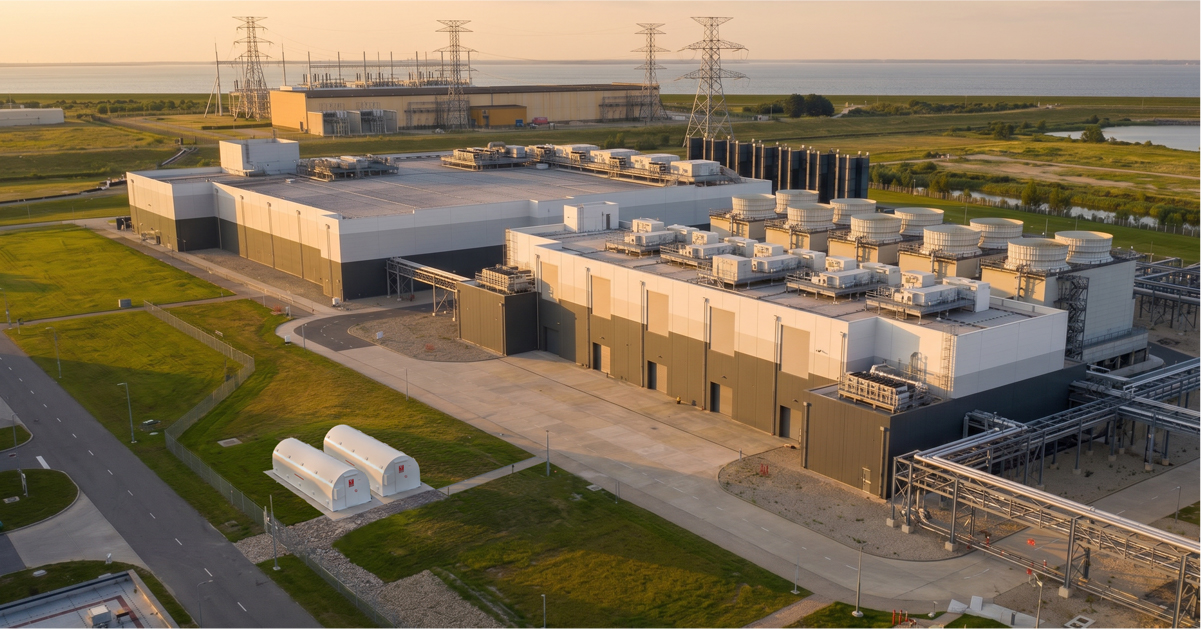
The data center industry has invested heavily in protecting its critical infrastructure from extreme weather and other disruptions. In the mission-critical world, redundant power systems, hardened enclosures, flood-elevated equipment and generator failover protocols have been engineered into every layer of the stack for decades. But it's been slower to address is the human layer.
As the AI infrastructure boom drives a massive wave of new data center construction into tornado-prone states, like Oklahoma, Texas, Virginia, Ohio, Georgia, Illinois, or Indiana, the question of how to protect workers can no longer be treated like an oversight. Facilities managers, EHS directors, real estate developers and general contractors building or operating data centers in tornado country need to understand what tornado shelter requirements and standards may apply and how tornado protection should factor into employee safety planning.
Does Data Center Infrastructure Resilience Cover Your Employees?
The data center industry's resilience planning focuses heavily on infrastructure. Uptime Institute Tier standards, which classify data centers based on resilience and redundancy of their critical infrastructure, along with redundant cooling, seismic bracing, raised floors and other measures, were developed to protect equipment and maintain operational continuity during adverse events. These measures may support overall facility resilience, but they do not establish whether technicians, security personnel, contractors and operations staff have access to a space designed specifically for occupant protection during a tornado.
 A reinforced concrete data center shell is not a tornado shelter. Its construction alone does not establish that it provides the level of occupant protection required of a purpose-built tornado shelter or safe room. The distinction matters because a building's ability to protect critical infrastructure does not necessarily indicate how it will protect occupants during extreme winds and wind-borne debris.
Is Tornado Risk a Data Center Issue?
The geographic overlap between the current wave of data center development and some of the nation's highest tornado risk zones is the result of site selection driven by power availability, land cost, tax incentives and connectivity. These factors have helped drive substantial new development in the central and southeastern United States, directly in the path of the country's most active tornado corridors.
Major data center markets illustrate the overlap. Oklahoma and Texas have long histories of significant tornado activity, while Texas is also one of the country's largest data center markets. Northern Virginia is the nation's largest concentration of data center capacity, and substantial data center investment is also underway in Ohio, Georgia, Illinois and Indiana. Each of these markets faces some degree of tornado exposure, even though the frequency and severity of that risk vary considerably by location.
Hardening a building does not necessarily mean the people inside it have equivalent protection. And as tornado activity continues to expand geographically, with the Southeast and Mid-Atlantic seeing more frequent and more violent events than predicted by historical averages, few major data center markets are fully outside the risk zone.
Does Having a Tornado Shelter Affect Insurance Premiums?
Insurance carriers evaluate risk differently, and installing a tornado shelter does not automatically result in lower commercial insurance premiums. However, insurers may consider building features, emergency preparedness measures and other risk-mitigation efforts when evaluating a facility. Data center owners and operators should talk with their insurance broker or carrier about whether a code-compliant tornado shelter could affect property, business interruption, workers' compensation or other coverage. Even when no direct premium credit is available, documenting the shelter's design, installation and inclusion in the facility's emergency action plan can support broader risk-management efforts.
What Happens if an Employee Is Injured During Severe Weather at a Data Center Without a Protected Space?
One question that is likely to come up when evaluating if an employer is liable in a workplace injury is whether they took reasonable, industry-recognized precautions for known and foreseeable risks. For facilities operating in regions where severe weather is a recognized hazard, employers should evaluate how personnel will be protected during an emergency. A professionally engineered, code-compliant protective space, supported by documented design records, occupancy planning, maintenance procedures and emergency response protocols, helps demonstrate a thoughtful, well-documented approach to employee safety. While no protective measure eliminates all liability, maintaining documented compliance with applicable standards demonstrates that an employer took reasonable steps to protect personnel should an incident occur.
What Does a Tornado Shelter for a Data Center Actually Look Like?
For many data center applications, an above-ground prefabricated steel community shelter can be a practical solution. The reasons are specific to the way data centers are built and operated.
No excavation required. Data centers sit on thick concrete slabs with extensive underground infrastructure — conduit runs, fiber pathways, grounding systems and cooling piping. An above-ground shelter installs on the surface without disturbing any of that infrastructure.
ADA accessible from day one. Grade-level entry accommodates all employees, including those with mobility limitations. No stairs, no hatches, no secondary accommodations required. This satisfies both ADA requirements and the operational need for fast shelter loading during a tornado warning with minimal lead time.
No flooding risk. Data centers are frequently sited near power infrastructure in areas where underground construction creates water table or drainage problems. Above-ground shelters eliminate that concern, a critical advantage in regions where tornado events coincide with heavy rainfall and flash flooding.
Scalable to any workforce size. Survive-A-Storm's Quonset-style commercial shelters are built in 8-foot sections, ranging from 10×8 to 10×96, and can be customized for larger requirements. For hyperscale campuses with large construction workforces, multiple units positioned across the facility may be the right answer.
The Window Is Now — Not After the Next Storm Season
Every storm season, there are facilities that intend to provide employee access to shelter but don't get it done in time. Design takes longer than expected. Permits take longer than planned. Installation lead times grow as spring approaches. The data center operators who have their shelters in place before the next storm season peaks are the ones who started the process months before the first watch was issued.
If your data center is operating or under construction in Oklahoma, Texas, Virginia, Ohio, Georgia, Illinois, Indiana or any tornado-prone state, the time to evaluate your employee shelter needs is now. Not simply because a regulation requires it. The people who keep your infrastructure running deserve the same engineered protection as the servers they maintain.
Author