Storm Shelters for Data Centers
Do Data Centers Need a Tornado Shelter?
What Facility Managers and Developers Need to Know
Data centers are being built at record pace across tornado-prone America. States with the highest concentration of new data center development, including Virginia, Texas, Oklahoma, Ohio, Georgia, Illinois, and Indiana, overlap directly with the nation's highest tornado risk zones. While data center design standards address power resilience, cooling redundancy, and physical security, tornado shelter requirements for the employees working in and around these facilities are frequently overlooked until a permit application, an OSHA inquiry, or a near-miss forces the question. The answer depends on your location, workforce size, and applicable building code, but the standard for protection is clear: ICC-500 and FEMA P-361-compliant above-ground community shelters are the recognized solution for large-workforce commercial facilities in tornado risk zones.
Protect your data center workforce before your next permit application or storm season.
Why Are Data Centers a Tornado Shelter Priority Right Now?
The data center industry is undergoing its largest expansion in history, driven by AI infrastructure demand, cloud growth, and hyperscale development. Texas is home to hundreds of data centers, and states like Oklahoma, Ohio, and Georgia are gaining ground as traditional hubs like Northern Virginia face land and power limits. This geographic shift is moving massive new facilities directly into tornado-prone regions, many of which have local building codes that now require on-site employee shelter.
Which States Have the Highest Data Center and Tornado Overlap?
Georgia
Growing as a Southeast data center hub in a state with significant Dixie Alley tornado exposure, often at night when warning times are shortest.
Texas
More data centers and more confirmed tornadoes annually than any other state. Dallas, Austin, and San Antonio are active hyperscale corridors. Local municipalities increasingly require on-site shelter for large-workforce facilities.
Ohio
Rapidly emerging as a major cloud region. A number of cloud, social media, and technology companies now have deep stakes in the region — and Ohio sits directly in a widening tornado risk zone that now extends well beyond traditional Tornado Alley.
Virginia
The world's largest data center concentration in Northern Virginia's "Data Center Alley." Virginia sits in the mid-Atlantic severe weather corridor with documented tornado activity.
What Kind of Tornado Shelter Is Right for a Data Center?
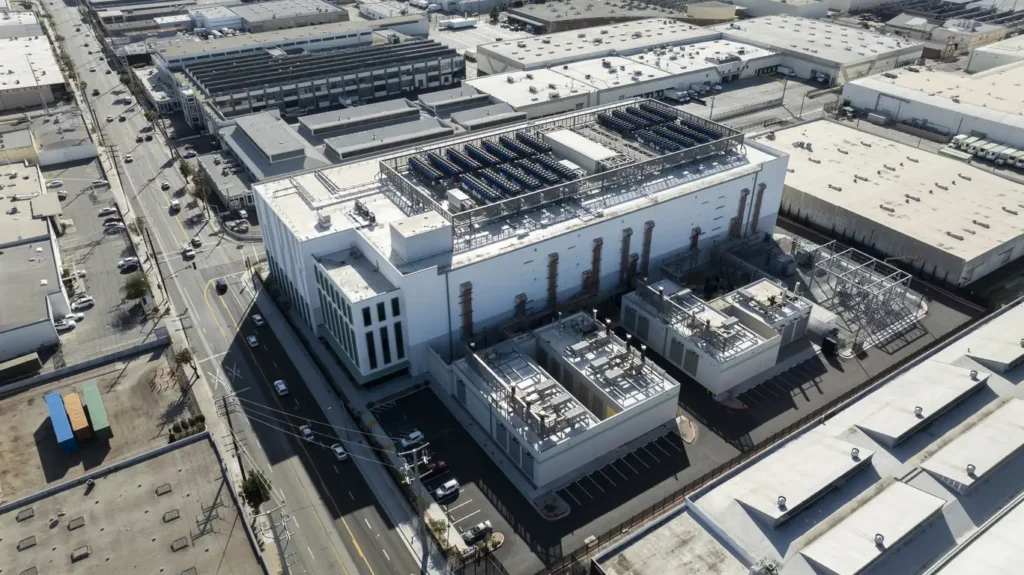
Data centers present a specific set of site and operational conditions that shape shelter selection:
Above-Ground Steel Community Shelters — The Preferred Solution for Most Data Centers
Above-ground prefabricated steel shelters are the most practical solution for the majority of data center applications. ADA-accessible grade-level entry accommodates all employees including those with mobility limitations. Installation is typically completed in a single day by Survive-A-Storm's factory-trained teams.
For data center facilities, above-ground shelters offer an additional operational advantage: no flooding risk. Data centers are frequently located near power substations and in areas where underground installation would create water table or drainage complications.
How Do You Size a Tornado Shelter for a Data Center Workforce?
You need a minimum of 5 square feet of usable floor area per occupant. Data center workforce sizing must account for maximum concurrent occupancy, including on-site operations staff, security personnel, contractors, and visiting technicians, not just the typical headcount during a standard shift.
Survive-A-Storm's Quonset-style commercial shelters are available in 8-foot sections from 10×8 through 10×96, accommodating small operations teams through several hundred occupants. For hyperscale facilities with large contractor populations during construction phases, shelter capacity planning should account for peak construction workforce, when tornado exposure is highest and on-site certified shelter is most critical.
Can a Data Center Install Multiple Shelter Units?
Yes, and for large campus facilities, multiple shelter placements are often the right answer. If employees in a data center cannot reach a single shelter within the available warning lead time, a second or third unit positioned strategically across the facility is the compliant and practical solution. Survive-A-Storm's commercial team conducts site assessments to determine optimal placement.
Ready to size the right shelter for your facility?
Our commercial team works directly with data center developers, facilities managers, and general contractors from the design phase through installation. We provide the proper documentation ready for your permit package.
The Legal and Liability Case for Proactive Shelter Installation
How Does a Certified
Shelter Affect
Insurance Premiums?
Commercial property and liability insurers are increasingly factoring tornado shelter compliance into premium calculations and coverage terms for facilities in high-risk zones. A tornado shelter with documented installation records, regular inspection, and a trained emergency action plan can meaningfully reduce premiums for commercial property, business interruption, and workers' compensation coverage. Contact your broker specifically about life-safety improvement credits before and after installation.
What Happens if an Employee Is Injured During a Severe Weather Event at a Data Center Without a Protected Space?
The legal standard in workplace injury litigation is whether an employer took reasonable, industry-recognized precautions for known and foreseeable risks. For facilities operating in regions where severe weather is a recognized hazard, employers are increasingly expected to evaluate how personnel will be protected during an emergency. A professionally engineered, code-compliant protective space—supported by documented design records, occupancy planning, maintenance procedures, and emergency response protocols—helps demonstrate a thoughtful, well-documented approach to employee safety. While no protective measure eliminates all liability, maintaining documented compliance with applicable standards provides one of the strongest foundations for demonstrating due diligence should an incident occur.
Why Data Center Operators Choose Survive-A-Storm Shelters
We Manufacture What We Install
Every Survive-A-Storm commercial shelter is built in our Thomasville, Georgia factory. We are not a reseller or a rental company that added shelters to a catalog. We control the engineering, the steel, the weld, and the installation, which means our compliance documentation is verifiable and our engineering team can support the permit and review process from design through certificate of occupancy.
Trusted by Data Centers and the World's Most Demanding Organizations
Survive-A-Storm Shelters is a preferred provider for many data center projects across the United States, helping owners, developers, contractors, and operators protect personnel while meeting demanding construction schedules and project requirements. Our experience working in mission-critical environments has made us a trusted partner for facilities where safety, reliability, and documentation are essential.
Beyond the data center industry, we have delivered protective shelter solutions for organizations including Walmart, Toyota, Kia, Mercedes, 3M, Siemens, Procter & Gamble, Schlumberger, the U.S. Army, the U.S. Air Force, and the U.S. Navy. These organizations operate complex facilities, manage significant workforce responsibility, and require engineering documentation and quality standards that withstand rigorous internal, regulatory, and customer review.
Whether supporting a hyperscale campus, an enterprise data center, or another critical facility, our team understands how to integrate with large construction projects, coordinate with multiple stakeholders, and deliver dependable protective solutions on demanding timelines.
We Work Directly With Architects, Engineers, and General Contractors
Survive-A-Storm's commercial team is actively working with architects, engineers, general contractors, developers, and owners on data center projects across the United States. We understand how these projects move from concept through construction, and we collaborate with project teams every day to help identify the appropriate protective solution while supporting design schedules, permitting requirements, and construction milestones.
During the planning and design phases, we work alongside architects and engineers to evaluate occupancy requirements, applicable codes and standards, site constraints, structural integration, and project-specific objectives. We also provide engineering documentation, specification support, and technical guidance in the formats design professionals need to simplify coordination across the project team.
By engaging early, owners and design teams can avoid costly redesigns, streamline permitting, and ensure the protective solution is fully integrated into the project before construction begins. Our experience supporting data center developments nationwide allows us to communicate effectively with every stakeholder and keep projects moving forward with confidence.

Frequently Asked Questions: Tornado Shelters for
Data Centers
Do data centers need a protected personnel space?
Requirements vary depending on the jurisdiction, adopted building code, occupancy classification, and the specific project. Many owners, developers, and design teams choose to incorporate a hardened protective space as part of their overall emergency preparedness strategy and risk management program. Even when not explicitly required, evaluating how personnel will be protected during severe weather or other emergency events is an increasingly common consideration for mission-critical facilities. Our commercial team can help determine the requirements and design considerations for your project.
What size protective space does a data center need?
The appropriate size depends on your facility's maximum anticipated occupancy, including operations staff, security personnel, contractors, and visitors. Our commercial protective spaces are available in modular configurations ranging from 10'×8' to 10'×96', with custom solutions available for larger populations. We work with your project team to determine the appropriate size and configuration based on your facility's operational needs and project requirements.
Can a protective space be installed inside an existing data center?
Yes. Our prefabricated steel protective spaces can often be installed within existing buildings without excavation, making them a practical option for both new construction and retrofit projects. Depending on the facility layout, they can also be integrated into adjacent structures, covered service areas, or other suitable locations throughout the campus. Our team evaluates each site to recommend the best solution for your operational and structural requirements.
How long does it take to install a commercial protective space?
Most above-ground installations are completed in a single day by Survive-A-Storm's factory-trained installation teams. Manufacturing lead times vary based on the project size, customization, and installation location. For projects that are still in design or construction, we recommend engaging our commercial team early so the protective space can be coordinated with the overall project schedule and permitting process.
What documentation does Survive-A-Storm provide?
Every commercial installation includes the engineering documentation, design drawings, occupancy information, and installation records required for the project. Depending on the application, our team also provides the documentation needed to support permitting, project closeout, owner records, and coordination with architects, engineers, general contractors, and authorities having jurisdiction.
Do you work with architects, engineers, and general contractors during the design phase?
Yes. Survive-A-Storm is actively working with architects, engineers, general contractors, developers, and owners on data center projects across the country. Our commercial team provides specification support, engineering documentation, design guidance, and technical coordination throughout the planning and design process. Engaging early helps project teams integrate the protective space into the overall facility design, streamline permitting, and reduce the likelihood of costly revisions during construction.
Protect your data center workforce before your next permit application or storm season.