


CATEGORIES:
Storm Shelter Mortgage Financing: What Lenders Allow (And What They Don't)
April 20, 2026

Can you finance a storm shelter through your mortgage? The short answer is yes, but only under the right conditions. The right answer depends on three things: when you're financing (at purchase or after), what type of shelter you're installing, and how your lender classifies that shelter under their underwriting rules. If you get those three factors right, then you’ll have real options. If you miss them, you’ll waste weeks applying for financing that won’t even work in your situation.
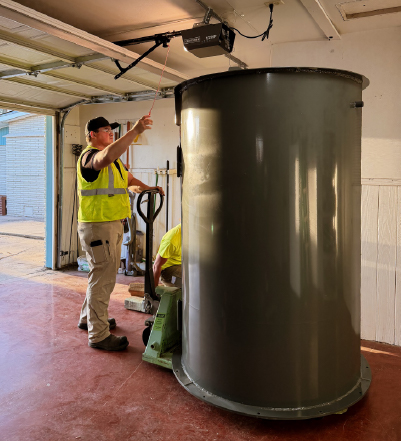 This distinction matters because lenders will only finance real property or permanent features of the property. If your shelter can be repossessed and resold independently of the home, most lenders won't include its cost in a home loan. A storm shelter should meet local building codes and be permanently affixed to the property to qualify for mortgage financing under guidelines from agencies like HUD, Fannie Mae, and Freddie Mac.
FEMA-rated safe rooms built to FEMA P-320 or P-361 standards are typically treated as permanent installations, which helps with both lender classification and appraised value. A shelter built to the standards of the National Storm Shelter Association (NSSA) can also support a lender's determination that a shelter is a code-compliant, permanent structure.
This distinction matters because lenders will only finance real property or permanent features of the property. If your shelter can be repossessed and resold independently of the home, most lenders won't include its cost in a home loan. A storm shelter should meet local building codes and be permanently affixed to the property to qualify for mortgage financing under guidelines from agencies like HUD, Fannie Mae, and Freddie Mac.
FEMA-rated safe rooms built to FEMA P-320 or P-361 standards are typically treated as permanent installations, which helps with both lender classification and appraised value. A shelter built to the standards of the National Storm Shelter Association (NSSA) can also support a lender's determination that a shelter is a code-compliant, permanent structure.
 Shelter costs vary widely. According to cost data from the National Storm Shelter Association (NSSA), prefabricated above-ground safe rooms typically cost between $3,000 and $6,000 installed, while in-ground shelters are higher, depending on size, soil conditions, and regional labor costs. That range matters because a $4,000 above-ground unit may be better suited for a personal loan or contractor financing, while a $15,000 below-ground shelter makes it worth exploring home-equity or a renovation mortgage at lower interest rates.
One financial benefit worth factoring into your decision: homeowners in tornado-prone states who install storm shelters that meet FEMA standards can see homeowner's insurance premium reductions of 1 to 5 percent annually, depending on the insurer and shelter type. [Source: Insurance Information Institute] Over a 15- to 30-year mortgage term, those savings can meaningfully offset financing costs and make borrowing for a shelter more financially defensible.
Shelter costs vary widely. According to cost data from the National Storm Shelter Association (NSSA), prefabricated above-ground safe rooms typically cost between $3,000 and $6,000 installed, while in-ground shelters are higher, depending on size, soil conditions, and regional labor costs. That range matters because a $4,000 above-ground unit may be better suited for a personal loan or contractor financing, while a $15,000 below-ground shelter makes it worth exploring home-equity or a renovation mortgage at lower interest rates.
One financial benefit worth factoring into your decision: homeowners in tornado-prone states who install storm shelters that meet FEMA standards can see homeowner's insurance premium reductions of 1 to 5 percent annually, depending on the insurer and shelter type. [Source: Insurance Information Institute] Over a 15- to 30-year mortgage term, those savings can meaningfully offset financing costs and make borrowing for a shelter more financially defensible.
Can You Actually Roll a Tornado Shelter Into Your Mortgage?
Yes, you can roll a tornado shelter into your mortgage, but only under specific conditions. Lenders treat storm shelters differently depending on whether the shelter is classified as a permanent improvement to real property or as a movable structure. That classification determines which financing doors are open and which aren't.Permanent Fixture vs. Personal Property
A poured, in-ground shelter that is bolted to a foundation and can’t be removed without significant structural work is treated as a permanent home improvement, similar to a finished basement or an addition. A prefabricated above-ground unit that can be unbolted and hauled away on a flatbed truck may be treated as personal property, which standard mortgage products won't cover.This distinction matters because lenders will only finance real property or permanent features of the property. If your shelter can be repossessed and resold independently of the home, most lenders won't include its cost in a home loan. A storm shelter should meet local building codes and be permanently affixed to the property to qualify for mortgage financing under guidelines from agencies like HUD, Fannie Mae, and Freddie Mac.
FEMA-rated safe rooms built to FEMA P-320 or P-361 standards are typically treated as permanent installations, which helps with both lender classification and appraised value. A shelter built to the standards of the National Storm Shelter Association (NSSA) can also support a lender's determination that a shelter is a code-compliant, permanent structure.
When Can You Finance a Storm Shelter?
There are three financing windows available to homeowners. The first is at the time of purchase, when renovation mortgage programs allow you to bundle the shelter cost into your home loan at closing. The second financing window is through a refinance, when a cash-out refinance, or renovation refinance, converts existing equity into funds for shelter construction. The third is after closing, when home equity products like a home equity loan or HELOC allow you to access your home equity without touching your existing mortgage. Each window offers different loan products. Understanding which financing window you're in is the fastest way to narrow your options.Loan Programs That Allow Storm Shelter Financing
Several federal loan programs explicitly allow storm shelter and safe room improvements as eligible costs. Each program has its own eligibility rules, geographic restrictions, and minimum cost thresholds that will screen out some borrowers.FHA 203(k) Rehabilitation Loan
The FHA 203(k) loan—a government-backed mortgage that bundles home purchase and renovation costs into a single loan—comes in two versions. The Limited 203(k) covers up to $75,000 in improvements without requiring a HUD consultant. The Standard 203(k) covers larger, more complex projects and requires an FHA-approved consultant to oversee the work. Both versions can fund storm shelter installation as part of a broader home improvement scope, provided the shelter is permanently attached to the property and meets local building codes. According to HUD's 203(k) program guidelines, eligible improvements include those that make the home safer and more livable, like disaster-resistant structures that meet code. The minimum total improvement cost under the Limited 203(k) is $5,000, which most shelter installations will meet easily. Renovation mortgage programs like FHA 203(k) require homeowners to use a licensed contractor, and lenders disburse funds through a contractor escrow account in draws tied to completed construction milestones.Fannie Mae HomeStyle and Freddie Mac CHOICERenovation
For borrowers who prefer conventional financing to FHA, the Fannie Mae HomeStyle renovation loan works similarly to the FHA 203(k) but without FHA mortgage insurance requirements for borrowers with stronger credit profiles. HomeStyle allows permanent home improvements, including safe rooms, to be bundled into a mortgage purchase or refinance. Freddie Mac's CHOICERenovation loan is worth special attention. Freddie Mac updated CHOICERenovation to specifically include resilience improvements as eligible costs, and storm shelters fall within that category. According to Freddie Mac's CHOICERenovation product guidelines, improvements that enhance a property's ability to withstand natural disasters are eligible for financing, a significant advantage for borrowers in tornado-prone areas seeking conventional loan terms.USDA and VA Renovation Options
Rural homeowners have access to the USDA Section 504 Home Repair Loan and Grant program, which can fund safety improvements, including storm shelters, for income-qualifying homeowners. Loans through Section 504 carry a fixed 1 percent interest rate, and grants are available to homeowners aged 62 and older who are unable to repay a loan. Geographic restrictions apply since the property must be in a USDA-eligible rural area. Veterans have access to VA renovation loan products (sometimes called VA rehab loans), which allow eligible veterans to combine home purchase with safety improvements under a single VA-backed mortgage. VA renovation loans carry the same funding fee and benefit structure as standard VA loans, with the added option to include permanent shelter installations within the scope of financing. Key Takeaway: Freddie Mac's CHOICERenovation loan explicitly includes storm shelters and resilience improvements as eligible financing costs, making it one of the most direct conventional loan paths for borrowers who want to avoid FHA programs.What FHA and Conventional Lenders Actually Permit
Federal guidelines may allow storm shelter financing, but individual lenders retain underwriting discretion. Many have internal overlays that restrict or complicate shelter financing in practice. Knowing what to ask before applying saves significant time.The Appraisal Problem
One of the least-discussed obstacles in storm shelter mortgage financing is appraisal support. Lenders require the shelter to add appraised value to the home equal to or greater than its cost for the loan to be approved at the requested amount. In many markets, appraisers have limited comparable sales data for homes with storm shelters, which can compress the appraised value assigned to the shelter and create a financing gap. According to Fannie Mae's appraisal guidelines, appraisers are directed to reflect the contributory value of disaster-resistant features in their reports when market evidence supports it. The challenge is that in some markets, the evidence is thin. A shelter that costs $15,000 to install may add only $8,000 to the appraised value in a market with few comparable shelter-equipped homes, leaving a $7,000 gap the lender won't finance. This is especially common in markets where tornado shelters are relatively new or uncommon, even in regions with genuine weather risk.Lender Overlays and Internal Restrictions
The difference between what FHA, Fannie Mae, and Freddie Mac allow and what an individual lender actually originates can be substantial. Lenders are permitted to layer stricter requirements on top of agency guidelines, known as lender overlays. Many lenders technically offer FHA 203(k) loans but rarely originate them, lack trained staff to process them, and effectively decline applications by making the process impractical. When asking about storm shelter financing, we recommend asking your lender specifically: "Do you actively originate FHA 203(k) or HomeStyle renovation loans, and how many did you close in the past 12 months?" A lender who closes renovation loans regularly will process a shelter financing request far more smoothly than one who technically offers the product but rarely uses it. Q: Will my lender automatically include a storm shelter in my home's appraised value? No. Appraisers determine storm shelter value by comparing the property to similar homes with and without shelters. In markets where such comparables are limited, the appraiser may assign partial or minimal value to the shelter. This can reduce the amount a lender will finance. If you're in a tornado-prone area, it's worth asking your lender whether they have experience with appraisals that include shelter installations before you commit to a renovation loan product.Adding a Shelter to an Existing Mortgage
If you already own your home, you can’t add a storm shelter to your existing mortgage mid-term. That’s not how mortgage lending works. What you can do is access the equity you've built through a separate loan, or refinance your entire mortgage into a new loan that includes additional funds for the shelter.Cash-Out Refinance
A cash-out refinance replaces your existing mortgage with a new, larger loan. The difference between the old loan balance and the new loan amount is paid to you in cash at closing, which you can then use to fund shelter construction. Most lenders cap the loan-to-value ratio at 80 percent of the home's appraised value, meaning you need meaningful equity before this option is available. Cash-out refinancing only makes financial sense when the new rate is close to or below your current mortgage rate. In a higher-rate environment, replacing a low-rate mortgage with a higher-rate one to fund a shelter will cost significantly more over the life of the loan than using a home equity product that leaves your existing mortgage intact.Home Equity Loan vs. HELOC
A home equity loan provides a lump sum at a fixed interest rate, with predictable monthly payments over a set term. A HELOC (home equity line of credit) is a revolving credit line that you draw from as needed, which works better for phased projects or situations where the final shelter cost is uncertain. For a defined shelter project with a contractor bid in hand, a fixed-rate home equity loan typically makes more sense. For homeowners who are still pricing shelter options or planning to phase construction, a HELOC offers more flexibility. Both products require sufficient equity and lender approval, and both will review whether the home improvement is permanent, which brings the “permanent fixture” classification back into play. Pro Tip: Before choosing between a cash-out refinance and a home equity loan, calculate the total interest cost over your expected payoff timeline for both options. In many cases, a home equity loan that preserves your existing low-rate mortgage will cost thousands less than a full refinance, even if the home equity loan carries a slightly higher rate.FEMA Grants and State Assistance Programs
FEMA's Hazard Mitigation Grant Program (HMGP) provides funding to states and communities for storm shelter construction. Individual homeowners access these funds through their state or local emergency management agency, not by applying directly to FEMA. According to FEMA's Hazard Mitigation Assistance program pages, the HMGP has funded over 25,000 residential safe rooms since the program expanded following major tornado outbreaks, and safe rooms built to FEMA P-320 and P-361 standards qualify for funding consideration. FEMA grants don’t need to be repaid, making them the most cost-effective storm shelter financing option when accessible. The limitation is availability. Most FEMA individual assistance programs activate after a presidentially declared disaster, which limits on-demand access. The HMGP, however, operates on an ongoing basis through state agencies. State-level programs are often more consistently accessible than federal programs. Oklahoma's Sooner Safe Room rebate program has distributed millions of dollars in rebates since its inception, offering eligible residents up to $2,000 toward the purchase and installation of a FEMA-compliant safe room, according to documentation from the Oklahoma Department of Emergency Management. Alabama's Safe Room Rebate Program, administered by the Alabama Emergency Management Agency, offers similar direct financial assistance to qualifying homeowners for installing FEMA-compliant shelters. Both programs have specific eligibility requirements, application windows, and funding limits that vary by year. Community Development Block Grant Disaster Recovery (CDBG-DR) funds are another underused mechanism, particularly in counties that have received disaster recovery allocations. These funds flow through local governments and can be directed toward residential shelter programs. Q: Do I have to wait for a disaster to be declared to access FEMA shelter funding? No, you don’t always have to wait for a disaster to be declared. FEMA's Hazard Mitigation Grant Program operates on an ongoing basis through state emergency management agencies, even outside of disaster declarations. State-level programs like Oklahoma's Sooner Safe Room rebate and Alabama's Safe Room Rebate Program also run independently of federal disaster declarations. We recommend contacting your state emergency management agency directly to ask what programs are currently funded and accepting applications in your area.Choosing the Right Financing Path for Your Shelter
There’s no single best way to finance a storm shelter. The right answer depends on when you're financing, how much equity you have, what your current mortgage rate is, and whether you qualify for state or federal assistance. Matching those variables to the right product is the core decision.Shelter costs vary widely. According to cost data from the National Storm Shelter Association (NSSA), prefabricated above-ground safe rooms typically cost between $3,000 and $6,000 installed, while in-ground shelters are higher, depending on size, soil conditions, and regional labor costs. That range matters because a $4,000 above-ground unit may be better suited for a personal loan or contractor financing, while a $15,000 below-ground shelter makes it worth exploring home-equity or a renovation mortgage at lower interest rates.
One financial benefit worth factoring into your decision: homeowners in tornado-prone states who install storm shelters that meet FEMA standards can see homeowner's insurance premium reductions of 1 to 5 percent annually, depending on the insurer and shelter type. [Source: Insurance Information Institute] Over a 15- to 30-year mortgage term, those savings can meaningfully offset financing costs and make borrowing for a shelter more financially defensible.
Questions to Ask Your Lender Before Applying
- Do you actively originate FHA 203(k) or Freddie Mac CHOICERenovation loans, and how many did you close in the past 12 months?
- How does your appraisal process handle storm shelter value in markets with limited comparable data?
- Is the specific shelter type and installation method I'm planning classified as a permanent fixture under your underwriting guidelines?
- Do you have lender overlays that restrict renovation loan products beyond Fannie Mae or FHA guidelines?
- What contractor licensing requirements apply to the shelter installation for this loan type?
- How are renovation funds disbursed, and what draw schedule applies to shelter construction?
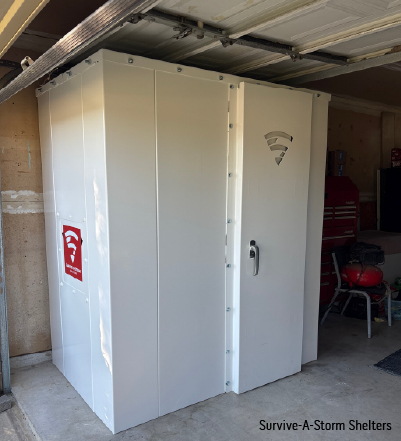
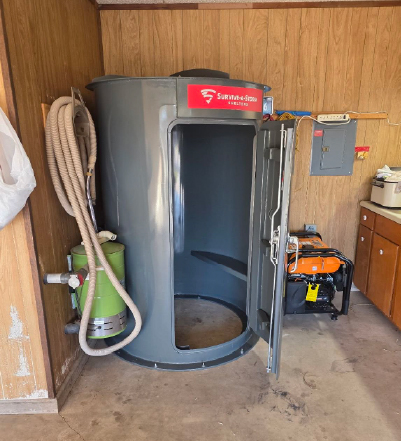
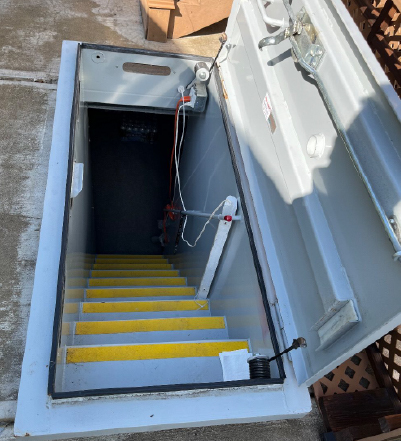
Frequently Asked Questions About Storm Shelter Mortgage Financing
Can you roll a storm shelter into your mortgage?
Yes, in certain situations. If you are purchasing a home, renovation mortgage programs like FHA 203(k), Fannie Mae HomeStyle, and Freddie Mac CHOICERenovation allow you to bundle storm shelter installation costs into your loan at closing. If you already own your home, options include a cash-out refinance or home equity products. The shelter must be permanently affixed to the property and meet local building codes to qualify under most lender guidelines.What is the cheapest way to finance a storm shelter?
FEMA grants and state rebate programs are the most cost-effective option because they don’t require repayment. Oklahoma, Alabama, and several other tornado-prone states offer active rebate programs for FEMA-compliant safe rooms. Exhausting grant and rebate options before turning to loan products will always produce the lowest out-of-pocket cost.Does a storm shelter add value to your home?
It can, but the appraised value added depends on your local market. In areas where storm shelters are common and comparable sales data exists, appraisers can more reliably assign contributory value. In markets where shelters are newer or less common, appraisers may assign partial value even on a high-quality installation, which can affect how much a lender will finance.Will homeowners insurance cover storm shelter installation?
Standard homeowners’ insurance policies don’t typically cover the cost of installing a storm shelter as a proactive improvement. However, installing a storm shelter built to FEMA standards can reduce your annual homeowners’ insurance premium by 1 to 5 percent, depending on your insurer and the type of shelter, helping to offset financing costs over time.What type of storm shelter qualifies for mortgage financing?
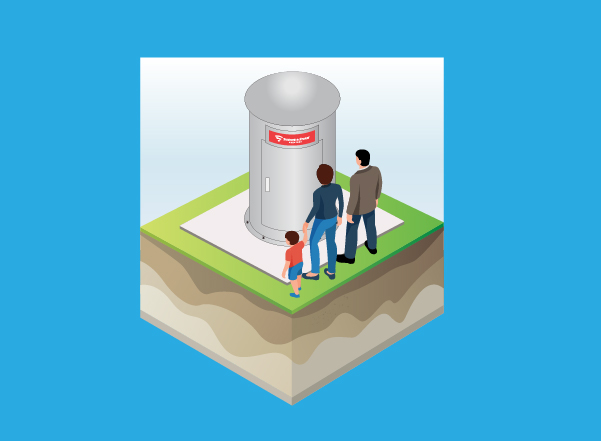 Permanently affixed shelters that meet local building codes and can’t be removed without significant structural work are the most likely to qualify. FEMA-rated safe rooms built to FEMA P-320 or P-361 standards, and shelters that meet the National Storm Shelter Association (NSSA) standards, are the strongest candidates. Above-ground prefabricated units that can be unbolted and removed may be classified as personal property, which most mortgage products will not finance.
Can a renter finance a storm shelter?
No. Mortgage and home equity financing products are tied to property ownership. Renters don’t have access to renovation mortgage programs, home equity loans, or HELOCs for shelter installation. Renters interested in personal storm protection should speak with their landlord about shelter options or explore community shelter locations through their local emergency management agency.How do I apply for a FEMA storm shelter grant?
Individual homeowners don’t apply to FEMA directly for shelter grants. Funding flows through state and local emergency management agencies. Contact your state emergency management agency to ask what programs are currently funded and accepting applications. FEMA's Hazard Mitigation Grant Program operates on an ongoing basis and does not require a disaster declaration to access through your state agency.What questions should I ask my lender before applying for storm shelter financing?
Ask whether they actively originate renovation loan products, like FHA 203(k) or Freddie Mac CHOICERenovation, and how many they closed in the past year. Ask how their appraisal process accounts for storm-shelter value in your market. Confirm whether the shelter type you are planning qualifies as a permanent fixture under their underwriting guidelines, and ask whether they have any internal overlays that restrict renovation lending beyond standard agency guidelines.Author


The leading manufacturer and distributor of prefabricated steel above ground and below ground tornado shelters, and community safe rooms.


Privacy Policy | Terms Copyright ©2026 Survive-A-Storm. All rights reserved.